Beef + Lamb New Zealand Awards 2026 Winners Announced in Christchurch
Last night saw the winners of the 2026 Beef + Lamb New Zealand (B+LNZ) Awards named at a gala dinner at Te Pae Christchurch Convention Centre.
 increase font size
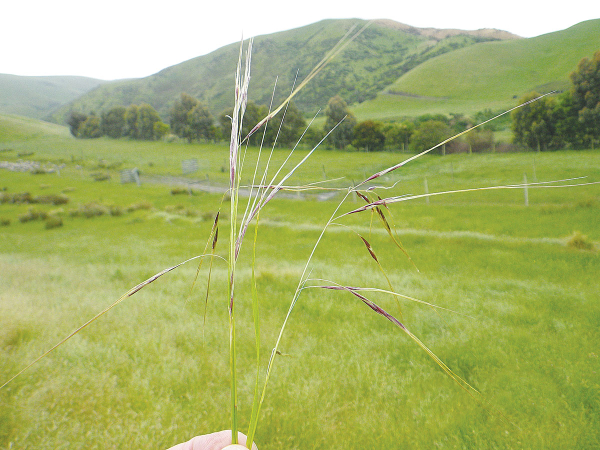 Chilean needle grass has sharp penetrating seeds that cause blindness in livestock, pelt and carcass damage – as well as the loss in pasture quality and grazing.
If nothing was done to stop Chilean needle grass, it could spread through most of New Zealand and eventually cost the country over a billion dollars.
That predication comes following newly published research.
The potential 'sleeper weed' Chilean needle grass (Nassella neesiana) is known to have already taken hold in Hawke's Bay, Canterbury, and Marlborough. It has sharp penetrating seeds that cause blindness in livestock, pelt and carcass damage - as well as the loss in pasture quality and grazing access leading to farm production to take a financial hit.
This weed is one of approximately 22,000 species of introduced plants in New Zealand. The scientific challenge is to identify those that pose an economic or environmental threat before they become widespread.
These sleeper weeds can then be prioritised by authorities – such as regional councils and the Department of Conservation for management to prevent their spread.
“The exciting part is that we now have the ability – through our research – to develop models and tools to identify sleeper weeds,” says AgResearch principal scientist Dr Graeme Bourdôt.
“And predict how and where they will spread in a changing climate and estimate the economic and environmental damage that would result.”
He adds that AgResearch has worked with Manaaki Whenua - Landcare Research on analysing various management scenarios for sleeper pests in general.
“We are currently working with regional councils, DOC and the Ministry of Primary Industries to develop a web-based tool that will enable informed decisions about investing in sleeper weed management programmes”.
The newly published research about Chilean needle grass is in the science journal PLOS One, authored by Bourdôt and AgResearch colleague Dr Chris Buddenhagen. The research combined climate niche modelling (to estimate the potential range of the species in New Zealand) and a spread model (to estimate the future economic losses under a “do nothing” scenario) to determine the benefits of stopping its spread.
Under realistic low and high estimates of this weed’s spread rate, where it takes either 201 or 100 years to reach 90% occupation of its potential climatically suitable range covering 3.96 million hectares, the loss to the pastoral sector is $192 million and $1.16 billion respectively.
These losses would justify annual expenditures to prevent the spread of $5.3m and $34m respectively, the research claims.
“This bio-economic modelling reveals that a nationally coordinated approach to managing Chilean needle grass makes best economic sense,” Buddenhagen says.
“This would include surveillance in susceptible regions and control measures in the infested regions.”
Last night saw the winners of the 2026 Beef + Lamb New Zealand (B+LNZ) Awards named at a gala dinner at Te Pae Christchurch Convention Centre.

Ravensdown's next evolution in smart farming technology, HawkEye Pro, was awarded the Technology Section Award at the Southern Field Days Farm Innovation Awards in February 2026.
While mariners may recognise a “dog watch” as a two-hour shift on a ship, the Good Dog Work Watch is quite a different concept and the clever creation of Southland siblings Grace (9) and Archer Brown (7), both pupils at Riverton Primary School.
South Island dairy farmers will soon be able to supply organic milk to Fonterra.
With the rising interest in alternative fuels, it’s no surprise that manufacturers of ATVs and side-by-side vehicles are introducing alternative power solutions into their ranges.


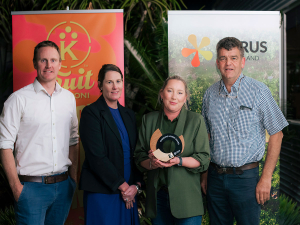
New Zealand's citrus growers were challenged to build their future on the value embedded in their fruit rather than the volume they produce, at Citrus New Zealand's annual gathering in Gisborne on 17 September.
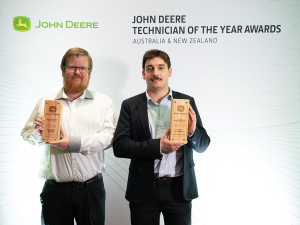
Leading John Deere technicians and apprentices from New Zealand and Australians were recognised at the recent sixth annual JD Technician of the Year Awards, held in Brisbane.
In Dacre, near Invercargill in New Zealand’s South Island, Bruce Dinnington is running a dairy operation unlike any other.
A free online platform aggregating governance vacancies across rural and regional New Zealand has been launched.
Environment Minister Nicola Grigg has announced details of a new rural plastics recycling scheme.
Agricultural drone operators say that a government decision to allow lower-risk drone work without certification won’t lower standards but drive innovation and efficiency.