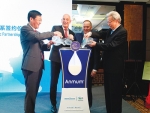
Fonterra celebrates China dairy alliance
Fonterra's partnership with Chinese company Beingmate was celebrated in style last week.
 increase font size
 New Zealand dairy, meat and seafood exporters need to keep up with rapidly evolving agri-food sustainability policies in China to ensure future market success.
According to a new report from the New Zealand China Council, New Zealand dairy, meat and seafood exporters need to keep up with rapidly evolving agri-food sustainability policies in China to ensure future market success.
The report, titled Tasting the Future, says China has been a late adopter of environmental policies in food production but is now moving at “China speed” to implement four policy priorities with implications for international trade partners: reducing the local environmental footprint of agriculture, mitigating the climate impacts of agriculture, reducing food packaging, and reducing food waste.
New Zealand China Council chair John McKinnon says these policies reflect the Chinese government’s increasingly urgent environmental protection and climate change agenda and will help to drive a fundamental transformation of China’s domestic protein market at the producer level.
“Major Chinese protein companies are already adopting voluntary net zero commitments in anticipation of the government’s clearly signalled directions,” says McKinnon.
He says China’s top agri-food priority remains food security for its population.
“But where sustainable production practices can support that goal, we can expect fast changes in Chinese protein production and consumer preferences in coming years.
“New Zealand producers have traditionally positioned themselves well in the China market as ‘clean green’ producers of high-quality protein, however, this will not be enough in future,” says McKinnon. “To maintain market share we will need to continue refining our value proposition to align with China’s increasing focus on sustainability.”
The report says China’s policies to reduce food packaging and waste are those most likely to impact New Zealand producers in the near term.
“The government’s multiple policy drivers relating to reduced packaging, packaging recyclability, food safety and reduced wasted product are sometimes in conflict and can and can result in a complex and fast-changing body of rules and regulation.
“New Zealand exporters will need to develop products and packaging that keep up with China’s moves to minimise spoilage and waste,” McKinnon says.
While the report says China's increasing emphasis on food security won't immediately impact New Zealand's protein export market, McKinnon emphasises that New Zealand exporters are facing growing competition in China.
“This competition comes not only from other global producers but also from local Chinese companies that have improved in quality due to significant domestic investment.
“China’s agri-food system in ten years will look very different to the present. Producers must understand the underlying long-term drivers, and where we fit in the new paradigm.”
The report also assesses the current and anticipated future potential of China’s alternative and novel proteins sector, including plant-based meat and dairy substitutes as well as products created through microbial fermentation and other emerging processes.
Chair of the Council’s Sustainable Food Working Group, future food entrepreneur Cleo Gilmour, says while it’s clear that traditional proteins will continue to be dominant in China for the foreseeable future, it’s another area with potential for New Zealand exporters and producers.
“Regulators’ concerns about food safety will limit the pace at which certain new technologies are introduced, regardless of their sustainability potential. But where these approaches align well with the government’s food security and other priorities, we could see some areas be supported to scale up rapidly.
“New Zealand companies and researchers are developing world-leading technologies drawing on our long history of food innovation and entrepreneurship, and seeking global investment capital and pathways into markets larger than our own. There are definitely opportunities for us, but to benefit we first have to understand China’s policy goals shaping investment and collaboration,” Gilmour says.
Fonterra's partnership with Chinese company Beingmate was celebrated in style last week.


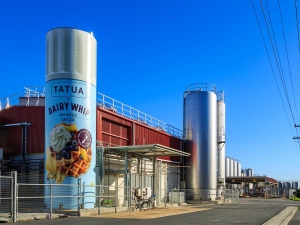
Waikato milk processor Tatua has again declared a record milk payout to farmer shareholders, leaving other processors in the dust.

A Labour-led Government won’t be bringing back the controversial freshwater rules of 2020.
National’s much-touted free trade deal with India featured in the Rural Issues Debate at Mystery Creek, Hamilton on Wednesday night.
New Zealand's 2026-27 freshwater fishing season has opened, with anglers encouraged to head to rivers and lakes over the coming days as conditions look favourable across much of the country.
Central Otago District Council (CODC) has voted against a plan to spread treated sewage sludge from Cromwell and Alexandra on farmland near Lauder, a decision Federated Farmers says reflects strong opposition from rural residents.
Pāmu has released its FY26 Integrated Annual Report, reporting a Net Operating Profit of $113 million, more than double the $49 million recorded in FY25.