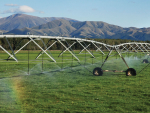
Efficient Irrigation Improves Pasture Productivity
Increased competition for water means the whole community is looking at how irrigators use water.
 increase font size

Restrictions on new dairy conversions and irrigation are coming as the Government grapples with improving waterways around the country.
All farmers will be required to have a farm plan by 2025 to manage risks to freshwater on their properties.
The proposals were outlined in a draft National Policy Statement and National Environment Standards: Freshwater paper released last week by Environment Minister David Parker and Agriculture Minister Damien O’Connor.
Public submissions will be accepted on the proposals until October. The Government will decide finally on the national policy statement by early next year.
“From June 2020, changes such as new irrigation or conversion to dairying will only happen where there is evidence it will not increase pollution,” the discussion document says.
Among other proposals, catchments with high nitrate/nitrogen levels will be required to reduce nitrogen loss within five years.
The Government also wants farmers to do more to exclude stock from waterways. It proposes more fencing and wider setbacks to keep stock out of waterways, reduce erosion and capture contaminants before they reach water.
Standards will also be introduced for intensive winter grazing, feedlots and stock holding areas to reduce erosion and pollution of waterways by nutrients, sediment and pathogens.
The document talks about extra costs facing farmers- $600 million over 10 years for extra fencing and $3,500 for each farm plan. The Government has allocated $229m funding in the Budget for farmers.
Some farmer organisations are welcoming the proposals.
Horticulture New Zealand chief executive Mike Chapman says every NZer wants clean lakes, rivers and streams. And fruit and vegetable growers are no exception, he says.
IrrigationNZ says it is pleased to see the Government’s freshwater proposals do not pin blame for waterway degradation solely on the primary sector.
But sheep and beef farmers have significant concerns.
Beef + Lamb NZ (BLNZ) says plans to lock down current land uses will disproportionately affect the majority of sheep and beef farms which are low input, extensive systems with a light touch on the environment.
Increased competition for water means the whole community is looking at how irrigators use water.
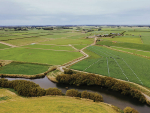
Matt McRae, a farmer from Mokoreta in Southland who runs a sheep, beef and dairy support business alongside a sheep stud, has been elected to the Beef +Lamb NZ Board as a farmer director.
Moves are afoot to get a team of Australians over here to help repair North Canterbury's irrigation machinery, ravaged by the big windstorm of late October.
Recent widespread autumn rain will have triggered the germination of subterranean clover seeds, and the resulting seedlings should be allowed to reach the 3–4 trifoliate leaf stage before grazing, says Beef+Lamb NZ.
Horticulture New Zealand (HortNZ) says access to reliable irrigation water is essential for a thriving horticultural sector.


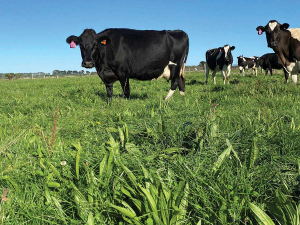
A four year trial has reaffirmed that mixing plantain into dairy pastures can help reduce nitrogen losses to freshwater while maintaining milk production and profitability, say researchers.

Fonterra has opened its upgraded Chengdu Application Centre, bringing New Zealand dairy expertise closer to customers in one of China's fastest-growing regions.
When it comes to annual rebates, it's been a long time between drinks for Ravensdown shareholders.
Special courses for secondary school teachers to help excite kids about agriculture and horticulture are now being run at Massey University.
Running a tight and self-contained ship is the key to the success of the country's largest dairy farmer, says Blair Robinson, the new man at the helm of Dairy Holdings.
Federated Farmers president Colin Hurst and his family raised a glass of milk last week to toast the start of a new addition to their farming operation at Makihihi, south of Timaru.