Four Candidates Confirmed for Fonterra Board Election
Four candidates have been confirmed for two director positions on Fonterra’s board.
 increase font size
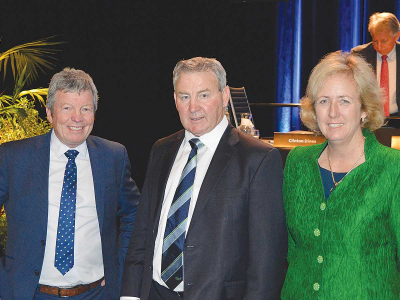 A lot of work to do: Fonterra chairman John Monaghan flanked by re-elected directors Donna Smit and Andy Macfarlane following the co-op’s annual meeting earlier this month.
Fonterra's poor performance is driving institutional investors away from the co-op.
And Fonterra Shareholders Fund chairman John Sherwin says the co-op needs to meet key milestones to regain investors’ confidence in it as an investment proposition.
The FSF annual meeting in Auckland last week heard that institution and private wealth holdings reduced over the 2019 financial year as the co-op struggled with some poor performing assets.
Institutional shareholding declined from 25% to 15% and private wealth declined from 14% to 7%, compared to the previous year.
Sherwin says these investors were also waiting for greater clarity on Fonterra’s strategy and earnings outlook.
“While we have seen improved sentiment, Fonterra now needs to meet, and continue to meet, key milestones to regain confidence in it as an investment proposition,” Sherwin told about 100 unit and shareholders.
The drop in institutional investors, however, had little effect on the number of units issued by FSF: 102 million units were issued -- 0.6 million less than the previous year
This was mostly due to Fonterra farmers buying more shares for two reasons; a situation described by Sherwin as “somewhat of a dichotomy”.
Fonterra farmers need one share for every kgMS they supply the co-op. Farmers who have reached the upper limit of non-supply backed Fonterra shares they can hold are purchasing shares and converting them to FSF units for future share compliance requirements.
“It appears that due to the historically low unit price, a number of these farmers have proactively acquired units which they will be able to transfer to shares when required,” said Sherwin.
Also, farmers who have ceased to supply Fonterra are converting their shares to units.
Sherwin says these farmers are in varying stages of the mandatory three-year sell down period of their Fonterra shares.
“However, not wanting to exit the co-op at the current price, they have opted to convert their shares to units.
“Some of these farmers would have only been required to sell the first third or second third of their shares.”
Sherwin says this is likely to be the primary driver of the increase in units issued to 111 million in late January. Also, some farmers may simply be choosing to hold units as they want to remain connected to the co-op.
The share price hit a 12-month low of $3.15 in late August, but it rebounded to about $4.16 last week.
Sherwin says while market sentiment has improved slightly, investors are keen to see how Fonterra’s new strategy will work.
“There are still many questions on what the business will look like in the future. And receiving greater detail on the strategy in FY20 will be instrumental in helping unit holders and farmers looking for more accountability.”
Unit holders unhappy too
Unhappy Fonterra unit holders fired questions to Fonterra management on A2 milk, Australian business and milk price paid to farmer shareholders.
One shareholder, Robert Gray, noted that A2 Milk used to be “a penny dreadful” but now Fonterra exists in its shadow. He questioned why Fonterra has not taken the initiatives A2 Milk has taken.
Fonterra chief executive Miles Hurrell acknowledged the great work A2 has done.
“They have found themselves a fantastic position in the Chinese market and done pretty well as a result. There’s no point in looking back over that other than taking some learnings.”
He said Fonterra was now part of the A2 milk market.
Another unit holder asked why Tip Top was sold by Fonterra, and whether it was incurring a loss.
Hurrell says Tip Top was making a decent return on the investment, but it was “by and large a confectionary company”.
Shareholder Philip van der Waal questioned why the asset sale review did not include Australian assets.
Hurrell said the Australian business is very important and a lot of milk from NZ ends up there.
“A lot of milk is sent across to the Australian market. They produce a lot of our nutritional powders.”
Van der Waal called for a review of the milk price so that it’s fair to both farmer suppliers and unit holders.
Four candidates have been confirmed for two director positions on Fonterra’s board.
A record farmgate milk price and strong global demand is laying the foundation for continued growth of organic dairy farming in New Zealand.
Waikato milk processor Tatua has again declared a record milk payout to farmer shareholders, leaving other processors in the dust.
Fonterra has unveiled its annual results for the 2026 financial year, posting $27 billion in revenue and close to $20 billion returned to New Zealand farmer owners and unit holders.
Fonterra Co-operative Group has confirmed the independently assessed candidates standing for election to its board in 2026.


A major move is about to get underway to improve the quality and viability of dairy beef and cattle in NZ.
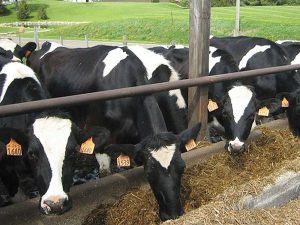
Veterinarians say changes to the code of welfare for dairy cattle provides a positive foundation for improved cattle welfare across the country.
Today, 15 October, is the International Day of Rural Women, which recognises rural women’s contribution to farming, communities and the environment.
Global dairy giant Lactalis has integrated its Australian operations with the Mainland Dairy consumer business it acquired from Fonterra earlier this year.
After almost two decades of sharemilking, saving and building equity, Aaron and Marcia Flay this year realised their long-held dream of settling on their first dairy farm.
Good medium to long term prospects for NZ beef, especially in the US, has heighted the focus on various initiatives to capitalise on this situation.