Farmers Wait Out Close Election, Says Federated Farmers
Farmers will wait it out like the rest of the country as the composition of the incoming government remains up in the air.
 increase font size
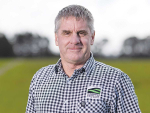
 Feds chief executive Graham Smith.
Health and safety, along with water, are the two hottest topics with farmers, according to Federated Farmers’ chief executive Graham Smith.
He and a Feds team have been out in the provinces talking to members as part of a ‘refresh’ of the federation.
Smith says health and safety is a huge issue now, coming at a time when Feds is trying to work with WorkSafe New Zealand to find practical solutions to safety on farms.
His views are echoed by the federation’s vice president, Anders Crofoot, also on the roadshow.
“I have gone around to Feds annual meetings and found health and safety is always right up there on the list,” he told Rural News. “Either they have had guest speakers talking about it or it’s being raised during general discussions. Everyone is keen on making farms safer workplaces and no one faults that.
“The issue is how should a bureaucratic system that seems to be aimed at ‘ticking’ going to achieve a good outcome. I’ve heard it said that farmers are interested in outcomes, that they’re not so concerned about process, whereas WorkSafe seems to be really hung up on the process and that’s probably not going to produce the outcomes they’re hoping for.”
Crofoot says the flashpoint is obviously quad safety and WorkSafe’s view that no passengers should be carried on these vehicles. But he says NZ farmers don’t believe that US manufacturers’ guidelines – designed for Americans using quads as recreational vehicles – should apply in NZ. He says the least risky way of taking a fertiliser rep or bank manager around a farm is as a passenger on a quad driven by an experienced rider.
Crofoot also has concerns about WorkSafe’s approach to dealing with visitors on farms, such as hunters. He says the paperwork required is a turnoff for farmers.
“If they try to clutter the system with too much record keeping – even simple record keeping – this will annoy farmers who in the end will find it easier to say ‘no’ than do the paperwork,” he says.
Re-engaging with the provinces
Federated Farmers plans to employ a fulltime person to strengthen its dialogue and communication with its members in the provinces.
Feds chief executive Graham Smith says as a result of their roadshow around the country – where they were seeking ways to improve services to members – a major concern voiced was the need for better engagement with the regions.
“We had a lot of feedback from provincial presidents saying they’d like to have someone who lives and breathes what they do,” Smith told Rural News. “As a result of this feedback, we’re creating a new role and recruiting for it now.”
Smith says the new role – ‘general manager of provincial engagement’ – will help build Feds’ capacity to meet the changing demands being put on farmers. Also as part of the ‘refresh’, Feds plans to set up national water and science teams.
As well as recruiting an extra staff member Feds will refocus staff in specific areas.
Farmers have pointed out that the federation, with its membership of 14,000, could do more given its strong representation in the provinces and a reputation for good engagement with politicians and industry leaders.
“There are big issues in the primary sector, now and in the future. We could help shape the thinking for forming coalitions and help find solutions to some of the issues – water, health and safety and new technology.”
Smith says as a result of this feedback, the federation will direct much of its efforts towards environment, health and safety and science and innovation.
Farmers will wait it out like the rest of the country as the composition of the incoming government remains up in the air.

OPINION: The Government's decision to reinstate agriculture and horticultural science as a standalone subject from Year 11 is the right one.
With less than a week to go before voters choose the next government, Federated Farmers has a simple message to its members - get out and vote.
Good effluent management on a dairy farm combines a well-designed system with proper processes to ensure the right amount of effluent gets applied to pasture at the right time.
For years, IrrigationNZ has called for a coordinated national approach to water security, backed by enabling regulation, strategic infrastructure investment and sound technical practice. As the 2026 general election approaches, many of these priorities are now reflected in political commitments and legislative reforms. That represents significant progress, but the real measure of success will be turning policy into practical outcomes, says IrrigationNZ principal technical officer Stephen McNally.



During the nesting season, from September to December, industrious starlings can quickly build nests in the darker areas behind tractor and vehicle, usually close to hot engines, typically resulting in localised damage or in some cases complete write-offs.
The meat processing industry is much more collegial than it was in the past and is now more focused on common goals.
With the last couple of months having seen some potential tractor purchases put on hold with the impending election and continued input cost rises, year-to-date figures, ending September, has seen deliveries up around 5% over the same period in 2025, with a total of 2026 units.
Beef+Lamb New Zealand is calling for nominations for director roles in the Northern South Island and Northern North Island electoral districts.
Fonterra chief executive, Richard Allen says being resilient has helped the dairy industry overcome extreme volatility in recent years.
The head of the Ministry for Primary Industries (MPI) trade and international relations group says New Zealand is well-positioned to secure trade access and compete internationally as the world becomes more complicated, demanding and uncertain.