Why Now Is the Time to Plan Farm Succession, Findex Says
OPINION: Succession and long-term planning are perennial topics because it is perpetually sidelined on busy farms.
 increase font size
 Southern Pastures' Tom Bailey says consumers are flocking back to dairy products as Covid shines the light on health and wellness.
Consumers are flocking back to dairy products as Covid shines the light on health and wellness, says Tom Bailey, the new senior vice president for Southern Pastures.
Bailey, who took up his new role in Auckland after working as a senior dairy analyst for RaboResearch in the US, told Rural News that dairy demand has come roaring back as people seek natural nutrition and go back to basics – simple, uncomplicated, familiar and trusted food.
“Covid has emphasised health and wellness from many angles and demand for milk is back,” he says.
“There are specific examples of this on a national scale; the US has bought massive amounts of dairy as part of its food support programs,” he says.
“Chinese demand has also been very strong. The government has emphasised the health benefits of milk, and we are hearing that fluid milk demand is pumping.”
As a result, the Chinese dairy processors do not have excess milk, which they normally would, because fluid milk demand has been so strong.
This has helped bolster NZ exports as our exports meet growing demand and also backfill where domestic Chinese manufacturers are missing.
Bailey also says NZ ingredients remain at a substantial premium relative to the global markets, due to many factors – grass-fed is better, many brands require Fonterra specifications for label requirements, and NZ has a great working relationship with key importing markets, such as China.
Southern Pastures owns and operates 20 farms in Waikato and Canterbury and also owns boutique milk company Lewis Road Creamery. The company milks cows under a stringent independently certified 10 Star certified values program, which stipulates grass-fed, free-range, climate-change mitigation, human welfare, animal welfare, GMO-free, palm products free, growth hormones free, antibiotic stewardship, and environmental sustainability requirements.
Premium milk produced under the Southern Pastures 10 Star program is currently used in Lewis Road Creamery’s grass-fed butter sold in Whole Foods and other stores across the US.
Bailey believes value-add dairy products of the type produced by Southern Pastures and Lewis Road are poised for significant global growth.
“We’ve seen a back-to-basics trend for some time now, with consumers seeking out high quality, nutritious dairy options over more expensive and less healthful alternative plant-based products,” he says.
“People are showing a clear preference for more natural, less adulterated foods with shorter ingredient lists.”
He said premium markets will increasingly pay more for dairy that has an authentic and traceable story.
“When you add attributes such as sustainability or more favourable omega 3:6 milk fat ratios you can extend your market lead, and that’s where Southern Pastures really stands out.”
Lost Opportunity
New Zealand milk volume is surprisingly declining in a highly profitable environment.
Tom Bailey believes this is due to legislative uncertainty around environmental regulations and central bank policies creating reluctance to invest in dairy.
“This is affecting banks’ willingness to lend as well as farmer ability to expand. This is a lost opportunity for the economy,” he says.
While NZ supply set for further possible declines, Bailey believes NZ premium are well positioned to be maintained relative to other global dairy export markets.
“Furthermore, consumers continue to show a lot of love for grass-fed products,” he told Rural News.
“Because grazing is amazing and NZ dairies are the most productive with the smallest environmental footprint in the world, NZ products should sell well.
“There is no doubt that premium consumers want our products – our Lewis Road brand has had fantastic traction in the US, and we are set to launch on Amazon, making us the first NZ butter brand store on Amazon.”
OPINION: Succession and long-term planning are perennial topics because it is perpetually sidelined on busy farms.
Farms across the upper North Island are trialling different pasture mixes as part of a research programme that aims to build greater resilience into farming systems.
Election years are always a concerning time for farmers, according to DairyNZ chair Tracy Brown.
Matt Collier, Probiotic Revolution, says calves will drink a lot of milk once-a-day with their probiotic Calf Xtreme.

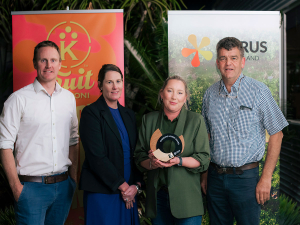
New Zealand's citrus growers were challenged to build their future on the value embedded in their fruit rather than the volume they produce, at Citrus New Zealand's annual gathering in Gisborne on 17 September.
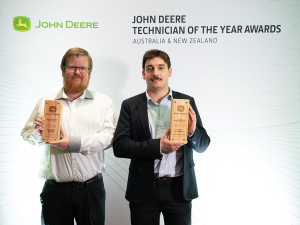
Leading John Deere technicians and apprentices from New Zealand and Australians were recognised at the recent sixth annual JD Technician of the Year Awards, held in Brisbane.
In Dacre, near Invercargill in New Zealand’s South Island, Bruce Dinnington is running a dairy operation unlike any other.
A free online platform aggregating governance vacancies across rural and regional New Zealand has been launched.
Environment Minister Nicola Grigg has announced details of a new rural plastics recycling scheme.
Agricultural drone operators say that a government decision to allow lower-risk drone work without certification won’t lower standards but drive innovation and efficiency.