It's The Margins That Matter
OPINION: It appears to be difficult for people who haven’t tried to run a business to understand the difference between assets and cash.
 increase font size
The dairy industry contributed 37% of the total value of New Zealand's primary exports in 2014-15, according to DairyNZ.
This was revealed last week at DairyNZ's annual meeting in Morrinsville.
Dairy earnings for the year totalled $13.2 billion. Waikato remains the dairy heartland with 34% of the herds; it produced $2.4b of milk last year.
The Waikato's 4020 dairy herds produced 518m kgMS in 2014-15, 27% of NZ's total milk production. But Waikato's $2.4b earnings were down $1.8b on the 2013-14 season when the high milk price ($8.47 average payout) boosted the region's coffers by $4.2b.
Outgoing DairyNZ chairman John Luxton says the 2014-15 season's low milk price has affected all farms as owners and sharemilkers strove to remain profitable.
"The value of milk production to Waikato's economy is huge; the region takes a big hit when farmers do," says Luxton.
The North Island had 74% of herds, producing 59% of total milksolids; the South Island 26% of herds but produced 41% of milksolids.
The industry employed 40,730 people during the year; 27,830 worked on farms and 12,900 in processing and wholesaling.
The total number of herds reached 11,970; average herd size was 419. Last year the industry had 5 million cows.
OPINION: It appears to be difficult for people who haven’t tried to run a business to understand the difference between assets and cash.

Farmers can spend less time on paperwork, thanks to a new data sharing agreement between DairyNZ’s DairyBase and LIC’s MINDA software.
OPINION: In the 1980s, concern was expressed in West Germany about the falling birth rate. Some simple analysis was performed by Professor Helmut Sies, physician and biochemist at Dusseldorf University. His letter ‘A new parameter for sex education’ was published in Nature in 1988:
OPINION: Dairy farmers know better than anyone that change is constant.
A four year trial has reaffirmed that mixing plantain into dairy pastures can help reduce nitrogen losses to freshwater while maintaining milk production and profitability, say researchers.

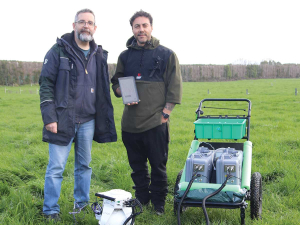
Researchers at Massey University are using a special piece of scientific equipment to improve the measurement of greenhouse gas emissions from pasture soils.
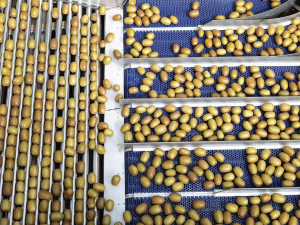
More signs of a booming kiwifruit sector.
OPINION: David Seymour and James Meager's plan to make it easier for farmers and orchardists to operate drones can best be described a 'courageous' move.
New Zealand wool is reaching new heights as air filtration companies move away from synthetic products to biodegradable alternatives.
Opuha Dam's ability to protect South Canterbury communities from major flooding has taken a significant step forward, with Opuha Water Limited (OWL) successfully commissioning a new outlet valve capable of releasing record volumes of water from the dam ahead of a weather event.
There's been widespread support from the primary sector for the Government's announcement on changes to freshwater farm plans that come under the Natural Environment Bill, which is now set to replace the existing RMA.