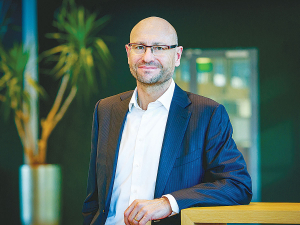
“We will demonstrate our performance and we are confident that will open up the market to all in the industry,” Ritchie told Rural News.
“It will enable us to take advantage or capitalise on a different part of the market as the industry has done in other parts of the world.” For instance chilled lamb to Europe or chilled beef to Pacific markets.
“The whole business model is about extracting maximum value from an animal,” he says. “One way of doing that is to have as many markets open as possible – or as few restrictions as possible which allows the processors and exporters to capitalise on the opportunities out there.”
Chilled meat will have significant potential, says Ritchie.
“It is a higher value business – a business with greater risk because you have shelf life issues and all of that.
“You are servicing a significant part of the market but you also have to have confidence that the value chain or the distribution chain is such that it can handle that chilled product. Any minor variation in temperature has a direct impact on the shelf life of the product.”
New Zealand has evolved a good system for lamb over the years, says Ritchie.
“Lamb is pretty sensitive to temperature fluctuations,” he says. “The shelf life is dependent on that so we have evolved systems which allow us to get from one side of the world to another and still have sufficient shelf life to enable it to be further processed, or repackaged, and retailed and for someone to buy it and sit it in their fridge for a few days and still have a good experience with it.”
NZ has developed those technologies over the years to deliver good product around the world, Ritchie says.
“Other countries have probably done more of the pioneering work in beef but NZ did the pioneering work in lamb over the years.
“So access for chilled meat to China will be really good because the business in China takes a third of our sheep meat and about 18-19% of the beef.”
So far all of it has been frozen.
“The sheep meat area tends to be the lower value cuts, which in itself is great in the sense that they place a greater value on lower value cuts than other parts of the world so it is logical that those value items go there.
“But the great thing about that is the reason they put that greater value on the product is because it is more attuned to their cuisine and their tradition.
“Breast and flaps and things that go there -- they pay far more than anywhere else in the world. They go in and bone it out, make their lamb rolls and slice it very thinly for their hot pot, the traditional Chinese dish which is fantastic. That has been great there -- the mainstay of the business.
“But now with access to chilled product we can start to open doors in other parts of that market – the higher value end.”
Again it all depends on the integrity of the distribution system -- being able to handle it because it is a perishable product and more susceptible to abuse than frozen product.
“It won’t go from nothing to a huge amount overnight. It is going to evolve which is good.