Wool Impact and Campaign for Wool NZ Merge to Form Collective
Will a stronger, more coordinated voice help rebuild confidence and improve returns in the wool sector?
 increase font size
 A combination of factors have given wool cheques a lift and helped to balance sheep farmers' incomes.
A combination of factors have given wool cheques a lift and helped to balance sheep farmers' incomes, says Kaikoura wool producer and industry representative Derrick Millton.
New Zealand spinning companies, although relatively small users of wool in this country, are flat out at the moment, says Millton, who is chairman of the Wool Research Organisation of NZ (WRONZ).
The lower dollar is also contributing. Either wool demand is increasing, or the supply is reducing, but all those things together "have given farmers' wool cheques quite a lift," he told Rural News.
"That is quite significant. You can put it down to all those things – supply issues, demand issues and people perhaps wanting to use NZ wool because of its superior production or processing capability.
"Hopefully the NZ wool industry is on a better path. Definitely three years ago it was below the level of production and now we are seeing some profits coming to farmers from wool production.
"After they have shorn their sheep there is a reasonable amount left. It's not substantial but that rise has been pretty useful."
He says the clean wool price is now at least $6/kg whereas two years ago it was $4-$4.50.
"Mid micron wool has been a star performer," Millton says. "It has started to really increase in price and compete with Merino. The apparel trade has boosted that." – Pam Tipa
Will a stronger, more coordinated voice help rebuild confidence and improve returns in the wool sector?
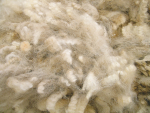
OPINION: Confidence in the wool sector is rebounding as prices hit levels not seen in more than 15 years.
The recently signed free trade agreement with India is an invitation to strengthen relationships between the New Zealand and Indian strong wool industries, says Wool Impact chief executive Andy Caughey.
Strong competition and tightening supply have seen wool reach its highest prices paid at auction since 2011.
A collaboration between two New Zealand companies will see wool used as a renewable colour source for 3D printing.


The chair of the country's environmental regulator, the Environmental Protection Authority (EPA), says changes are already under way to improve the performance of the agency to better meet the needs of those who interface with them.

Alliance Group's $16 million programme to install innovative heat pump systems at its Otago and Southland processing plants wins a New Zealand Energy Excellence Award after cutting annual emissions by more than 24,000 tonnes of CO₂e.
The arable sector losing good people and land is a major concern for the 2026 Arable Farmers of the Year, Mid Canterbury seed growers John and Mel McCaw.
The terrible floods that hit the Wairarapa may have subsided, but the danger to farmers still exists, according to local Federated Farmers president Rob Hickson.
New Zealand's Emissions Trading Scheme (NZ ETS) encourages afforestation while not achieving climate goals, says a new report released by the Parliamentary Commissioner for the Environment, Simon Upton.
Are you ready for El Nino? That’s the question asked by Beef+Lamb NZ’s Ian Tarbotton who leads B+LNZ’s farm extension service.