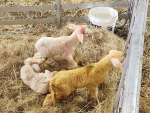
Beef + Lamb NZ's Lambing Kit Checklist for a Tough Season
With lambing underway in many regions, Beef + Lamb New Zealand is encouraging farmers to put together a wellequipped lambing kit to help minimise lamb losses, particularly in bad weather.
 increase font size

BEEF + LAMB New Zealand (B+LNZ) Genetics is officially in business.
B+LNZ Genetics general manager, Graham Alder says the contract with the Ministry of Business, Innovation and Employment has been signed, securing the Government's contribution of $15 million over the next five years.
In total the new entity will attract $44 million, coming from sheep and beef farmers, the wider red meat industry and the Government.
"This investment will power up the genetic gains for New Zealand sheep and cattle so they are more profitable and better matched to consumer demands."
B+LNZ Genetics combines the previous investments in Ovita, Sheep Improvement Ltd and the B+LNZ Central Progeny Test.
Alder says the money will be invested primarily in three areas and there will be a renewed focus on beef genetics.
"There will be an upgrade to the software that runs the SIL database so it's capable of dealing with increased flows. There will be research into new genetic traits relevant to sheep and beef profitability – like the longevity of ewes and cows, particularly on hill country. And the third area is making the genetic tools and information easier to understand and use."
Alder says the work is all about providing tools and information so farmers can buy better rams and bulls.
Beef + Lamb New Zealand chief executive, Dr Scott Champion says it is an exciting time for sheep and beef farmers, as genetic advances are one of the most important drivers of profitability and productivity.
"We're on the eve of being able to access a whole new range of genetic tools and information that will take the sector to the next level. Importantly, B+LNZ Genetics brings together what were previously three separate parts of the business into an entity just focused on genetics; getting new genetic tools and services out to farmers, and then supporting them to use them in their farming businesses," Champion said.
It's estimated the genetic investment and its uptake has the potential to add $845 million to the sheep and beef sector over the next 20 years.
With lambing underway in many regions, Beef + Lamb New Zealand is encouraging farmers to put together a wellequipped lambing kit to help minimise lamb losses, particularly in bad weather.
Chinese beef trade quotas and a looming suspension of Brazilian beef imports into the European Union are expected to reshape global beef trade flows over the remainder of 2026, with implications for New Zealand exporters, according to Rabobank's Q3 Global Beef Quarterly report.
Will a stronger, more coordinated voice help rebuild confidence and improve returns in the wool sector?
Bovine Viral Diarrhoea (BVD) is sometimes viewed as a dairy industry issue, but the reality is that the disease can have serious consequences for beef breeding herds as well.
For Taupiri dairy farmers Logan and Sian Dawson, their involvement in the NZ Dairy Industry Awards has been a key catalyst in the growth of their business - the experience helping shape how they approach the farm ownership pathway they are pursuing today.



Three men have been sentenced in District Courts after Ministry for Primary Industries prosecutions over animal welfare, food safety and cattle tracing offences.
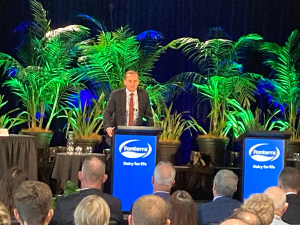
Fonterra’s 2026 financial year was a year of delivery, with record volumes of milk collected, processed and shipped by the co-op.
OPINION: The Government's decision to reinstate agriculture and horticultural science as a standalone subject from Year 11 is the right one.
Dairy farmers, still holding onto their Fonterra shares despite switching milk supply elsewhere or exiting the industry, now face a stricter share sell-down requirement.
Hamilton-based agritech company Aimer Farming has completed a $3 million capital raise to support its next stage of growth, including a beef farming product due to launch in 2027.
When dairy manager Miriam Lauridsen learned the farm, she was joining held weekly health and safety meetings, she initially thought that was “a bit over the top”. Experiencing that culture changed her mind.