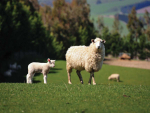
Early Weaning Lambs: What the Massey Trials Found
Farmers with high-quality feed available in late spring could consider weaning at least a proportion of their lamb crop early to benefit both lambs and ewes.
 increase font size

New Zealand feed manufacturers are lifting their game when it comes to quality and safety of their products.
The New Zealand Feed Manufacturers Association (NZFMA) has introduced a new risk management programme that sees significant upgrades to the auditing and testing conducted by feed manufacturers.
The move comes as more imported non-grain ingredients arrive in the country.
While the quality of feed manufacturing is already spot checked by the Ministry for Primary Industries (MPI) and regularly audited by AsureQuality, this new risk management initiative will require additional testing of ingredients used to manufacture the feed they produce: helping to safeguard the quality of animal feed and, by extension, the food New Zealanders enjoy.
“FeedSafeNZ is a dynamic organisation that responds swiftly to changes in the industry. Increasingly New Zealand’s feed manufacturers are sourcing non grain ingredients from places around the world, including China and the Philippines,” says Michael Brooks, executive director of the NZFMA.
“These new sources have brought some uncertainty about the accuracy of labelling and the quality of the raw material, especially non grain ingredients such as vitamins and minerals that are added to feed.”
FeedSafeNZ, which was introduced in 2015, is an accreditation for NZFMA members who pass independent, audited standards on their manufacturing processes.
“FeedSafeNZ accreditation is there to help ensure safe feed for animals and to protect the safety of human food,” says Brooks.
FeedSafeNZ audits are carried out annually by AsureQuality, a company that provides food safety and biosecurity services to the food and primary production sectors worldwide. Feed manufacturers undergo a stringent testing regime that involves a thorough on-site audit of their ingredients, plant and storage facilities and operations. Only FeedSafeNZ accredited sites are permitted to use the FeedSafeNZ logo on their packaging and other materials.
“Anyone who feeds animals, be it farm animals or pets, would be well advised to look for the FeedSafeNZ logo,” says Brooks.
“For farmers, especially, it is crucial that the quality and integrity of the food we produce in New Zealand remain uncompromised. FeedSafeNZ accreditation provides stock owners the assurance that the feed they are purchasing is manufactured to the highest possible standard."
Brooks says as an organisation attuned to the changes in our industry, if felt the need to take testing to another level, which is why the NZFMA has introduced additional testing regimes to verify that any additives are what they claim to be.
“All ingredients must adhere to strict standards to achieve FeedSafeNZ accreditation,” he says.
These new testing regimes will be implemented now, with all new audits for feed manufacturers including this extra level of scrutiny.
Click here to watch FeedSafeNZ's video explaining the organisation's work.
Farmers with high-quality feed available in late spring could consider weaning at least a proportion of their lamb crop early to benefit both lambs and ewes.

Testing confirms H5 bird flu in a single northern giant petrel, found dead on a remote Cape Palliser beach in the Wairarapa, says Dr Mary van Andel, the Ministry for Primary Industries' (MPI) Chief Veterinary Officer.
The apple sector is working with the Government to unlock access to two key markets that could bring millions in revenue for apple growers.
A Palmerston North shearer has been sentenced to six months' community detention and 12 months' supervision after being found to have physically abused three lambs while shearing them.
OPINION: A simpler, clearer, more effective Recognised Seasonal Employer (RSE) scheme.



Federated Farmers has welcomed new rural policies released by ACT, saying they align closely with its own election priorities.

Rural Contractors NZ says proposed changes to land transport rules for agricultural vehicles are a welcome response by the Government to out of date regulations which have seen members hit with huge fines.
Alliance is calling for final applications for its 2027 Graduate Programme, with applications closing on Sunday 25 October.
Decades piloting planes has ensured vet and farmer David Hayes is focused on safety. So, after a serious accident while welding on farm, he is sharing his experience so others can learn from it.
Canterbury milk processor, Synlait Milk has confirmed Leon Fung as its chief executive officer.
OPINION: Making it easier to collect rainwater and use it to grow crops and livestock is a no brainer.