B+LNZ Forecasts Lower Prices, But Still a Strong Season
Farmgate lamb prices are down by 8%, beef cattle by 4.5% and farm expenditure up by 4.2%.
 increase font size
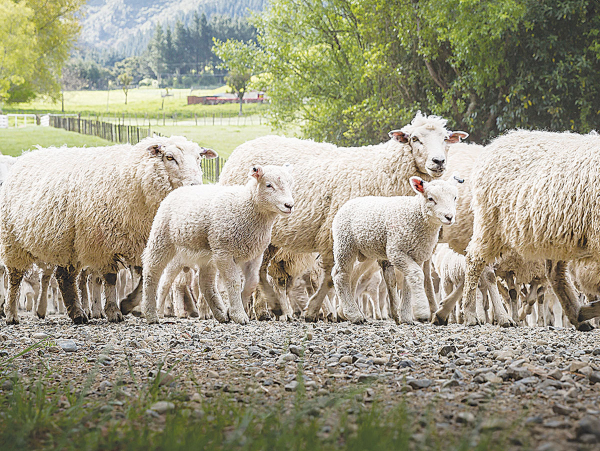 Farmers can treat their boundaries like a border and control what comes over it.
Treat your farm boundary like a border. This was one of the messages delivered to farmers at a recent Beef + Lamb New Zealand Protect Your Patch workshop in Lincoln.
Run by Dr Will Halliday, veterinarian and B+LNZ’s senior manager technical policy, the workshop covered what farmers could do to “protect their patch” from pests and diseases.
“New Zealand has a border, and farms have boundaries, but farmers can treat their boundaries like a border and control what comes over it,” says Halliday.
As with national borders, there is pre-border, at the border and post-border management that can be implemented on-farm.
Halliday says farmers will already be doing this as part of everyday farming but should be aware of the measures they are taking to protect their businesses.
Farmers can also assess the level of biosecurity risk from a highly likely scenario (buying lambs with worms) to a highly unlikely but devastating scenario such as an incursion by a disease such as Foot and Mouth.
Halliday's hierarchy of disease
At the workshop, Halliday outlined what he has coined Halliday’s Hierarchy of Disease.
The first in this hierarchy is a nationally catastrophic disease such as Food and Mouth Disease, or Avian Influenza; the second are endemic nasties that are in NZ, but farmers work hard to contain.
Included in this list are TB, BVD, brucellosis, and drench resistance. The third in the hierarchy are the many diseases that farmers have taught themselves to accept as “just part of farming”.
These include Johnes Disease, facial eczema, footrot and mastitis, and it is these diseases that are costing farmers the most in lost production and control efforts.
Seven biosecurity interventions
Seven measures can help protect the farm business from pests and diseases.
1. Recording livestock movements is critical. This includes recording movements in NAIT and ASD forms, knowing where animals are coming from and what they may be carrying with them.
2. Keeping livestock well-fed and healthy will make them less susceptible to disease. Animal Health Plans play a critical part in farm biosecurity as they serve both as a reminder and a record of animal health treatments.
3. People, equipment and dogs. Be aware of who and what is coming onto the farm, where they have been and what they are bringing with them. Keep a visitor register. Identify all the entry forms onto the farm and ideally provide cleaning and disinfecting facilities at entry points. These facilities can be as simple as a fish bin with water, disinfectant, and a brush.
4. Feed and water. Where is feed being sourced from? This includes hay and silage and milk, and colostrum. Some bagged supplementary feeds should not be fed to ruminants (check the label) and offal should be either frozen or cooked before being fed to dogs to help prevent the spread of sheep measles.
5. Pest control. Pests can include plant pests as well as possums, pigs, deer, goats, rats and mice as well as feral sheep and cattle. These animals can cause damage to pasture or be a vector for disease.
6. Correct handling of waste and carcase management. Identify, remove and correctly dispose of dead stock. Manage livestock waste to ensure it is not a source of contamination.
7. Shared knowledge and understanding. Ensuring everyone in the farm team, as well as people coming onto the farm, understand that biosecurity is taken seriously. Include staff in drawing up and implementing biosecurity plans and learn where to go to identify pests and diseases. See https://agpest.co.nz/
Farmgate lamb prices are down by 8%, beef cattle by 4.5% and farm expenditure up by 4.2%.
Red meat farmers are welcoming Labour’s plan to review the Emissions Trading Scheme and not to campaign on pricing agricultural emissions.
Animal health company Bovonic is gearing up for its next stage of growth after increasing New Zealand sales of QuadSense by more than 50% in the last 12 months, including a record quarter for the business this year.
With lambing underway in many regions, Beef + Lamb New Zealand is encouraging farmers to put together a wellequipped lambing kit to help minimise lamb losses, particularly in bad weather.
Bovine Viral Diarrhoea (BVD) remains one of the most significant infectious diseases affecting New Zealand dairy herds.


Farmgate lamb prices are down by 8%, beef cattle by 4.5% and farm expenditure up by 4.2%.
Kiwifruit growers are watchful but remain optimistic as concerns around the potential effects of the El Niño weather pattern this season.
Almond hulls sourced from Australian orchards may have the potential to help New Zealand cows reduce emissions, boost milk yield and lower input costs.
Striking a balance between meeting the needs of industry to speed up approval time for products but on the other hand ensuring that risks are properly assessed.
Surprised, humbled and quite thrilled. That’s the reaction of James Allen, one of the founding partners and now chief executive of AgFirst, on being made a life member of the Institute of Rural Professionals.