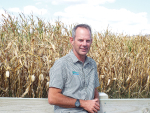
James Allen Named Life Member of Rural Professionals Body
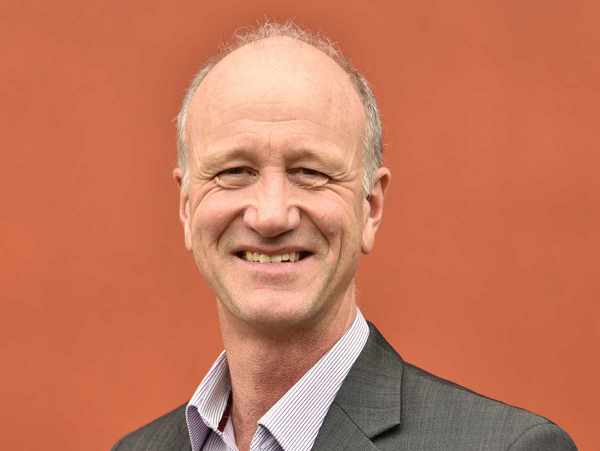
Surprised, humbled and quite thrilled. That’s the reaction of James Allen, one of the founding partners and now chief executive of AgFirst, on being made a life member of the Institute of Rural Professionals.
He told Rural News that being honoured by one’s peers is probably the highest accolade that any person can receive. The honour recognises his dedicated work across rural consultancy, agribusiness and industry leadership over 30 years.
The citation for his award says that throughout his career, Allen has combined practical farm advisory work with a commitment to lifelong learning and thought leadership.
He initially gained a Bachelor of Commerce in Agriculture at Lincoln University and later completed a Master of Agribusiness. In recent years he was awarded a Nuffield Scholarship, during which he researched artificial intelligence and the future of agricultural advisory services.
The citation goes on to say that he’s undertaken international study and research, led major extension and mentoring programmes, and developed expertise in farm systems, nutrient management, governance and business transition.
“His work has taken him from South Waikato to Uruguay; Ireland to Rwanda; and Chile to Vanuatu; bringing global insights back to benefit New Zealand farmers and rural businesses. Service has been a constant theme. Allen served as National President of New Zealand Young Farmers, President of NZIPIM, President of the National Fieldays Society, and Associate Director of AGMARDT,” says the citation.
Finally, the citation says Allen has also been a passionate advocate for professional standards through his long-standing involvement with certification and advisory programmes. It adds that he’s has never been short on ideas, projects, committees or air miles, but throughout it all he has remained grounded, practical and deeply committed to people.
Farming's More Complex
In his 30 years as a rural professional, Allen says some things have changed enormously, while some fundamentals have not changed.
The technical tasks that rural professionals do are becoming more complicated.
"Originally it was, how do you feed an animal, grow it better, grow more grass, but now you have to do all that plus do it in an environmentally friendly and socially sustainable way, plus look after your staff and grow the business. So, you have governance, environmental and social parameters," he says.
Farming has become a lot more complex and Allen says therefore rural professionals have had to adapt and grow their skill set and collaborate more with industry.
He says the technology role is changing more dramatically over the next five years as AI comes into play.
"As rural professionals, we do have to be right up to date and technology is moving very quickly. A classic example is wearables... as a rural professional, we have to understand them and what works for what farm and the technology behind them. We have got to be right up to date with technology but equally recognise that some of the leading farmers are pushing boundaries as well," he says.