NZKGI Responds to Migrant Worker Exploitation Reports
Where any worker in the kiwifruit industry is mistreated, we expect the authorities to take action.
 increase font size
 Seeka is looking for 300 local people to replace RSE workers from Malaysia.
RSE workers from Malaysia unable to leave their country because of a coronavirus lockdown there has led to a labour shortage for Seeka.
The horticulture business is looking for 300 local people across their kiwifruit orchard and post-harvest operations in Bay of Plenty, Coromandel and Northland.
Seeka chief executive, Michael Franks says the usual flow of people to work for them in their eight facilities across the North Island has been impacted.
“The number of backpackers through our doors is low, and a significant portion of our experienced Recognised Seasonal Employee (RSE) scheme employees have been restricted from departing their country,” he says.
Franks outlined that 135 RSE workers scheduled from Malaysia had been restricted by their Government closing its borders for both inbound and outbound travellers. The New Zealand Government had allowed these vacancies to be filled with workers from the Pacific Islands. However, Seeka is still 300 workers short.
“While we look to employ New Zealanders first and foremost, we also need to find other sources of workers such as backpackers and those from the RSE scheme as the harvesting and packing window of kiwifruit is relatively short,” Franks says.
“To date around 5% of crop Seeka handles has been processed, for the moment we have coped – however in about three weeks we will hit peak flow and need far more numbers of people.
Each year Seeka needs 3,000 seasonal workers. Seasonal jobs start in March and finish around mid-June.
Where any worker in the kiwifruit industry is mistreated, we expect the authorities to take action.

Kiwifruit growers are watchful but remain optimistic as concerns around the potential effects of the El Niño weather pattern this season.
More signs of a booming kiwifruit sector.
James Blair, an agronomist for AS Wilcox and the Pukekohe regional champion, has won the 2026 Young Grower national title.
Claimed to be the first autonomous robot for New Zealand vegetables growers, the first Kilter AX-1 unit has arrived in the country.


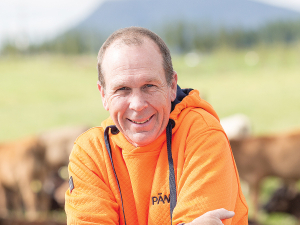
Pāmu has released its FY26 Integrated Annual Report, reporting a Net Operating Profit of $113 million, more than double the $49 million recorded in FY25.

Meat Industry Association data, released alongside the Red Meat Sector conference in Wellington, shows export value climbing across the US, China, UK and Canada.
Applications are set to open for the 2027 Zanda McDonald Award, a trans-Tasman award recognised for identifying and fast-tracking talented young leaders in agriculture and agribusiness.
The Royal New Zealand College of General Practitioners (the College) and Hauora Taiwhenua Rural Health Network are calling for investment in a proposed new training pathway for rural GPs, warning that many rural practices are struggling to recruit while a large share of the existing workforce nears retirement.
Federated Farmers has called on Central Otago District Council (CODC) to drop or vote down a plan to truck sludge from Alexandra and Cromwell to farmland near Lauder, warning it would compound an "outrageous" situation created by a separate council's decision weeks earlier.
Synlait has swung to second-half profit as operations stabilise, but the dairy processor still posted a $75.4m annual loss.