Massey Uses Portable Analyser to Measure Pasture Soil GHGs
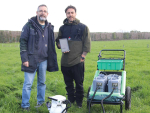
Researchers at Massey University are using a special piece of scientific equipment to improve the measurement of greenhouse gas emissions from pasture soils.
 increase font size
 Paul Kenyon says it’s a struggle to get young people and their families to understand that there are real, high-value career opportunities in horticulture.
Historical negative perceptions about horticulture seems to be a key reason why bright, young people are not signing up to do degrees that would take them into careers in the sector.
Massey Universities College of Agriculture and Environment head Professor Paul Kenyon told Hort News that the university is not getting the number of students through their doors that the industry is demanding in terms of potential jobs. He says it’s a struggle to get young people and their families to understand that there are real, high-value career opportunities in horticulture.
“This is because in the media they just see the low paying jobs – the pruning and picking – and don’t realise there are professional opportunities in the industry and that is an issue.”
Kenyon says Massey has been doing much to try and attract the best and brightest to undertake a hort degree that would see them end up in a well-paid, exciting and fulfilling career. He explains that Massey has been trying to work with high school teachers – through the Horticultural and Agricultural Teachers Association – as well as going to the schools and talking to potential students and telling them about the opportunities there are in the sector.
“We are also trying to break down some of these historical perceptions, which has always been that kids who are not so academically minded should do horticulture at school,” Kenyon adds.
“That is not what the industry wants. They want smart kids to realise the opportunities in horticulture at high school and later do some tertiary education and then make horticulture their career choice.”
Kenyon says in all Massey degree courses – including horticulture – they have a range of papers which highlight the directions that students can take in their future careers – things such as agritech, finance and food technology.
He adds that while it is a challenge to change perceptions with teachers and parents, there has actually been an increase in the number of secondary schools teaching agriculture and horticulture.
“This has grown from a very small base from a handful of schools to almost 100 teaching it in some form,” Kenyon told Hort News.
“We just need to get those kids that are doing this to progress their education through to tertiary level, so they can go on and make significant impacts in the horticulture and agricultural industries.”
Researchers at Massey University are using a special piece of scientific equipment to improve the measurement of greenhouse gas emissions from pasture soils.

Interest in agritech and production animal systems has prompted Massey University's School of Agriculture and the Environment to new majors to its popular animal science degree.
The industry is crying out for graduates with agricultural related degrees.
A four year trial has reaffirmed that mixing plantain into dairy pastures can help reduce nitrogen losses to freshwater while maintaining milk production and profitability, say researchers.
Special courses for secondary school teachers to help excite kids about agriculture and horticulture are now being run at Massey University.


DairyNZ deputy chair Cameron Henderson has been re-appointed unopposed for another term.
Farms across the upper North Island are trialling different pasture mixes as part of a research programme that aims to build greater resilience into farming systems.
Election years are always a concerning time for farmers, according to DairyNZ chair Tracy Brown.
The Ballance Farm Environment Awards are coming to the West Coast of the South Island.
Most dairy regions around the country have had a pretty good season so far says Tracy Brown.