El Niño Warning: NZ Farmers Urged to Plan Fert Early
Plan ahead and be patient. That’s the message to farmers and horticulturalists from the chairman of the NZ Agricultural Aviation Association, Kent Weir.
 increase font size
 Ground spreaders write the first chapter of our pasture to plate story.
OPINION: Like many of you, I’m so over the uninformed knockers of primary industries.
People who are swayed by a headline, a social media post or a slick advertising campaign, without any in-depth knowledge of why sectors within it, operate the way they do.
One area which often gets a bad rap from these faultfinders is fertiliser.
Fertiliser, like many pastoral and arable practices, grew out of necessity.
After the development of ryegrass to cope with New Zealand’s cold/wet conditions and heavy hoof traffic in the 1920s, our agricultural goal became production.
As cattle and sheep numbers grew, nutrients to aid our young soils grow grass (or crops) were needed. Aerial top dressing of phosphate revolutionising hill country farming in the 1950s led the way.
Fast forward to today and that productin target continues.
Ground spreaders write the first chapter of our pasture to plate story.
The fertilisers they lay are the foundation blocks for whatever the land is used for, pastoral or arable.
I can tell you, after attending last month’s Groundspread NZ annual gathering, that it’s an industry genuinely trying to do better for the environment, while supporting our nation’s food production.
Like precision specialists the ag contractors, who plant the perfect rows of grass seed, maize, kale, turnips and swedes we see around our nation, ground spreaders want to ensure fertiliser gets to where it needs to go, down to the last gram.
Innovative technology, using nitrogen optical sensors for variable rate applications, is helping improve the odds. The end result is more accurately applied fertiliser at lower rates, away from waterways.
Groundspread NZ also has Spreadmark, its fertiliser placement quality assurance programme.
This scheme registers spreading companies provided they have certified machinery, trained operators and appropriate quality management systems, to ensure farmer/grower expectations are met and environmental sustainability is protected.
There are current challenges and risks to the industry, mainly of the compliance kind — navigating different council plans, health and safety changes; food industry regulations rapidly increasing costs and supply chain issues.
There was the suggestion operators needed to change their thinking, from what impact cutting emissions would have globally, to what that would mean locally.
The upshot being, New Zealand could be the country, others would want to follow. That we could be the world’s leaders and I liked their attitude.
Current controls for synthetic fertiliser use are found in the Resource Management Act 1991, and in regulations introduced by the government in 2020, which limit synthetic nitrogen fertiliser use to a maximum of 190kg N/ha on pastoral farms.
I have said numerous times, the answers to our ag challenges, including fertiliser and methane, will come from the ground up, and the ground spreaders are literally at the starting line.
Like our ancestors welcoming the advent of refrigeration in the late 1800s and topdressing in the 1950s, today’s farmers and growers have already seen dramatic developments in science and technology. Many more are to come.
But just like fossil fuels will remain in use until alternative energy sources are available in numbers we can all utilise; synthetic fertilisers will stay in the food and fibre producers’ toolkit, for now.
Until then, my message to the nutrient naysayers is simple: without the primary industries, we’d starve.
Barbara Kuriger is National’s agriculture spokesperson.
Plan ahead and be patient. That’s the message to farmers and horticulturalists from the chairman of the NZ Agricultural Aviation Association, Kent Weir.
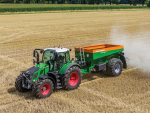
Amazone's ZG-TX combi spreader has been updated with several new features, centred around improved accuracy and easier operation.
When it comes to annual rebates, it's been a long time between drinks for Ravensdown shareholders.
Ravensdown has reported a net profit before tax and rebate of $50.1 million for the year ended 31 May 2026.
A new digital assistant is now helping Ballance Agri-Nutrients farmers speed up nutrient information and ordering.



Ravensdown shareholders have elected Jane Montgomery and Kate Acland to the Ravensdown Board for three-year terms, following a closely contested director election.
Federated Farmers says new legislation replacing the Resource Management Act will cut red tape, unlock investment and help grow New Zealand's export-led economy, after the Planning Bill and Natural Environment Bill passed their third reading in Parliament yesterday.
Leading figures from the major political parties will be questioned on their primary sector policies at the Rural Issues Debate at Mystery Creek Events Centre, Hamilton, on 30 September.
OPINION: Have a plan in place now!
Beef + Lamb New Zealand (B+LNZ) says it welcomes the passage of the Natural Environment Bill and Planning Bill, calling the bills a positive step for sheep and beef farmers.
A spate of southerly winds bringing cold temperatures has presented challenges for Taranaki dairy farmers.