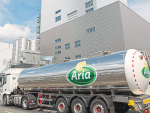
Arla targets $25b in total revenue
European dairy co-operative Arla Foods is forecasting a total revenue of nearly $25 billion this year.
 increase font size
You would be udderly surprised to encounter a Simmental or Braunvieh running up the steps of New York’s One World Trade Center or Shanghai’s equally tall World Financial Center.
But that’s the kind of climb – albeit on dirt trails, not concrete steps – a typical Swiss dairy cow makes every summer.
According to the Swiss Federal Agricultural Office, about 270,000 cows are marched from their valley farms to mountain meadows at the start of every summer, just to come back down again in early autumn. Why do it?
Dairy farmers have incentives to herd their cattle high. On the one hand, they get top dollar for the aromatic ‘Alp cheese’ made from the milk of their livestock. From June to early September, alpine pastures serve up a smorgasbord of hundreds of different grasses and herbs for the cows to graze. Lower in the valley there are only a few types.
European dairy co-operative Arla Foods is forecasting a total revenue of nearly $25 billion this year.
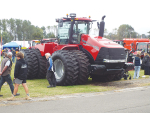
According to numbers sourced from national authorities, 151,800 tractors were registered across Europe in 2023, of which 26,200 tractors (17%) were 37kW (50 hp) and under and 131,900 (83%) were 38kW and above.
OPINION: European farmers are going to extreme lengths to have their message heard.
OPINION: Farmer protests have swept Europe in recent weeks.
OPINION: The heat wave that hit Europe last week has forced a rethink among UK dairy farmers who normally graze their cows outdoors in summer.


Farmers are being encouraged to rethink how they manage waste on farm with the launch of ruralwastesorted.co.nz, a new website bringing together practical tips, real farmer experiences and resources.

New Zealand Winegrowers (NZW) is celebrating the India-New Zealand Free Trade Agreement (FTA) coming into force today, bringing New Zealand wine improved access to one of the world’s fastest-growing economies.
New Zealand’s red meat sector has welcomed the India-New Zealand Free Trade Agreement taking effect, which removes India’s 33% tariff on New Zealand sheepmeat.
More than 95 per cent of New Zealand’s forestry and wood exports to India can now enter tariff free as the New Zealand-India Free Trade Agreement comes into force today.
Federated Farmers is backing Feilding High School’s call to keep Agriculture and Horticultural Science as a standalone subject in Year 11.
Food and fibre exports have returned a billion- dollar bonus to the country.