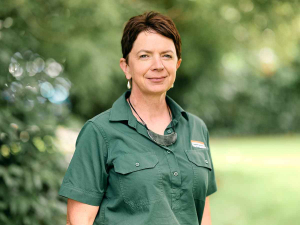
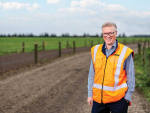
Two robotic milkers on 29ha platform are not the norm in New Zealand, but that's the case for the Comins family that farm at Kihikiki, south of Te Awamutu where they milk 100 cows.
Carmen and Ian's robotic journey started back in 2018, when they moved from a 10-a-side herringbone set up milking 85 cows, when they installed a single Lely Astronaut robot. This was followed in 2020 with a second unit, that saw cow numbers increase to 110, but more lately settle back at 100 animals.
Alongside the dairy farming operation Ian also runs a general contracting business locally, so the autonomous milking process allows him to spend long days away from the farm.
Both Carmen and Ian agree that the robots have given them time to do other things on or away from the farm, but more importantly as Carmen says, "they remove the 4.00am starts, the drudgery and the heat and flies during the summer months".
Having produced 40,000 kgMS during the 2022 season, the enthusiastic couple now have an annual production target of 45,000kg in their sights, driven by better feed utilisation, a more holistic animal health regime and a slight increase in cow numbers.
In terms of practicalities of robotic milking, the farm is split into three areas, accessed by individual races, with the cows getting a move to the A, B or C areas every eight hours. Cows typically visit the robots around 2.6 times each day, where they will receive a pre-determined meal feed. Carmen notes, “The cows are happy, calm, not rushed and largely do their own thing. The cows adapted to the new system quickly and typically prefer one of the two robots, often waiting for access to their preferred unit, even if the other is empty.”
Ian freely admits that the original decision to move into robotic milking brought with it big questions about financials. “Investing around $500k into two robots for a 29ha milking platform may seem like a lot, but spreading that amount over 10 years and the results we have achieved means we are more than comfortable with the reducing debt,” he says.
The Lely Astronaut system is said to realise a substantially lower cost of production, thanks to features like its unique hybrid robot arm, using the power of air, without any air consumption, while also lowering detergent and water consumption and reducing energy usage by up to 20%.
As part of the system, the robots’ user-friendly touch screen interfaces are said to make it easy to move between milking or cleaning functions as required, while settings, information and generating reports are easily accessed.
As part of the package, the system also picks up on cell counts, delivering corresponding alerts, while also monitoring an animal’s general animal health, heat cycle and overall activity. Said to offer 100% accuracy of detection, several days before clinical evidence of mastitis is apparent, the system has helped the couple realise a significant reduction in antibiotic use.
“An early notification has the two-fold benefit of making sure we don’t get any downgrades on our milk, but equally importantly we can treat cows earlier with more holistic and natural products, without going down the antibiotic route,” says Carmen.
Indications of problems like ketosis can also be spotted early, meaning animals can be treated well in advance of becoming very sick, losing condition and production.
Integral to the robotic system, the Horizon management function works in the background to collect data and produce comparative reports for clearer choices and best optimisation.
It also lets the user “talk” with other agricultural data providers or third parties to bring all the information required into a single app, reducing workload, time in front of a computer screen and the number of mistakes.