Ten kiwi dairy farmers who have shown exceptional care for the environment have been recognised with a DairyNZ sustainability and stewardship award.
The award was part of the Ballance Farm Environment Awards.
“The dairy sector has made a commitment under the Dairy Tomorrow strategy to protect and nurture the environment for future generations,” says Dr David Burger, DairyNZ strategy and investment leader – responsible dairy.
“The award recipients are fantastic examples of this commitment in action on farms.”
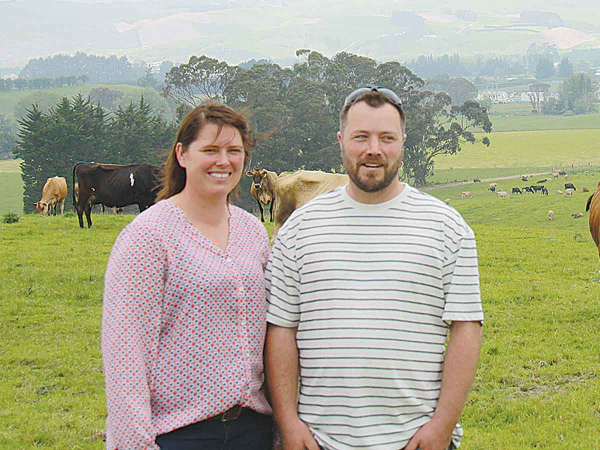
Chris and Desiree Giles of Waimumu Downs equity partnership near Gore were the Southland DairyNZ award recipients. Their 550 cow farm is the hub of a community environmental project.
“As part of the Waimumu Downs Project we’re working with local Enviroschools, our catchment community and local iwi to start a community nursery which can nurture locally sourced seedlings from our farm and local area,” Chris explains.
The plan includes seeds from the local area being propagated by Eastern Southland Enviroschools in glass houses on the farm. School children have been carrying out stream studies of water on the farm, raising plants and looking at biodiversity and pest control on the property.
The Giles’ have also developed four wetlands that farm drains flow into, and planted farm waterways.
“We would like to develop a native plant corridor from the Mataura River to the Hokonui Hills and get other neighbouring farms on board with this project,” Chris says.
Together with Environment Southland, the Giles’ have been trialling using straw bales and Douglas Fir woodchips to help filter sediment and nutrients going into the wetlands. Testing has shown this has resulted in a 47 percent average reduction in total nutrients leaving the wetlands.
 |
|---|
|
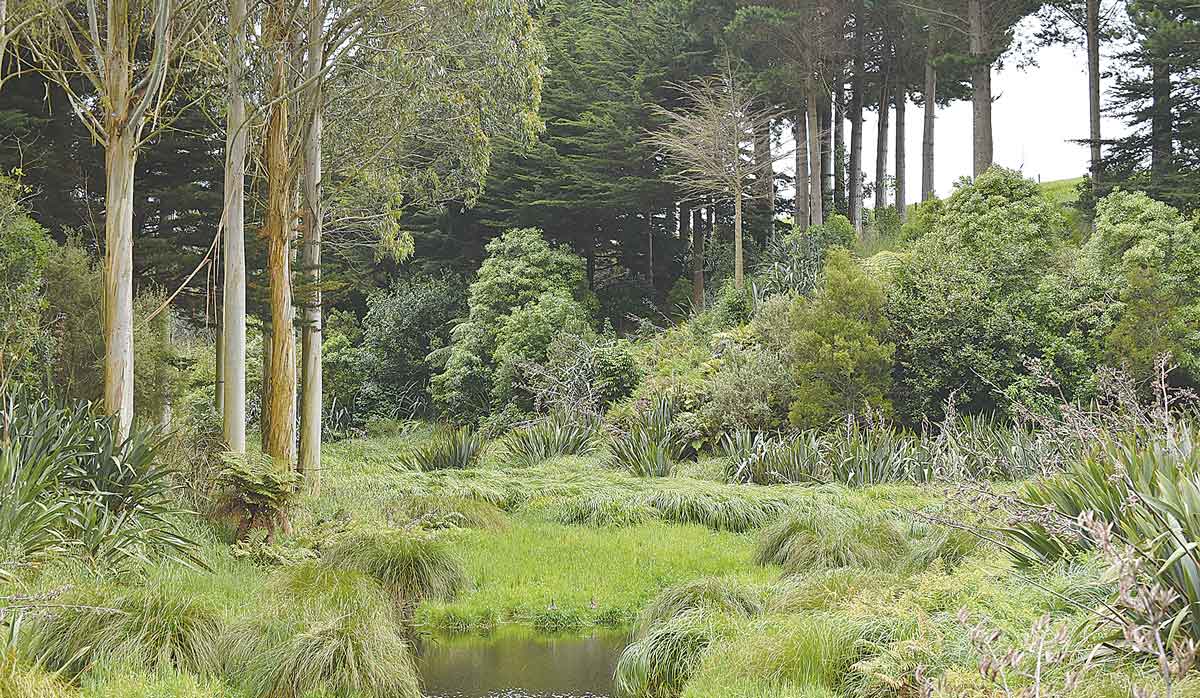
Planting on the Bourke/Smith family farm in Taranaki.
|
In Taranaki, the Bourke/Smith family received the DairyNZ Sustainability and Stewardship Award for their work to enhance a property which has been in the family for nearly 150 years, with judges also commending their animal care standards.
Fern Flats is a 73ha, 180 cow farm owned by Robert and Verna Bourke. Their daughter Conna and son-in-law Nick Smith are 50:50 sharemilkers there. The farm was bought in 1873 by Robert Bourke’s great grandfather, with what were believed to be profits from striking gold in the Otago goldrush.
“We have a gully area in the middle of the farm which used to be grazed by heifers but it wasn’t a very productive area,” Robert explains.
“After attending some farm forestry field days, I saw how planting trees could be a good use for areas that were hard to manage and also help beautify the farm.”
Extensive planting in the gully has created a 12 hectare forest of pines. Another 4-5 hectares of riparian margins have been planted with native species and a farm wetland provides a habitat for pukeko.
Testing shows that water from two springs on the farm is good enough for the family to drink.
Robert says there’s plenty of advice on offer for other farmers who want to improve their farm environment – including from regional councils and farm forestry field days.
DairyNZ also hosted a discussion group on the farm where an expert assessed the farm effluent requirements - providing valuable information on improving the effluent system.