The dairy sector has launched a new workforce plan setting out how it will attract, retain and grow the farm workforce in the next decade.
The Great Futures in Dairying plan is the sector's strategy for shaping dairy farming as a competitive career option through a range of workplace and technology.
"Dairy farms employ 37,000 people on-farm. The success of dairy is critical for those working in the sector and to New Zealand as a whole," says DairyNZ chief executive Tim Mackle.
"New Zealand is facing significant social changes which will require many businesses to work harder to attract and retain staff. These include an ageing population, increasing urbanisation, wider career options, lower fertility rates and technological change."
Mackle says these trends mean the dairy sector needs to be forward-thinking and develop fresh ideas to attract and keep the right staff.
"Farmers are resilient and practical people, and we know they are focused on finding solutions to this challenge."
The Great Futures in Dairying plan is led by DairyNZ in partnership with farmers, government and farming sector representatives. The plan identifies three key focus areas to make dairy a competitive career option.
"As a sector we firstly want to shape up to ensure we are attractive in an increasingly competitive labour market. We are looking at a range of initiatives, including piloting an induction experience for new dairy staff and developing clear career training pathways for people to progress into more senior roles," says Mackle.
The second focus area - change the job - looks at embracing new technology and strategies to improve workplaces. Smart cow collars, milking cup removal technology and flexible milking are some initiatives proposed to provide staff with a better work-life balance.
"Lastly, we want to look in new places - like Pacifika communities, women and people with disabilities - for our dairy teams to draw on a larger and more diverse talent pool," says Dr Mackle.
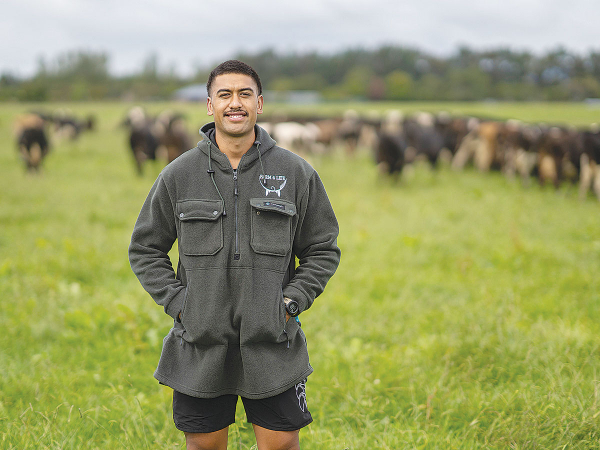
The 2021 Ahuwhenua Young Māori Farmer of the Year Quinn Morgan is one of the farmers supporting the new plan. He grew up in the city and previously worked in the city and previously worked in the fitness industry. Morgan now manages a team of eight on a Taupo dairy farm.
"For people who aren't familiar with farming, it can feel intimidating to consider applying for a dairy job.
"So, it's awesome that the dairy sector is looking to encourage a wider range of people to work on farms," he says.
Morgan's team is already focused on developing their skills by using online video learning, and they are looking forward to welcoming a staff member who is new to farming soon.
Taranaki farmer Hayden Lawrence is one farmer who is embracing new technology, with his farm team.
"We use a project management platform which allows our team to see and manage farm tasks. This gives us the flexibility to better manage workloads to avoid too much overtime," says Hayden.
He says it is a priority to support his team to upskill themselves so they can move into more senior roles in the sector.
Mackle says that the Great Futures in Dairying plan is ambitious and will require contributions from many organisations to succeed.
"We already have some of the initiatives in the plan underway - like our GoDairy recruitment campaign. The next step will be working with other stakeholders to secure funding for other projects and plan their rollout. We hope to see the Government get behind the plan, as the dairy sector is vital to New Zealand's future."