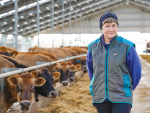
How to Improve Milking Efficiency in Swing-Over Herringbone Sheds
The swing-over herringbone is the most common dairy type in New Zealand, used on 69% of dairy farms. Simple changes save seconds per cow, and that quickly adds up.
 increase font size

DAIRY TECHNOLOGY manufacturer Waikato Milking Systems will next month open the first stage of its new $12 million complex.
The first 3900m2 building, now in the final stages of construction, brings together three of the company’s manufacturing divisions on the same site for the first time.
Waikato Milking managing director John Anderson says the purpose built complex will give it the opportunity to streamline the manufacturing processes and make the business more efficient.
New technology includes an industrial robot welder automated to move around different work stations for different welding functions. The company has used robot welders before, but mobilising the robot will save more time and money. No jobs will be lost, but there will be big gains in efficiency, Anderson says.
“We will be able to process more products in less time without losing anything in the quality of the work,” Anderson says. The robot, from New Zealand company Carbines Engineering, cost about $60,000 and the upgrade to it about $20,000.
The company has also spent $100,000 on a new bridge crane to improve raw material handling, saving $200,000 in building costs. Previously the company stored steel until it was needed but now the crane will deliver the steel immediately to the saw.
Other improvements include a move to ‘lean’ manufacturing principles in making rotary milking platforms. Lean manufacturing helps businesses become more profitable and sustainable by identifying and eliminating sources of waste. The company is also negotiating ‘just in time’ supply arrangements, where suppliers deliver materials only when needed. The company will save money in storage costs but will still get discounts for bulk buying.
The second stage of the complex is scheduled to open toward the end of 2014. This will include a new head office, and design and manufacturing facilities. The new complex is at Northgate Business Park, north of Hamilton.
The swing-over herringbone is the most common dairy type in New Zealand, used on 69% of dairy farms. Simple changes save seconds per cow, and that quickly adds up.
This season's dry conditions have made one thing clear: not having enough feed on hand can bring your season to an early close.
Waikato Milking Systems’ latest innovation, ErgoPOD is now commercially available within New Zealand and Australia.
"Ask me in about three weeks’ time."
DairyNZ's Kirsty Verhoek ‘walks the talk’, balancing her interests in animal welfare, agricultural science and innovative dairy farming.



Ravensdown shareholders have elected Jane Montgomery and Kate Acland to the Ravensdown Board for three-year terms, following a closely contested director election.

Federated Farmers says new legislation replacing the Resource Management Act will cut red tape, unlock investment and help grow New Zealand's export-led economy, after the Planning Bill and Natural Environment Bill passed their third reading in Parliament yesterday.
Leading figures from the major political parties will be questioned on their primary sector policies at the Rural Issues Debate at Mystery Creek Events Centre, Hamilton, on 30 September.
OPINION: Have a plan in place now!
Beef + Lamb New Zealand (B+LNZ) says it welcomes the passage of the Natural Environment Bill and Planning Bill, calling the bills a positive step for sheep and beef farmers.
A spate of southerly winds bringing cold temperatures has presented challenges for Taranaki dairy farmers.