Federated Farmers Welcomes ACT’s New Farming Policies
Federated Farmers has welcomed new rural policies released by ACT, saying they align closely with its own election priorities.
 increase font size
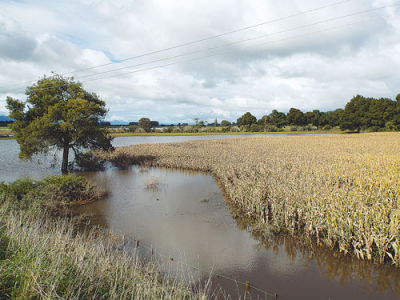 Parts of Hauraki Plains flooded earlier this year.
Floods in April and continuing rain are costing some Bay of Plenty farmers up to $700 per cow to repair damage and buy extra feed.
Their average herd being 370 cows, these farmers face an extra $260,000 in operating costs.
Bay of Plenty Federated Farmers president Darryl Jensen, a dairy farmer, cites the cost of extra supplementary feed, off-farm grazing, pasture renewal and repairs to farm infrastructure.
“The wet trying conditions are making life very difficult and I am still personally involved in flood recovery around the Whakatane Eastern Bay district. We are still dealing with issues from that and the farmers want to see some sunshine to help dry things out.
“A lot of supplement is being used because the ground is so wet and pasture growth rates are not where they need to be; farmers are mindful of the need to minimise pasture damage.”
Jensen says the higher payout is very welcome by farmers, especially those hit badly by the floods.
Despite the wet conditions calving is going pretty well but they are making a tough job tougher. He hears of vets having to do more assisted calvings than normal.
“I have spoken to a few farmers whose stock has come back from winter grazing not quite in the condition they wanted them to be in; they put this down to the hard conditions that have made life a bit more difficult for everyone.”
He says the farmers struggling the most are those in wet, low lying areas; those on the slightly elevated hill country are faring better.
In northern Waikato, pasture damage on some farms is as high as 80-90%, says Feds provincial president Andrew McGiven.
The ongoing rain is compounding the problem caused by the floods in April. It takes only 3mm of rain for the ground to be suddenly sodden again.
“I’ve never seen so many pugged paddocks. The guys with standoff facilities have been using them overtime -- I certainly have. We thought we were going to have a good autumn but it’s turned out a bit of a nightmare.”
McGiven says most dairy farmers, himself included, are using more supplement than normal and pasture utilisation has been poor. Some farmers have had to re-grass their pastures two-three times and other farms are so badly damaged they won’t support grazing for a year.
“Everyone is tired of the rain. We are all doing our best with what we have. We are well aware of the requirements under animal welfare rules and are trying to look after the stock which is where our money comes from and minimise the pugging.”
McGiven says most guys coping well have a plan in place to deal with their predicament; and they appreciate the help from the Rural Support Trust and Feds.
Federated Farmers has welcomed new rural policies released by ACT, saying they align closely with its own election priorities.
Federated Farmers is backing Feilding High School’s call to keep Agriculture and Horticultural Science as a standalone subject in Year 11.
National’s pledge to introduce 19 new national standards shows the party is serious about getting Wellington out of farming, Federated Farmers says.
Mobile phone coverage and reliability are deteriorating in rural areas, and farming families are bearing the cost, according to a Federated Farmers survey.
Central Otago District Council (CODC) has voted against a plan to spread treated sewage sludge from Cromwell and Alexandra on farmland near Lauder, a decision Federated Farmers says reflects strong opposition from rural residents.


Federated Farmers has welcomed new rural policies released by ACT, saying they align closely with its own election priorities.

Rural Contractors NZ says proposed changes to land transport rules for agricultural vehicles are a welcome response by the Government to out of date regulations which have seen members hit with huge fines.
Alliance is calling for final applications for its 2027 Graduate Programme, with applications closing on Sunday 25 October.
Decades piloting planes has ensured vet and farmer David Hayes is focused on safety. So, after a serious accident while welding on farm, he is sharing his experience so others can learn from it.
Canterbury milk processor, Synlait Milk has confirmed Leon Fung as its chief executive officer.
OPINION: Making it easier to collect rainwater and use it to grow crops and livestock is a no brainer.