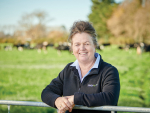
DairyNZ Strategy Review: Farmer Feedback Closes 15 Nov
Farmers have until the end of this week to help shape DairyNZ’s future focus.
 increase font size
 Jacqueline Rowarth
Dairy farmers are set to vote next month on three candidates for two board seats.
In September, dairy farmer levy payers will receive a vote pack including profiles of the candidates and can vote online or by post. They will have until 12pm Thursday, October 17 to cast their votes. Here are the three candidates:
Jacqueline Rowarth
With a background in agricultural science, Jacqueline Rowarth has sat on the DairyNZ board as a farmer-elected director since 2018.
Rowarth has a Bachelors in Agricultural Science and obtained a PhD in Soil Science from Massey University in 1987.
She went on to become the first chief scientist of the Environmental Protection Authority in 2016 before resigning from the role in 2018.
She is a past president of the New Zealand Agricultural and Horticultural Science, and of the New Zealand Grassland Association.
In 2008, Rowarth was awarded the Companion of the New Zealand Order of Merit for services to Agricultural Science.
Earlier this year, Rowarth was named the board’s deputy chair, a new role created as part of the strategic review of DairyNZ’s governance practices.
In June, it was announced that Rowarth would not stand for re-election. However, in July, she announced she would be running for the board again following calls from farmers, expressing regret that she would not continue with the board.
Richard McIntyre
A Horowhenua dairy farmer for 24 years, Richard McIntyre says he is passionate about farming.
McIntyre started out as a farm assistant, working his way up to becoming a herd-owning sharemilker.
 |
|---|
|
Richard McIntyre |
He also has a calf rearing business and a 180ha drystock farm.
McIntyre has been a part of Federated Farmers for 11 years and is currently a Federated Farmers board member and dairy section chair.
Prior to that, he was the industrygood body’s dairy vice chair between 2020 and 2022 and its sharemilker chair between 2016 and 2020.
He has also served as deputy chair of Fish & Game New Zealand between 2021 and 2022 and has served as chair of the NZ Dairy Industry Awards Trust. He currently still sits on the board of the Fish & Game Wellington council.
Kylie Leonard
Taupo-based dairy farmer Kylie Leonard was elected to the Fonterra Cooperative Council in 2020.
Leonard comes from a long history of farming in and around the Central Plateau.
Initially training as a teacher, in 2011 she and her husband Rick entered into a farm equity partnership with her parents.
Leonard has also served as a director of Vetora Bay of Plenty and is currently a councillor on the Taupo District Council.
 |
|---|
|
Kylie Leonard |
In 2018, she received the Dairy Community Leadership Award from Dairy Women’s Network. The award celebrated unsung heroes of rural communities.
In 2023, she was named a Nuffield Scholar, going on to produce a report named ‘Transitioning agriculture towards sustainability together’, which sought to focus on giving farmers a seat at the table of change in order to steer agriculture towards greater sustainability outcomes.
Farmers have until the end of this week to help shape DairyNZ’s future focus.
The New Zealand dairy sector set a record in the 2025/26 season, producing more than two billion kilograms of milksolids for the first time.
Dunedin-based company MastaPlex, which provides on-farm mastitis diagnostic platform globally, has named a new independent director.
Students will be able to study Agriculture and Horticultural Science from Year 11, creating a clear pathway into Years 12 and 13 and future careers in New Zealand’s primary industries, Education Minister Erica Stanford says.
OPINION: New Zealand dairy is delivering. In the year to June, dairy exports earned a record $28.8 billion for New Zealand. They were part of a record $65.2 billion earned by our wider food and fibre sector.

Halter has launched Mav, an AI farming assistant that lets dairy farmers ask questions about their herd and pasture and get answers drawn from the data the company’s collars already collect.

OPINION: At first glance it appears that Father Christmas has delivered the rural sector good tidings, with most pundits predicting the return of the centre-right coalition.
For 15 years, Glenda Rees has travelled from Gore to Awarua, often several times a week, to keep watch over one of the country’s rarest birds.
With some farmers opposing a government-industry partnership set up to develop methane reducing products, one NZ company claims that it already has a product on the market.
During the nesting season, from September to December, industrious starlings can quickly build nests in the darker areas behind tractor and vehicle, usually close to hot engines, typically resulting in localised damage or in some cases complete write-offs.
The meat processing industry is much more collegial than it was in the past and is now more focused on common goals.