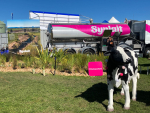
What Would Synlait Be Worth to Fonterra or a2 Milk?
Speculation of a possible joint move by Fonterra and a2 Milk to buy Synlait raises a much bigger strategic question, says agribusiness expert Dr Nic Lees.
 increase font size
 Fonterra principal scientist Shalome Bassett.
Fonterra's latest piece of technology could be a gamechanger and the co-operative says it’s already playing a key part in its strategic choices.
The MinION device is made by Oxford Nanopore Technologies and utilises Whole Genome Sequencing (WGS), the same technology used to test for Covid-19, says Fonterra principal scientist Shalome Bassett.
“It does this by measuring changes in the electrical current as the DNA passes through a special pore, or opening in the device,” Bassett told Dairy News.
The device is able to generate long pieces of DNA sequence, or ‘long read’ sequencing.
“We use our MinION data in combination with ‘short read’ sequencing data which is generated from a different type of sequencing machine (Illumina).
“This ensures that we don’t have any gaps (or missing information) in our genomes and gives us a better understanding of what our dairy cultures can, or potentially can, do.”
Bassett says Fonterra has utilised WGS for over 20 years since the co-op sequences the first of its two current commercialised probiotic strains.
“Back then whole genome sequencing came with a price tag of over a million dollars and took over a year to do,” she says
However, with advancements in sequencing technologies over that time, Bassett says, Fonterra can now perform WGS for hundreds of dollars and have the DNA results available in a matter of hours with a full genome assembled in days.
She says the co-op started developing in-house WGS capabilities with the short-read (Illumina) sequencing.
“And now with the addition of MinION, we’ve been able to extend our suite of sequencing technologies to include long read sequencing as well.”
She says the technology will be used across the co-op, for food safety and quality as well as probiotic discovery.
“Whole genome sequencing has now become a core capability that will help us to drive our strategy to lead in innovation and science.”
Bassett says that innovations like the MinION device are critical to Fonterra’s ability to realise its sustainability goals.
“For example, the use of MinION has played an important role in our Kowbucha programme which is looking to use probiotics as a natural way to reduce the methane produced by cows and lower New Zealand’s carbon emissions,” says Bassett.
“It’s also helping us to further unlock the secrets of our dairy culture collection, which is one of the largest in the world, so that we can bring new probiotic strains to market… much faster than ever before,” says Bassett.
Speculation of a possible joint move by Fonterra and a2 Milk to buy Synlait raises a much bigger strategic question, says agribusiness expert Dr Nic Lees.

In the past, much has been made of the concept of farm to fork, but an Australian expert in food science and marketing with experience in the dairy industry, Dr Angeline Achariya, says the reverse of this slogan is critical to win modern day consumers.
A four year trial has reaffirmed that mixing plantain into dairy pastures can help reduce nitrogen losses to freshwater while maintaining milk production and profitability, say researchers.
Fonterra has opened its upgraded Chengdu Application Centre, bringing New Zealand dairy expertise closer to customers in one of China's fastest-growing regions.
Tatua chair Stephen Allen says he leaves the co-op with a deep sense of gratitude for the people who have contributed to its success.
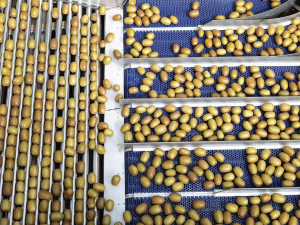
More signs of a booming kiwifruit sector.
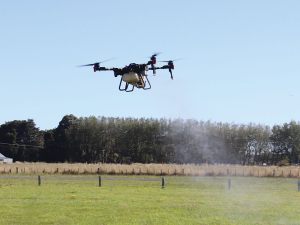
OPINION: David Seymour and James Meager's plan to make it easier for farmers and orchardists to operate drones can best be described a 'courageous' move.
New Zealand wool is reaching new heights as air filtration companies move away from synthetic products to biodegradable alternatives.
Opuha Dam's ability to protect South Canterbury communities from major flooding has taken a significant step forward, with Opuha Water Limited (OWL) successfully commissioning a new outlet valve capable of releasing record volumes of water from the dam ahead of a weather event.
There's been widespread support from the primary sector for the Government's announcement on changes to freshwater farm plans that come under the Natural Environment Bill, which is now set to replace the existing RMA.
A partnership between state-owned enterprise Pāmu (Landcorp Farming Limited) and charity Meet the Need is putting more than quality New Zealand beef into food bank parcels this year.