What Would Synlait Be Worth to Fonterra or a2 Milk?
Speculation of a possible joint move by Fonterra and a2 Milk to buy Synlait raises a much bigger strategic question, says agribusiness expert Dr Nic Lees.
 increase font size
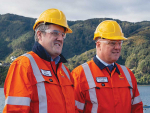
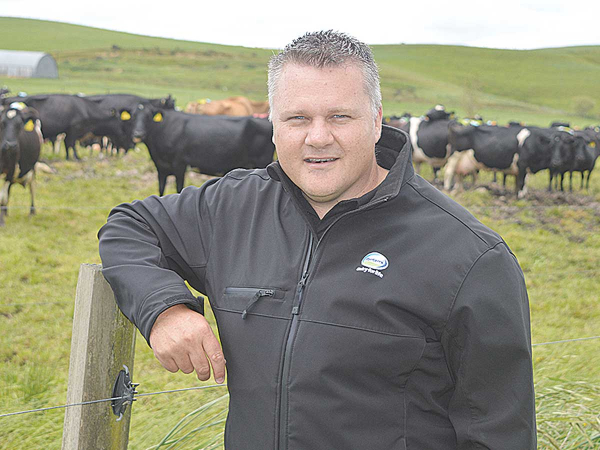 Fonterra chief executive Miles Hurrell says the co-op is in good shape.
Fonterra has reported a net profit of $1.1 billion for financial year ending July 31, 2024.
The strong performance has enabled the co-op to return an extra 15c/share dividend to farmer shareholders and unit holders.
The co-op’s final milk price for 2023-24 season is $7.83/kgMS, backed by a total dividend of 55c/share, providing a total cash payout to a fully shared up farmer of $8.38/kgMS for last season.
Chief executive Miles Hurrell says the payout reflects both Fonterra’s continued strong earnings performance and the long-term resilience of the Co-op.
“We’ve maintained the positive momentum seen in FY23 and delivered earnings at the top end of our forecast range.
“Our total dividend of 55c/share is the second largest since Fonterra was formed. It includes a 15c interim dividend and a 25c final dividend driven by strong FY24 earnings.
“In addition, our capital management efficiency and ongoing balance sheet strength have enabled us to return an extra 15 cents per share to farmer shareholders and unit holders through a special dividend.”
Fonterra collected over 1.47 billion kgMS last season. Profit after tax was $1.168b equivalent to 70c/share.
Hurrell says the co-op is in good shape.
“And I'm pleased to have delivered another year of solid returns to farmer shareholders and unit holders.
“Looking ahead, we’re well placed to consider the next phase of our strategy to grow long-term value for the Co-op.”
The Co-op reported a return on capital for FY24 of 11.3%, above the target range for FY24. Earnings (EBIT) from continuing operations were $1,560 million and continue to be well above previous years, albeit down on FY23 which benefitted from elevated price relativities.
Speculation of a possible joint move by Fonterra and a2 Milk to buy Synlait raises a much bigger strategic question, says agribusiness expert Dr Nic Lees.

In the past, much has been made of the concept of farm to fork, but an Australian expert in food science and marketing with experience in the dairy industry, Dr Angeline Achariya, says the reverse of this slogan is critical to win modern day consumers.
A four year trial has reaffirmed that mixing plantain into dairy pastures can help reduce nitrogen losses to freshwater while maintaining milk production and profitability, say researchers.
Fonterra has opened its upgraded Chengdu Application Centre, bringing New Zealand dairy expertise closer to customers in one of China's fastest-growing regions.
Tatua chair Stephen Allen says he leaves the co-op with a deep sense of gratitude for the people who have contributed to its success.

More signs of a booming kiwifruit sector.
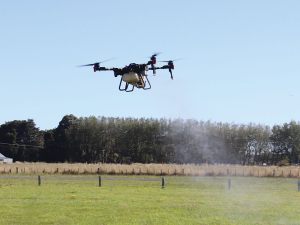
OPINION: David Seymour and James Meager's plan to make it easier for farmers and orchardists to operate drones can best be described a 'courageous' move.
New Zealand wool is reaching new heights as air filtration companies move away from synthetic products to biodegradable alternatives.
Opuha Dam's ability to protect South Canterbury communities from major flooding has taken a significant step forward, with Opuha Water Limited (OWL) successfully commissioning a new outlet valve capable of releasing record volumes of water from the dam ahead of a weather event.
There's been widespread support from the primary sector for the Government's announcement on changes to freshwater farm plans that come under the Natural Environment Bill, which is now set to replace the existing RMA.
A partnership between state-owned enterprise Pāmu (Landcorp Farming Limited) and charity Meet the Need is putting more than quality New Zealand beef into food bank parcels this year.