Celebrate 20 years of DairyBase at Fieldays
DairyNZ’s online platform DairyBase, which helps farmers drive profit and identify positive changes for their farm business, is celebating its 20th year at the Fieldays this week.
 increase font size
 Waikato farmer George Moss.
Misinformation spread on social media is one of the inhibiting factors in getting across the facts about climate change and agricultural greenhouse emissions.
This was the message from Waikato dairy farmer and DairyNZ climate change ambassador George Moss at last week's Agricultural Climate Change Conference in Wellington.
He told the nearly 300 attendees that some people rely entirely on social media for their information rather than relying on the mainstream media. He says many social media posts about climate change are sinister and laced with "conspiracy theories".
Moss says this makes it difficult for him as someone who is trying to get evidence-based science across.
Moss and his wife Sharon run 165 cows on their 70ha farm and have been working for many years to lower their environmental footprint.
He told the conference their focus has been on expediting herd improvement by breeding more efficient cows, maintaining existing production and slowly dropping stocking rates.
"We have dropped our herd from 180 to 165 and milk production has remained virtually the same," he says.
Moss says the remaining cows are being fed and managed better and that feed that was once going into maintaining some cows is now being used to produce milk.
He says this success is based on achieving best practice at every step of the way so that little gains suddenly become bigger gains.
"In terms of the animals, it is about making sure they grow to their potential as fast as possible and produce as much milk in the shortest time possible," he says.
According to Moss, there is a general lack of awareness in the industry about how doing little things very well on the farm can produce significant gains in terms of reducing overall greenhouse gas emissions. He says buyers of NZ products are demanding that these are of the highest quality and are sustainably produced.
"We have to produce what I call 'guilt free food'; food that people are happy to pay a premium for and are absolutely confident about its quality and its provenance and that its impact on the environment is minimal and positive for the planet," he says.
Organisers Happy
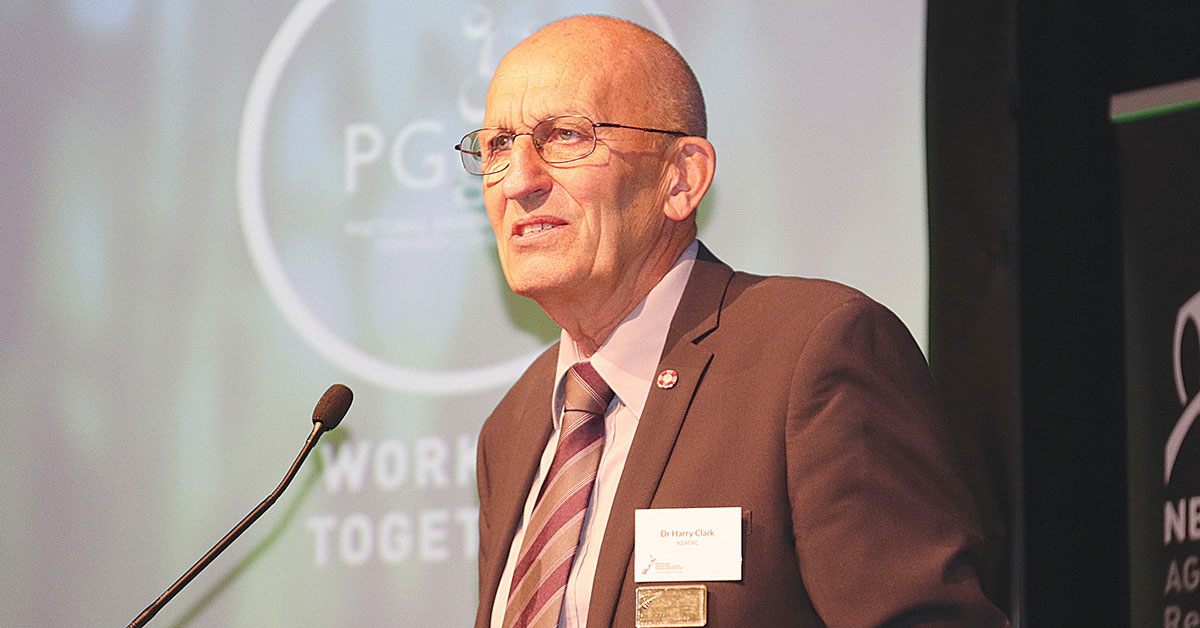
The organiser of the conference, well-known, leading climate change researcher Dr Harry Clark says he was exceedingly pleased with the event.
He says there was a great range of speakers, including some from overseas and says all noted the resources that are being poured into dealing with this huge global issue.
 |
|---|
|
Conference organiser Dr Harry Clark. |
He says there was strong recognition that dealing with agricultural emissions was not just a government issue and that strong messages are coming from supply chains demanding sustainably produced food.
"We have got to work together because change will come. It may be uncomfortable but it has to come," he says.
DairyNZ’s online platform DairyBase, which helps farmers drive profit and identify positive changes for their farm business, is celebating its 20th year at the Fieldays this week.

Setting a regulation in place often disengages certain people rather than appealing to their motivation to act.
A warning for people who say all NZ has to do is argue that it is not causing any more global warming than it currently does: That argument won’t cut it with the rest of the world, according to the Parliamentary Commissioner for the Environment, Simon Upton.
Look for market trends, rather than market signals.
Waikato dairy farmer George Moss says New Zealand’s dairy industry must keep innovating or risk losing the mantle of being the world’s most emissions efficient.

The International Dairy Federation’s World Dairy Summit has returned to New Zealand after sixteen years.
The New Zealand government is calling on global dairy industry players to urge their countries to bring down trade barriers.
Overseer Ltd has released an update to OverseerFM, the farm environmental modelling software, incorporating research findings that refine its estimates of crop nitrogen uptake.
New Zealand's red meat sector says it is disappointed that the United States' investigation into lamb imports will move to its next phase.
Three men have been sentenced in District Courts after Ministry for Primary Industries prosecutions over animal welfare, food safety and cattle tracing offences.
Fonterra’s 2026 financial year was a year of delivery, with record volumes of milk collected, processed and shipped by the co-op.