DairyNZ Resilient Pastures Trial Expands Across North Island
Farms across the upper North Island are trialling different pasture mixes as part of a research programme that aims to build greater resilience into farming systems.
 increase font size
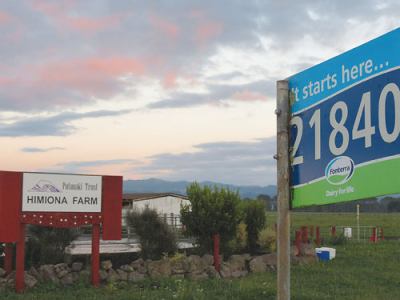 The Putauaki Trust in Bay of Plenty hopes to have its own milk powder plant by 2019.
A new Maori-owned new dairy factory is being planned for the Kawerau region, modelled on the first Maori dairy company Miraka, near Taupo.
The new plant, to make milk powder, will use geothermal power owned by Putauaki Trust, one of the Maori trusts in the project. Miraka has just such a deal with one of its geothermal power-owning partner trusts.
Maori leader Tiaki Hunia, a leader in the development, is chairman of the Putauaki Trust which has dairy farms around Te Teko and Kawerau. One of the farms, Himiona, named after his late father, was a finalist in the Ahuwhenua Trophy for the top Maori dairy farm in 2014.
Hunia is a solicitor and is the general manager, trusts, for Te Tumu Paeroa. He is also deputy Māori trustee and a director of trusts, companies and iwi authorities. He is a member of the Institute of Directors and the New Zealand Law Society and is highly regarded in Maoridom and the agribusiness sector.
“We are very excited about the project,” Hunia says. “We have seen what Miraka has done and we’d like to emulate this. The idea is... to utilise what we have -- clean natural resources with dairy farms locally.”
There has been a tradition in eastern Bay of Plenty of Maori trusts working together to scale up their dairy operations for greater economic viability. Hunia says they intend to work together.
“I am involved because the factory will be built on our land, but six or seven other Maori trusts will be involved in the project, from Rotorua, Bay of Plenty and down to Opotiki.”
Hunia says at this stage they expect to have 15-20 farms -- about 9000 cows -- supplying the new factory. But he emphasises it’s early days and the governance structure of the new entity has still to be finalised with all the interested parties. And they must finalise finance and get resource consents.
Leading the project is Poutama Trust, Rotorua, supported by Te Puni Kokiri; it could produce its first milk powder by 2019.
New player
The Putauaki Trust is a relatively new entrant in dairying, having bought Himiona farm in 2006.
Until then its main activity was raising beef and grazing dairy cows on its land near Kawerau, a forestry block and an interest in geothermal power, also at Kawerau.
The enterprise mix has expanded to include dairying, maize growing, manuka for honey, industrial land uses and a composting business.
The farm is situated on the Rangitaiki Plains between Te Teko and Edgcumbe
The original land purchase was just 57ha – barely economic -- but since 2006 the trust has acquired leases from several smallholdings and built up the milking platform to 180ha running 570 Kiwi cross cows.
In 2015 Putauaki Trust converted its drystock property at Kawerau into a 650-cow dairy farm. This included a $1.5 million 54-bail rotary cowshed. The property is partially irrigated.
Farms across the upper North Island are trialling different pasture mixes as part of a research programme that aims to build greater resilience into farming systems.

Zespri says it welcomes the recently signed Western Bay of Plenty Regional Deal, describing it as an important step towards supporting growth in the region and for New Zealand's kiwifruit industry.
The former chair of the Bay of Plenty Regional Council and farmer, Doug Leeder, says rural communities' biggest fear right now is the lack of long-term certainty over environmental regulations.
Bay of Plenty’s top share farmers Andre and Natalie Meier are no strangers to the New Zealand Dairy Industry Awards winning circle.
An innovative tourism business located in Katikati, is breaking new ground by offering tours of a working avocado orchard.

Federated Farmers says it welcomes Labour's commitment to reviewing the Sharemilking Agreements Act, calling on other major parties to do the same.
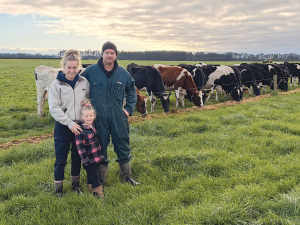
For Canterbury dairy farmers Sian Meijer and Rick Wobben, wearable technology has become one of their most valuable on-farm tools - helping manage 1850 cows across an expansive, high-performing dairy operation while improving efficiency, mating outcomes and day-to-day decision making.
Fonterra has unveiled its annual results for the 2026 financial year, posting $27 billion in revenue and close to $20 billion returned to New Zealand farmer owners and unit holders.
The first major update to the Dairy Cattle Code of Welfare in more than a decade has been released, marking what DairyNZ describes as an important step in ensuring animal welfare standards continue to evolve alongside scientific evidence and on-farm realities.
Ravensdown shareholders have elected Jane Montgomery and Kate Acland to the Ravensdown Board for three-year terms, following a closely contested director election.
Federated Farmers says new legislation replacing the Resource Management Act will cut red tape, unlock investment and help grow New Zealand's export-led economy, after the Planning Bill and Natural Environment Bill passed their third reading in Parliament yesterday.