South Island dairy production lifts despite stormy summer, feed risks loom
South Island dairy production is up on last year despite an unusually wet, dull and stormy summer, says DairyNZ lower South Island regional manager Jared Stockman.
 increase font size

Increased milk production was one of the main drivers for an unexpected 1.1% growth in GDP in the March quarter, the fastest quarterly pace in five years.
Compared with the March 2011 quarter, economic activity in the March 2012 quarter was up 2.4%.
For the year ended March 2012, economic activity was up 1.7% compared with the year ended March 2011.
"This quarter we saw growth spread across a number of industries, while in previous quarters the industry picture had been more mixed with growth in some industries offset by falls in others," Statistics New Zealand national accounts manager Rachael Milicich says.
"Continued good growing conditions have been a major factor in the growth this quarter, and are reflected in both the milk production in agriculture and in meat and dairy manufacturing."
The main growth contributors were:
• agriculture (up 2.3%), mainly driven by an increase in milk production.
• manufacturing (up 1.8%) due to increases in primary food manufacturing and metal product
• business services (up 2%) which include professional, scientific, technical, administrative, and support services
The expenditure measure of GDP was up 0.8% in the March 2012 quarter. The main features of this growth were:
• Investment in fixed assets, up 1.7% mainly due to new investment in plant, machinery, and equipment.
• The supply of goods produced exceeded demand this quarter leading to a $416 million build-up in inventories.
• Manufacturing production was up and more goods were imported, while exports fell 1.7%.
• The volume of spending by New Zealand households increased 0.1%
While household spending in New Zealand fell this quarter, New Zealanders increased their spending abroad on overseas holidays.
The size of the economy (in current prices) was $202 billion for the year ended March 2012.
South Island dairy production is up on last year despite an unusually wet, dull and stormy summer, says DairyNZ lower South Island regional manager Jared Stockman.
Many farmers around the country are taking advantage of the high dairy payout to get maximum production out of their cows.
New Zealand milk production is off to a strong start, with the first month of the 2025/26 dairy season recording a whopping 17.8% jump in milk production, compared to the previous season.
Milk production is up nationally, despite drought conditions beginning to bite in some districts, according to the latest update from Fonterra.
The dairy sector’s production remains stable despite tight and uncertain economic conditions, according to the latest annual New Zealand Dairy Statistics report.


LIC shareholders have elected a new North Island representative to the co-operative's Board, along with five representatives to its Shareholder Reference Group (SRG), following the company's Annual Meeting held in Invercargill.
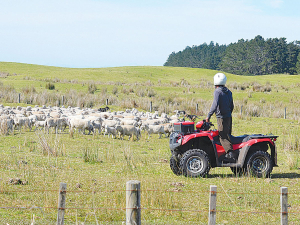
Farmers across parts of Southland and South Otago are continuing to deal with difficult conditions after a prolonged run of wet weather, with pressure building around feed supply, stock management, pasture damage, farm infrastructure and everyday workloads.
Federated Farmers says it welcomes Labour's commitment to reviewing the Sharemilking Agreements Act, calling on other major parties to do the same.
For Canterbury dairy farmers Sian Meijer and Rick Wobben, wearable technology has become one of their most valuable on-farm tools - helping manage 1850 cows across an expansive, high-performing dairy operation while improving efficiency, mating outcomes and day-to-day decision making.
Fonterra has unveiled its annual results for the 2026 financial year, posting $27 billion in revenue and close to $20 billion returned to New Zealand farmer owners and unit holders.
The first major update to the Dairy Cattle Code of Welfare in more than a decade has been released, marking what DairyNZ describes as an important step in ensuring animal welfare standards continue to evolve alongside scientific evidence and on-farm realities.