Massey Uses Portable Analyser to Measure Pasture Soil GHGs
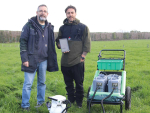
Researchers at Massey University are using a special piece of scientific equipment to improve the measurement of greenhouse gas emissions from pasture soils.
 increase font size
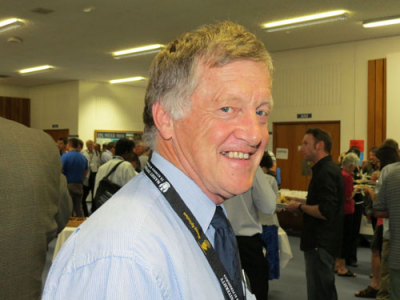 Professor Mike Hedley.
It's difficult at present for farmers to find time to look much at what’s happening beyond the farm gate.
The director of the Fertiliser and Lime Research Centre (FLRC) at Massey University, Professor Mike Hedley, says in the last year or two the frequency and nature of unpredictable storms -- not to mention market volatility -- have forced farmers to make looking after their livelihood their main priority. Many simply have not had time to look beyond their farms to being part of consultative groups with councils, which they normally do.
Massey last week held the 31st FLRC workshop, attended by 250 scientists, rural professionals, policy makers and scientists.
The focus was on farm environmental planning, and looking at science, policy and practice -- including how to engage farmers and other community groups in this process and how to get farmers into discussions on farming within new limits.
But Hedley says farmers are at present in a reactive mode as they cope with bizarre seasonal fluctuations that test their management skills. Their key focus is on having enough supplements to get them through the season.
“From Horowhenua north we have next to no grass silage anywhere to match the maize silage which at last is growing well. We have somehow got to have some protein to balance the pH in rumens,” he says.
Dairy farmers are under a lot of pressure from criticism in the mainstream media, Hedley says. Most farmers are not equipped to deal with this.
“If you have been educated for hard business you can deal with the hard knocks, but if you are a dairy farmer who hasn’t been educated for hard business it’s very difficult to take bad press. That bad press is undermining the morale of dairy farmers at a time when some environmentalists are giving them a battering.”
He says right now it’s hard for farmers to focus on issues such as improving the environment given that they are preoccupied with just keeping their basic farm business running. Anyone wanting to engage with farmers must create an easy pathway for farmers to do this.
Hedley points to one regional council that has made a series of DVDs on best practice management in catchments; these make it easier for farmers to get key messages.
He says people often talk about incentivising farmers to change, but achieving this requires someone to sit down and write a business plan. Increasingly farmers must hire rural professionals to help them prepare farm management plans. These are often complex and require people with special skills and good understanding of council regulations.
Also discussed was the large contribution farmers make to ecosystems and the overall environment -- for which they get little credit.
Researchers at Massey University are using a special piece of scientific equipment to improve the measurement of greenhouse gas emissions from pasture soils.

Interest in agritech and production animal systems has prompted Massey University's School of Agriculture and the Environment to new majors to its popular animal science degree.
The industry is crying out for graduates with agricultural related degrees.
A four year trial has reaffirmed that mixing plantain into dairy pastures can help reduce nitrogen losses to freshwater while maintaining milk production and profitability, say researchers.
Special courses for secondary school teachers to help excite kids about agriculture and horticulture are now being run at Massey University.


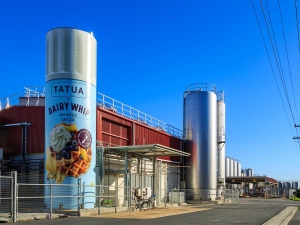
Waikato milk processor Tatua has again declared a record milk payout to farmer shareholders, leaving other processors in the dust.
A Labour-led Government won’t be bringing back the controversial freshwater rules of 2020.
National’s much-touted free trade deal with India featured in the Rural Issues Debate at Mystery Creek, Hamilton on Wednesday night.
New Zealand's 2026-27 freshwater fishing season has opened, with anglers encouraged to head to rivers and lakes over the coming days as conditions look favourable across much of the country.
Central Otago District Council (CODC) has voted against a plan to spread treated sewage sludge from Cromwell and Alexandra on farmland near Lauder, a decision Federated Farmers says reflects strong opposition from rural residents.
Pāmu has released its FY26 Integrated Annual Report, reporting a Net Operating Profit of $113 million, more than double the $49 million recorded in FY25.