El Niño Spring Outlook: What to Expect in Five NZ Regions
El Niño has officially been with us for several weeks now, and late winter and early September have given us a taste of what is to come.
 increase font size
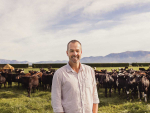
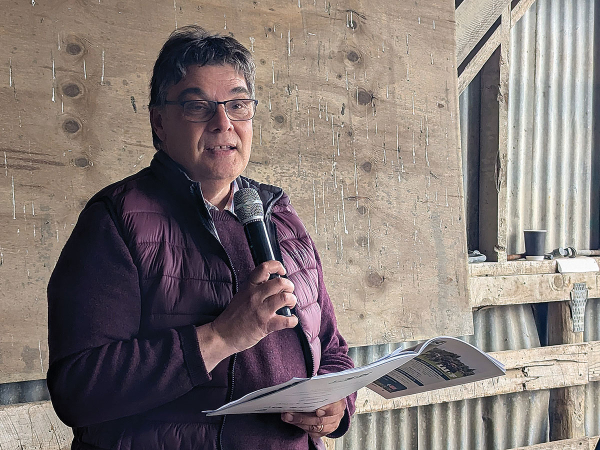 Blue Skies Weather & Climate Services meteorologist Tony Trewinnard.
Keeping up with pasture moisture demands is likely to be the key challenge for dairy farmers during this season’s El Niño weather pattern, says Blue Skies Weather & Climate Services meteorologist Tony Trewinnard.
Speaking to farmers at a recent Lincoln University Demonstration Dairy Farm focus day, Trewinnard said the risk was what he called “an irrigated drought”, when irrigators might not be able to keep up with demand due to a lack of settled days when pivots work at their best.
While the El Niño event was already proving to be a record, as predicted, Trewinnard says it was happening in the tropical Pacific, remote from New Zealand, and there was only an indirect correspondence with our weather.
“Don’t necessarily expect the El Niño event in the Pacific to be an on-off switch for particular weather patterns in New Zealand.”
The key characteristic was an enhanced westerly wind flow over New Zealand, bringing more rain to the west coast and less to the east.
“But the key word I want you to take home today is that the outcome for New Zealand is a windy season.
“The issue is not so much going to be lack of water, but keeping up with the demand that your pasture has for that water.”
Trewinnard pointed out that previous El Niños had very different characteristics. Not every El Niño brought significant drought and some of our droughts were not El Niños.
“Those are the years in which those lazy high pressure systems sit over the country and just prevent any rain-bearing systems arriving. That’s not the pattern that I’m anticipating this time around.”
Trewinnard was expecting westerlies to crank up in November, peak in January and probably persist into April. It would be a season with more nor’west days, but not necessarily heatwave type conditions.
He said the issue would be getting enough water onto paddocks over a rotation to make up for what’s being sucked out by the wind. It would not take much to fall behind and the chances of being able to catch back up would be contingent on getting settled conditions, where the norwester is not accelerating soil moisture loss.
“I can tell you that looking at 50 different runs of the computer model through the summer, we did not detect one that showed more than a three-day settled period.
“So, you’ve got potentially three days to catch up if you fall behind on a rotation before you’re going to be falling behind again because those nor’westers are coming back.
“You’ve got to make sure that you try and start every rotation with your soil moisture as full as you possibly can.”
Canterbury farmers on alpine fed schemes should be better off because the westerlies will top up alpine catchments and keep the main rivers flowing. Those on foothill rivers or groundwater may need to look really seriously at how they manage their trigger points and allocations.
Trewinnard said the quality of dairy pasture was likely to slip before the cover does.
“You are likely to be in a situation where your pasture stays green for quite long periods of time - then all of a sudden it isn’t, because the irrigated drought effect is the result of reducing soil moisture deeper down.”
El Niño has officially been with us for several weeks now, and late winter and early September have given us a taste of what is to come.

With a very strong El Niño increasing the odds of a dry and windy winegrowing season in New Zealand’s eastern regions, the industry should take measures to prepare.
Hawke's Bay fruit growers are being reminded of the need to prepare for whatever the El Niño weather system may bring in the coming months.
Westpac NZ is calling on farmers and growers to start preparing now for the possibility of a dry summer, as likely El Niño conditions raise the risk of drought across parts of the country.
OPINION: Have a plan in place now!


Keeping up with pasture moisture demands is likely to be the key challenge for dairy farmers during this season’s El Niño weather pattern, says Blue Skies Weather & Climate Services meteorologist Tony Trewinnard.
Farmers have until the end of this week to help shape DairyNZ’s future focus.
Wayne McNee, chief executive of AgriZeroNZ, has resigned and will leave the organisation on 15 January 2027.
The New Zealand dairy sector set a record in the 2025/26 season, producing more than two billion kilograms of milksolids for the first time.
Milk powder prices are continuing their merry run, firming up a potential $10/kgMS farmgate price this season.
Teachers are welcoming the outgoing Government’s U-turn allowing agriculture and horticultural science to remain a standalone Year 11 subject.