BVD Control Begins Long Before You See A Problem
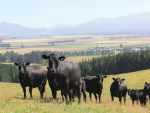
Bovine Viral Diarrhoea (BVD) is sometimes viewed as a dairy industry issue, but the reality is that the disease can have serious consequences for beef breeding herds as well.
 increase font size
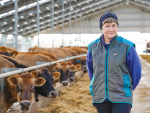
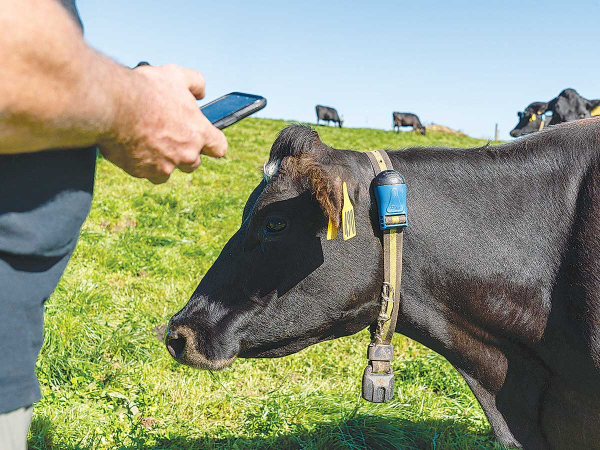 Cows that have just calved are ideally held on once-a-day milking until the collars show they are ready to join the twice-a-day herd.
With mating season just around the corner, Darfield dairy farmer Daniel Schat says activity-monitoring collars have been a game changer on his farm.
Schat is now into his fourth season of using MSD Allflex collars in conjunction with an Allflex automated drafting gate on his herringbone shed.
While he says it takes a year to really figure out how best to use the system, last year he had his best mating ever, with just 10.5% empty.
The software's algorithm looks for a spike in activity and a drop in rumination to identify when a cow is in heat, and gives them a score out of 100.
"So, if she comes onto that report, it'll draft her out. It's as easy as that, really.
"It allows you to not have to be there every morning drafting cows. You can rely on the system just to have the cows ready for you."
Schat uses no tail paint or any other backup for heat detection.
"We found we just trusted it right from the start."
Schat notes that other systems are available, but he chose Allflex because he originally had no automation in the shed whatsoever. Going with Allflex for both the drafting gate and collars meant that any issue was an easy fix.
The former sharemilker is now into the seventh season on his own farm, peak milking about 365 cows on 103 hectares effective.
With the collars, he is exclusively using AI, which he administers himself.
Schat says that at the start of the season the system needs about a week of data to get a trend and set a baseline.
The cows that have just calved are ideally held on once-a-day milking until the collars show they are ready to join the twice-a-day main herd.
"Once she's calved, then I'm looking more for the rumination. Is she eating properly and ruminating properly?
"If I'm being good, I should be holding them back if they're not over 380 [minutes a day rumination].
"This year we haven't had the feed round, and management-wise it's just been easier that after four days, we sent them to the milkers.
"But we have done it in the past where if they weren't ruminating above 380 minutes that we would just hold them back on once a day for a little bit longer."
Schat will start AI on October 23 but recommends putting the cows through the drafting gates for about three weeks before mating proper begins.
"Especially the two-year-olds, they don't know what they're doing. So, they just get used to doing it, so that when it happens for AI for real, they know, 'this is normal, I've done this before'.
"When we're practising, I just do it once a day, but we draft twice a day when I am actually breeding."
Morning and night AI increases the chances of catching the cow at the peak of the cycle.
Schat notes that in the US it would be normal for a farmer to observe a long stand-down period but New Zealand's seasonal industry needs to get as many cows as possible calving early - so he will inseminate even a late-calving cow having only her first heat right at the start of mating.
"Is she gonna hold? Possibly not. But I'm still gonna give it a go."
Schat also does a lot of embryo work and says the collars allow him to pick the best cows for implantation.
"You're creating quite valuable embryos that you don't want to go and put into a cow that is just on heat for the first time. Whereas I can go back on the collars and say, oh, she had three, she's had three good strong ones."
Bovine Viral Diarrhoea (BVD) is sometimes viewed as a dairy industry issue, but the reality is that the disease can have serious consequences for beef breeding herds as well.
MSD Animal Health has launched its comprehensive milk monitoring solution, under the SenseHub Dairy brand, for herringbone sheds following successful trials on Fonterra’s Te Rapa dairy farm in the Waikato.
The Government is offering wellbeing support to fruit growers facing tough times.
A firm stand on demonstrating machinery and technology is a key reason why 50% of the exhibitor sites are now sold for the South Island Agricultural Field Days, says spokesman Daniel Schat.


Pāmu has released its FY26 Integrated Annual Report, reporting a Net Operating Profit of $113 million, more than double the $49 million recorded in FY25.

Meat Industry Association data, released alongside the Red Meat Sector conference in Wellington, shows export value climbing across the US, China, UK and Canada.
Applications are set to open for the 2027 Zanda McDonald Award, a trans-Tasman award recognised for identifying and fast-tracking talented young leaders in agriculture and agribusiness.
The Royal New Zealand College of General Practitioners (the College) and Hauora Taiwhenua Rural Health Network are calling for investment in a proposed new training pathway for rural GPs, warning that many rural practices are struggling to recruit while a large share of the existing workforce nears retirement.
Federated Farmers has called on Central Otago District Council (CODC) to drop or vote down a plan to truck sludge from Alexandra and Cromwell to farmland near Lauder, warning it would compound an "outrageous" situation created by a separate council's decision weeks earlier.
Synlait has swung to second-half profit as operations stabilise, but the dairy processor still posted a $75.4m annual loss.