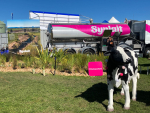
What Would Synlait Be Worth to Fonterra or a2 Milk?
Speculation of a possible joint move by Fonterra and a2 Milk to buy Synlait raises a much bigger strategic question, says agribusiness expert Dr Nic Lees.
 increase font size

It's possible that Fonterra’s board election could deliver a hung result this week – with voting closing at 10:30 am on Tuesday November 6.
The co-op’s revised director election process, implemented last year, requires farmers to vote ‘yes’ or ‘no’ against each candidate.
This year, five candidates – Peter McBride, Jamie Tuuta, Ashley Waugh, Leonie Guiney and John Nicholls – are vying for three board seats.
If three candidates fail to achieve the 50% ‘yes’ vote threshold, another director election could be on the cards.
Online voting requires farmers to cast a vote against each candidate; a maximum of three yes votes. Online voting won’t register unless farmers have used one, two or three of their yes votes, and all remaining no votes.
To win, a candidate must get more than 50% of those voting for him or her, so ‘no’ votes are as essential as well as ‘yes’ votes.
Because there are five candidates for three places, it is possible none, one, two or three could get elected.
Fonterra Shareholders Council chairman Duncan Coull told Rural News he wouldn’t speculate on the results as voting was on.
Coull says the director election process was approved by farmer shareholders three years ago.
“If we fail to elect three directors, then the council will run another election.”
Last year, when Fonterra used the new director voting system for the first time, but there were only three candidates for three vacant director seats. All three candidates – chairman John Monaghan, Brent Goldsack and Andy Macfarlane – got over the 50% threshold.
This year, the independent selection panel recommended three candidates- sitting director Waugh, McBride and Tuuta.
Nicholls and former director Guiney self-nominated for the election.
A Fonterra farmer told Rural News it seems the council never expected anyone to stand outside the panel process or thought through the implications.
“Farmers have already worked it out and are voting strategically.”
Another board election, apart from the financial cost – will also restrict some candidates from re-running. Under the rules, the three candidates who came through the independent selection panel process are ineligible to stand again for 12-months. There is no such restriction for self-nominated candidates.
The farmer told Rural News there is also confusion around the Fonterra director election protocol.
“That’s incredible for an election; throwing up all sorts of interesting combinations and permutations.”
Fonterra has 11 directors; seven farmer-elected and four independent directors appointed by the board.
Meanwhile, Fonterra board aspirant Peter McBride is stepping down as Zespri chairman in February next year. He will retire from Zespri board at the annual meeting in July 2019.
McBride has been touted as a possible future chairman of Fonterra.
Speculation of a possible joint move by Fonterra and a2 Milk to buy Synlait raises a much bigger strategic question, says agribusiness expert Dr Nic Lees.

In the past, much has been made of the concept of farm to fork, but an Australian expert in food science and marketing with experience in the dairy industry, Dr Angeline Achariya, says the reverse of this slogan is critical to win modern day consumers.
A four year trial has reaffirmed that mixing plantain into dairy pastures can help reduce nitrogen losses to freshwater while maintaining milk production and profitability, say researchers.
Fonterra has opened its upgraded Chengdu Application Centre, bringing New Zealand dairy expertise closer to customers in one of China's fastest-growing regions.
Tatua chair Stephen Allen says he leaves the co-op with a deep sense of gratitude for the people who have contributed to its success.
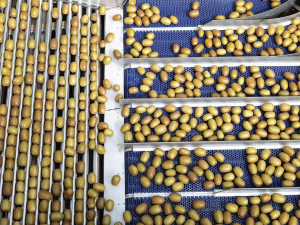
More signs of a booming kiwifruit sector.
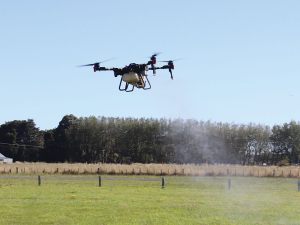
OPINION: David Seymour and James Meager's plan to make it easier for farmers and orchardists to operate drones can best be described a 'courageous' move.
New Zealand wool is reaching new heights as air filtration companies move away from synthetic products to biodegradable alternatives.
Opuha Dam's ability to protect South Canterbury communities from major flooding has taken a significant step forward, with Opuha Water Limited (OWL) successfully commissioning a new outlet valve capable of releasing record volumes of water from the dam ahead of a weather event.
There's been widespread support from the primary sector for the Government's announcement on changes to freshwater farm plans that come under the Natural Environment Bill, which is now set to replace the existing RMA.
A partnership between state-owned enterprise Pāmu (Landcorp Farming Limited) and charity Meet the Need is putting more than quality New Zealand beef into food bank parcels this year.