After helping many farmers detect lameness early using artificial intelligence (AI), Herd-i is rolling out its new body condition scoring (BCS) system.
This month, 42 selected dairy farmers are the first of 100 in New Zealand to go live with Herd-i's BCS system.
These early adopters are integrating this new AI technology into their dairy sheds to monitor cow health year-round with near real-time, daily body condition scores. Farm sizes of the first 42 operations from 263- to 1972-cow herds.
Traditionally, dairy farmers rely on manual body condition assessments, which can be inconsistent, time-consuming, and typically done only a few times a year. Herd-i's AI-powered system eliminates these challenges by providing consistent, daily body condition scores, enabling farmers to monitor trends in their cows' conditions year-round.
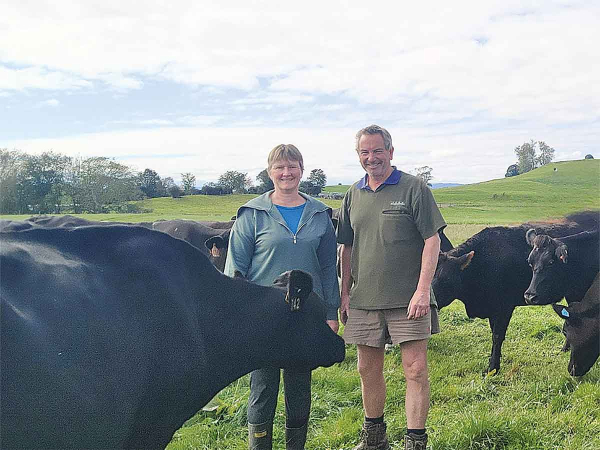
Amanda and Dean Benson, who own and - together with second-in-charge, Josh - manage a 250-cow dairy farm in South Waikato, are the very first of Herd-i's group of 100 BCS launch farmers to have the technology installed during May.
For Amanda, the decision to adopt Herd-i's system was all about gaining consistent data and being able to make fast, informed animal health decisions.
"When we learned about Herd-i's BCS system, it didn't take much to convince us to integrate it into our operation. We were already familiar with how manual body condition scoring works, and we knew the inconsistencies we faced using this method.
"With Herd-i, we'll have daily data, which means we can make quick, proactive and informed decisions, not just react when a cow is clearly in a poor state," she says.
"Herd-i will allow us to monitor every cow's trend, address health issues before they become severe, and improve the overall health and productivity of our herd."
According to Marty Orange, Herd-i's sales manager, "Herd-i provides farmers with daily body condition data which is presented as rolling average trends. This allows farmers to more closely monitor small changes in the body condition of their herd".
"These small changes in individual cows include data that shows the cow is losing or gaining the body condition at a different rate to the rest of the herd. Getting this data in near real-time allows farmers to more quickly adjust their farming practices when required."
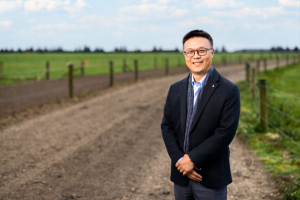
Herd-i chief executive officer Liz Muller told Dairy News that AI and Herd-i are both changing the game for kiwi dairy farmers.
Muller says Herd-i is using AI to enable the early detection of lameness using 14 annotated key points on a dairy cow.
"We track the gait of the cow and identify when the gait changes which may indicate the early signs of lameness.
"Early detection of lameness - ability to treat early and cost effectively and get faster recovery times and less reoccurrence of lameness, maximised milk production, improved reproductive performance and improved animal welfare."
Muller says AI has a significant role to play on NZ dairy farms where there is the opportunity to automate work that is subjective - AI removes the subjectivity - where consistency, speed, precision and sensitivity are required.
"The ability to detect small changes that are not easily detected by humans for example," she says.
Herd-i will be at the Fieldays - at stand K24 where a large LED screen will show farmers how the technology works.
There will also be displays of videos of cows being scored for lameness and BCS. "We also are running a 'Guess the Lameness Score' competition where farmers can win a free Herd-i system for a year," says Muller.