Development rewarded at youth camp
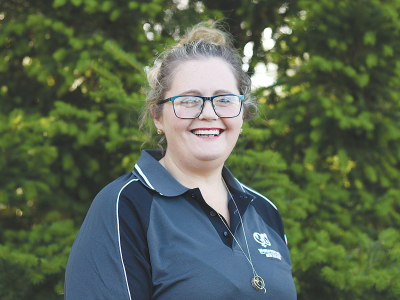
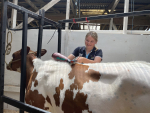
Zara Williams' personal and professional growth has seen her presented with the top award at the 2025 World Wide Sires national all dairy breeds youth camp.
The rate of improvement in dairy genetics is not keeping pace with technology, says World Wide Sires.
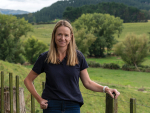
It refers to dairy farmer Louise Tupoutoa having become a WWS breeding specialist “because there had to be a better way”.
“I’ve been involved in dairy farming all my life, growing up on a dairy farm and now involved with my family in a 700 cow farm in Southland.”
She first worked in genetics for another company before joining WWS where “the ‘big guys’ have all put cups on cows”.
“They’re farmers who get around the world to experience hands-on dairying and understand how genetics can solve the challenges farmers are facing,” the company quotes her as saying.
Like a lot of countries, New Zealand is at a crossroads in its onfarm production, she says.
Farmers are facing radical change because, to maintain viability while protecting the environment they need to reduce the size of their herds and maintain or improve profitability.
And that requires a new approach from what we’ve been doing – fertile cows which consistently produce more than 550kg over a long time, Tupoutoa says.
“New Zealand’s breeding worth (BW) evaluation tool was introduced decades ago and has given us a national herd average of 380kgMS/cow.
“Farmers tell me BW isn’t paying the mortgage. I’m frequently learning about heifers which don’t last more than a season in the herd, whose udders and conformation simply aren’t ‘commercial’. The industry, let alone individual farmers, can’t afford this level of wastage.
“The base cow is holding us up as an industry. Most NZ farmers are doing the same as they were years ago and they’d go further (and assure their viability) if they had better bred animals under the same management system.
“Today’s farmers need animals which will survive many lactations and produce high components. Their farms need to make the same amount of money with fewer cows. When you do that, running costs come down.”
They also need genetics which come from a larger gene pool.
Tupoutoa says it’s generally recognised that there is an unacceptable level of inbreeding in the national herd and that we need more outcrosses and hybrid vigour to produce a robust commercial animal.
“I’m finding more and more farmers are adapting their breeding strategies which produce fertile, productive, profitable cows which last in the herd. Rather than make a radical change, I’m encouraging them to judge the difference for themselves: breed a proportion of the herd to overseas genetics and the balance to NZ genetics. The result is usually very stark in the strength and vigour of the World Wide Sires’ calves, and the heifers as they come into and last in the herd.
“As an industry we have to recognise that cows need to be fully fed to realise their potential. Do that and (with the right genetics) you can average at least 550kgMS/cow.”
Tupoutoa said she knows of cows which are fully fed and averaging 800kgMS.
“These are cows which are a pleasure to milk. They get in calf easily, produce beautiful strong quiet calves and milk like trains.”
|
A landmark moment for New Zealand. That's how Prime Minister Christopher Luxon describes the conclusion of negotiations for an India-New Zealand Free Trade Agreement. Beef Progeny Test 2025: Genetic insights for NZ beef industryAt Pāmu’s Kepler Farm in Manapouri, mating has wrapped up at the across-breed Beef Progeny Test. HortNZ celebrates 20 YearsMore than 150 people turned up at Parliament recently to celebrate the 20th anniversary of Horticulture New Zealand (HortNZ). Biosecurity NZ urges vigilance for yellow-legged hornetsBiosecurity New Zealand says Kiwis should continue to keep an eye out for yellow-legged hornets (Vespa velutina) over the holiday season. Mental Health and Fitness Unite: The Push-Up Challenge comes to New ZealandThe Push-Up Challenge, an event which combines mental health and fitness, is set to launch in New Zealand in 2026. Agritechnica 2025: Claas, Fendt and Valtra claim 2026 Tractor of the Year AwardsLast month's Agritechnica event led to a wide group of manufacturers celebrating successes when the 2026 Tractor of the Year Competition winners, selected by a panel of European journalists, were announced in Hanover Germany. NationalFonterra capital return could boost GDP – ANZ ReportThe Fonterra divestment capital return should provide “a tailwind to GDP growth” next year, according to a new ANZ NZ report,…Fonterra upgrades Eltham cheese production for global growthFonterra's Eltham site in Taranaki is stepping up its global impact with an upgrade to its processed cheese production lines,…Michelle Pye elected to Fonterra boardCanterbury farmer Michelle Pye has been elected to Fonterra’s board for a three-year term.Government plan to scrap regional councils faces criticismGovernment plans to get rid of regional councillors shows a lack of understanding of the fundamental problem affecting all of…Lactose to join fat and protein in Fonterra milk price modelFor over 20 years, Whakatane farmer Gerard Van Beek has been attending Fonterra annual general meetings with the same message…Machinery & ProductsCase IH Unveils New RB6 Round Balers & 2026 Square Baler UpgradesCase IH has released details of its all-new round balers and redesigns to its large square balers aimed at increasing…How to Improve Milking Efficiency in Swing-Over Herringbone ShedsThe swing-over herringbone is the most common dairy type in New Zealand, used on 69% of dairy farms. Simple changes…Claas Jaguar 1000 Series sets new forage harvesting world recordThe recently released Claas Jaguar 1000 Series has seen its flagship 1200 set a new official Guiness World Record in…CB Norwood appoints John Skurr as new general managerCB Norwood Distributors Limited has announced the appointment of John Skurr to the position of general manager.AIMER, Bovonic and Herd-i join forces to advance NZ dairy techThree New Zealand agritech companies are set to join forces to help unlock the full potential of technology. |