The importance of seeing regularly to your wellbeing will be the focus of Farmstrong’s site at Fieldays.
Regularly taking breaks, connecting with mates, keeping active, eating well and doing stuff you enjoy – these add up over time and help you cope better with the ups and downs of farming.
And these pay off for the business, says Farmstrong project leader Gerard Vaughan.
“Farmers who ‘lock in’ these habits tell us they not only feel better, but their performance, decision making and efficiency on the farm also improve,” he says.
This year, the Farmstrong site at E34-E36 will have interactive tools to allow visitors to identify tactics that could work for them.
“Over the last four years, hundreds of farmers have shared what they do for their wellbeing, countered by the things in farming that make withdrawals on their wellbeing.”
The Farmstrong site will have an interactive ‘wellbeing bank account’ display where visitors can quickly identify their current ‘investments’ and ‘withdrawals’ on their wellbeing.
“In farming, we regularly make plans and put systems in place to look after our land, stock and machinery, but sometimes forget about ourselves,” says Vaughan.
“Using this interactive tool will help you quickly see what you currently have in place and whether there are other things that you could be doing.
“Life can regularly throw ‘curve balls’ our way, whether it is weather ‘bombs’, low payouts or animal and plant diseases. Having habits in place for wellbeing can get us through tough times without our burning out or becoming unwell.”
The Farmstrong site will display basics from neuroscience that help us perform at our best each day.
“How we think about things, particularly when we are under the pump, can make a huge difference to the way we manage stress, solve problems and even prevent injuries,” Vaughan says.
“Knowing some of the more common thinking traps and how to avoid these is a good skill to add to the farming toolbox. Visitors can have a quick game of matching five common thinking traps with a farming example and a solution to it.
Rugby ambassador
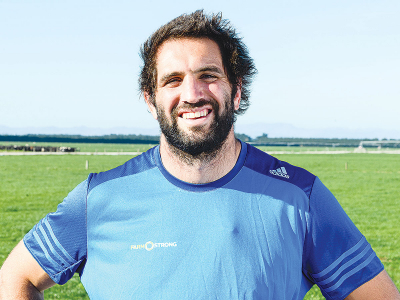
Farmstrong ambassador Sam Whitelock will also be on the Fieldays site on Friday June 14 from 2pm to 4pm.
Whitelock will be signing Farmstrong merchandise and telling what he does to cope with the pressure of being a professional athlete.
“As a rugby player, and someone from a farming background, I can identify with many of the pressures farmers have to deal with every day.
“That’s why I know looking after yourself is so important,” says Whitelock.