DairyNZ Strategy Review: Farmer Feedback Closes 15 Nov
Farmers have until the end of this week to help shape DairyNZ’s future focus.
 increase font size
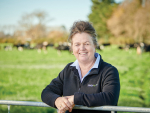
 Sharon Morrell.
Parts of the Waikato are starting to recover from the drought, but the availability of feed remains a concern, says DairyNZ’s Sharon Morrell.
She says some farms in Hauraki Plains and Northland with cow condition are below what it would normally be this time of the year.
Morell, head of DairyNZ’s consulting officers in the upper North Island, says it is working with farmers badly affected by the drought.
“What we are saying to farmers is you may still grow out of the drought to a certain extent but you need to do a feed budget on a best case and worst case scenario and have a definitive plan,” she told Dairy News.
“The other thing is in terms of plans. We are saying work with what’s in front of you. But you really need to quantify what this is so that you can respond to what you have and haven’t got and so make sound decisions,” she says.
DairyNZ is also encouraging farmers to take advantage of a programme being run by the Ministry of Primary Industries (MPI), which offers farmers up to $5,000 worth of advice from consultants on how to manage their businesses next season.
MPI has already received over 100 applications for help through this programme.
“This could be a good year to take a look at the whole picture of your farming operation,” says Morrell.
“Is this the year that those niggly cows that haven’t quite made the three black marks yet are culled so that only the best animals are kept? This is a good time to stop and take stock and think about next season and plan. That in itself can relieve some of the worry,” she says.
Morrell says when the milk price dropped last time, there was a drop in cow numbers. She wouldn’t be surprised if this happens again given the feed shortages and market uncertainty.
Cull snag
Waikato dairy farmer and Federated Farmers Dairy chair Chris Lewis echoes the views of Sharon Morrell about the state of the drought in his region.
He says some areas are getting back to normal, but others, such as farmers on the Hauraki Plains are struggling.
Lewis, who farms near Te Awamutu, says his biggest problem is the wait to get rid of his cull cows.
“I am still waiting and waiting like everybody else - no special treatment. I still have 130 plus animals to go and I have given up stressing. I am taking it as it comes, but it is just frustrating,” he says.
Lewis says he’s done a feed budget and recognises that he has next to no supplement left. With no feed and PKE prices high, he says he’s made the decisions to drop back stock numbers rather than try and buy in feed.
Farmers have until the end of this week to help shape DairyNZ’s future focus.
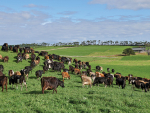
The New Zealand dairy sector set a record in the 2025/26 season, producing more than two billion kilograms of milksolids for the first time.
Students will be able to study Agriculture and Horticultural Science from Year 11, creating a clear pathway into Years 12 and 13 and future careers in New Zealand’s primary industries, Education Minister Erica Stanford says.
OPINION: New Zealand dairy is delivering. In the year to June, dairy exports earned a record $28.8 billion for New Zealand. They were part of a record $65.2 billion earned by our wider food and fibre sector.
Today, 15 October, is the International Day of Rural Women, which recognises rural women’s contribution to farming, communities and the environment.


During the nesting season, from September to December, industrious starlings can quickly build nests in the darker areas behind tractor and vehicle, usually close to hot engines, typically resulting in localised damage or in some cases complete write-offs.
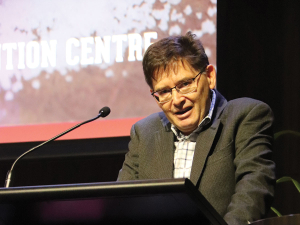
The meat processing industry is much more collegial than it was in the past and is now more focused on common goals.
With the last couple of months having seen some potential tractor purchases put on hold with the impending election and continued input cost rises, year-to-date figures, ending September, has seen deliveries up around 5% over the same period in 2025, with a total of 2026 units.
Beef+Lamb New Zealand is calling for nominations for director roles in the Northern South Island and Northern North Island electoral districts.
Fonterra chief executive, Richard Allen says being resilient has helped the dairy industry overcome extreme volatility in recent years.
The head of the Ministry for Primary Industries (MPI) trade and international relations group says New Zealand is well-positioned to secure trade access and compete internationally as the world becomes more complicated, demanding and uncertain.
