New Rural Recycling Scheme to Replace Voluntary Farm Plastics Programmes by 2027
Environment Minister Nicola Grigg has announced details of a new rural plastics recycling scheme.
 increase font size
 David Healy is Ballance Agri-Nutrients general manager operations, sourcing and supply.
OPINION: As a country that prides itself on being a trading nation, New Zealand's transport infrastructure has a critical role to play in supporting future growth and resilience.
The conversation about our economy often focuses on increasing productivity, along with food and fibre export growth, to compete in increasingly demanding global markets. Yet to achieve that growth, we must also ensure the roads, rail lines, ports and freight connections that underpin our economy are able to keep up.
Food and fibre exports are forecast to earn close to $60 billion this year. Those earnings don't happen by accident. They depend on products moving efficiently from farms and orchards to processors, ports and on to international markets.
Transport infrastructure is a core economic enabler and the foundation upon which productivity, export performance and economic competitiveness are built. As a country, we have an opportunity to keep strengthening that foundation through long-term planning, targeted investment and close partnership between government, industry and communities.
At Ballance, we rely heavily on an integrated network of ports and internal transport options to distribute nutrients throughout the country. Fertiliser may be manufactured, imported, processed, stored and moved through multiple locations before it reaches a farm.
When a rail line closes, roads are damaged or port capacity is constrained, the effects have an immediate effect on our supply chain. The consequences aren't always visible to consumers, but farmers feel them quickly.
Farmers don't need reminding that a missed fertiliser application impacts pasture growth and delayed nutrient delivery affects crop establishment.
Disruptions create uncertainty at exactly the time farmers are trying to make the best decisions for their businesses.
The same applies when it comes time to move food and fibre products out of New Zealand.
Around 99% of our international trade by volume moves through ports, and we are more dependent on maritime freight than almost any developed economy.
That reliance creates an opportunity to take a more coordinated, long-term view of port capacity, investment priorities and freight planning.
Constraints make it harder to efficiently use shipping capacity across multiple ports, reducing the resilience and flexibility of the wider freight network. A network approach that utilises both large and regional ports is likely to serve New Zealand better.
Rail presents similar opportunities. This is not simply about competition between modes; New Zealand's supply chain works best when they operate together.
Road transport will always remain essential, particularly for first and last mile freight movements. But rail can provide capacity, efficiency and resilience for moving large freight volumes over longer distances. Every tonne moved efficiently by rail helps strengthen the overall freight system and removes strain on our roading network.
For many years, infrastructure planning has had to respond to immediate pressures as well as longer-term needs. The opportunity now is to build on the work already underway and ensure decisions are increasingly strategic, evidence-based and focused on the future freight network New Zealand will need.
We welcome the Government's response and bipartisan support for the National Infrastructure Plan, particularly a commitment to action on improving long-term planning, asset management and investment decision-making.
For agriculture, this focus is important. Having reliable roads, rail, ports and freight connections help ensure inputs can reach farms efficiently and means New Zealand's food and fibre exports can continue to reach global markets with confidence. Stronger transport connections would improve productivity, strengthen supply chain resilience, reduce costs and support economic growth. Most importantly, it would help ensure New Zealand can continue to compete in global markets.
The food and fibre sector continues to make a significant contribution to the New Zealand economy. Farmers, growers and exporters are working hard to deliver for the country while adapting to changing market conditions, cost pressures and regulatory expectations.
There is a clear opportunity to support that contribution by ensuring the transport infrastructure the sector relies on is resilient, efficient and fit for the future. If we are serious about growing exports, lifting productivity and creating prosperity for future generations, infrastructure needs to remain a shared national priority.
David Healy is Ballance Agri-Nutrients general manager operations, sourcing and supply
Environment Minister Nicola Grigg has announced details of a new rural plastics recycling scheme.
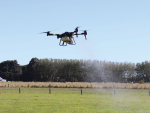
OPINION: David Seymour and James Meager's plan to make it easier for farmers and orchardists to operate drones can best be described a 'courageous' move.
There's been widespread support from the primary sector for the Government's announcement on changes to freshwater farm plans that come under the Natural Environment Bill, which is now set to replace the existing RMA.
The chair of the country's environmental regulator, the Environmental Protection Authority (EPA), says changes are already under way to improve the performance of the agency to better meet the needs of those who interface with them.
Are you ready for El Nino? That’s the question asked by Beef+Lamb NZ’s Ian Tarbotton who leads B+LNZ’s farm extension service.


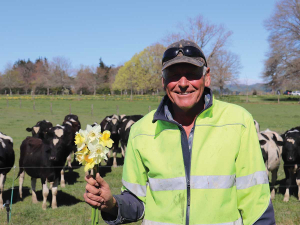
South of the central Hawke’s Bay town of Waipukurau is Taniwha Station – a highly successful 550ha bull beef farming operation.
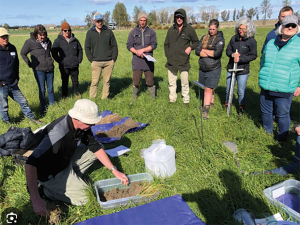
Beef + Lamb NZ funded research has shown that some simple changes to pasture management could help farmers make better use of rainfall and build resilience before dry conditions hit.
OPINION: There could hardly be a more appropriate theme for a conference than the one chosen by the red meat sector - Navigating Volatility.
When Northland leather worker Vernon Suckling started making horse saddles 50 years ago, quad bikes and side-by-side vehicles were unheard of.
Alliance Group has confirmed that eligible farmer-shareholders who supply and continue to back the business will receive up to $20 million later this year, following the strategic investment partnership with Dawn Meats.
With a general election under five weeks away, Rural News is asking major political parties about their policies and positions on key issues facing the primary sector. We will run their responses to each question over the next four weeks. The ACT Party and the Greens didn't respond in time.