M.I.A.
OPINION: The previous government spent too much during the Covid-19 pandemic, despite warnings from officials, according to a briefing released by the Treasury.
 increase font size
 NZ has a proud reputation as the producer of some of the best food in the world.
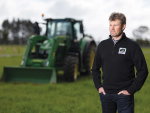
National’s agriculture spokesman, David Bennett on how the sector is key to New Zealand’s economic rebuild.
It’s no secret that agriculture is key to New Zealand’s economic rebuild and is cementing itself as the most reliable contributor to our economy in a post-Covid world.
It’s the same old story – no matter what, people need to eat and we have a proud reputation as the producer of some of the best food in the world.
I am a farmer and I know the contribution our farmers and growers make to our communities. It’s great to see more people outside the farm gate realising what we’ve known all along about how important agriculture is to our country. However, we can’t rest on our laurels and must always be looking at ways to grow the industry for years to come.
For central government there needs to be a greater focus on ensuring strategic infrastructure helps the industry reach its full economic potential. Right now, there are farmers and growers, across the country, experiencing the worst drought in living memory.
Investment in water storage infrastructure is an example of the sort of projects the Government should be looking at.
Other key investment areas are in roads to ensure good supply networks and broadband for greater connectivity. The previous National Government invested heavily in both of these with our Roads of National Significance campaign and Ultra-Fast Broadband rollout.
This sort of investment helps farmers make the best commercial decisions about how best to take the opportunities in international markets and deliver to New Zealanders and to our economy.
If we are going to borrow large sums of money to rebuild our economy from Covid-19, that money will need to be repaid by future generations of Kiwis – so we should be investing in strategic infrastructure that will help us grow.
Farmers need certainty. They deal with uncertainty in world markets and weather every day.
They don’t need any more from the Government, as has been the case of the proposed freshwater reforms.
The Government has reserved its right to impose a Dissolved Inorganic Nitrogen (DIN) level of 1 next year. This is the uncertainty that farmers don’t need.
The proposed DIN bottom lines could have crippling costs on farmers and growers. Farmers needed certainty that any upcoming DIN bottom lines are based on science and are practical so they can be achieved. The Government should be giving some assurance that any costs and requirements are practical and manageable.
The 95% bottom line on nitrogen toxicity is very high and will significantly affect many farmers’ production and New Zealand’s economy. The 90% bottom line that DairyNZ submitted is more in line with what is feasible for farmers to achieve.
Farmers are making big steps in this area already and any requirements need to be practical, achievable and based on the best science.
The primary sector is helping rebuild our economy and we have to back farmers to farm their way to achieve better outcomes.
• David Bennett is National’s agriculture spokesman
OPINION: The previous government spent too much during the Covid-19 pandemic, despite warnings from officials, according to a briefing released by the Treasury.
OPINION: Labour leader Chris 'Chippy' Hipkins is carrying on the world-class gaslighting of the nation that he and his cohorts started after their disastrous Covid response; now trying to undermine the Covid inquiry to protect his own backside.
OPINION: Did former PM Jacinda Ardern get fawning reviews for her book?
OPINION: Welcome to the second annual NZ Dairy Expo at Matamata – an event created to bring together the best of the New Zealand dairy industry in a focused, grassroots environment where dairy farmers and rural professionals can meet, talk, compare products, and make smart decisions for their farms.
It's a bloody tough year for sheep farmers, but the worst may be over, and the future looks optimistic.



Fonterra Co-operative Group chief financial officer Andrew Murray has resigned to take up a role outside the dairy giant.
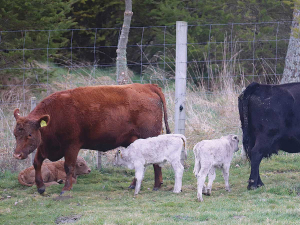
A major move is about to get underway to improve the quality and viability of dairy beef and cattle in NZ.
Veterinarians say changes to the code of welfare for dairy cattle provides a positive foundation for improved cattle welfare across the country.
Today, 15 October, is the International Day of Rural Women, which recognises rural women’s contribution to farming, communities and the environment.
Global dairy giant Lactalis has integrated its Australian operations with the Mainland Dairy consumer business it acquired from Fonterra earlier this year.
High country stations, mixed sheep and beef farms, Māori-owned farms, corporates and family operations are among the nine commercial farms taking part in the Livestock Innovation Farming Transformation programme, known as LIFT.