Precision N application test costs 'outweigh returns'
Precision application of nitrogen can improve yields, but the costs of testing currently outweigh improved returns, according to new research from Plant and Food Research, MPI and Ravensdown.
 increase font size
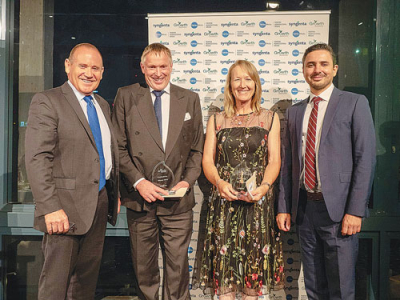 Syngenta Australasia head Paul Luxton, with joint productivity category winners Murray Turley (NZ) and Lynley Anderson (WA), as well as Syngenta regional director of APAC Alex Berkovskiy. SUPPLIED
Two New Zealanders were named as winners in the recent trans-Tasman 2018 Growth Awards run by agriculture multinational Syngenta.
Murray Turley, of Temuka-based Turley Farms, was a joint winner in the productivity category. And Jim Walker, of the NZ Institute for Plant and Food Research, was presented an award in the sustainability section.
Turley Farms is a 2930ha operation growing cereals, potatoes, and hybrid vegetable seeds.
The judges noted that Turley Farms has been one-hectare grid soil testing for a decade and applying variable rate fertiliser to ensure no nutrients are lost, so improving profitability and enhancing the environment.
Turley Farms is a founding shareholder of onion and potato packhouse Southern Packers, which can process 40,000 tonnes of onions a year. Turley also has interests in irrigation, dairy and other property, and has appeared in the National Business Review’s annual rich list.
Jim Walker, a researcher with Plant and Food Research, based in Hawkes Bay, was honoured in the sustainability section. The judges commented that Walker demonstrated a lifelong passion for safe fruit production through his work on pesticide applications. He led a team which introduced integrated fruit production and has helped growers adopt practices that decrease pesticide residues.
“Jim’s advice is regularly sought by NZ government officials,” said the judges.
Turley and Walker were among eight winners from NZ and Australia honoured at a function in Sydney, held in early December, having been chosen from 26 regional winners in three different categories – productivity, sustainability and community and people.
“This is our fifth year of running the awards and such is the quality of nominees that it is only getting harder to narrow down our winners,” Syngenta Australasia’s Paul Luxton said.
“Times have rarely been harder than they are now for farmers and their advisors, who are dedicated to growing the food and fibre that helps feed and clothe us all in NZ and Australia,” Luxton added.
“Growing seasons are less reliable than ever and the rural hubs they call home continue to shrink, contributing to feelings of isolation and even depression, yet our winners demonstrate a tremendous capacity to do more with less as real innovators, while caring for the land and each other.”
The winners get opportunity to join a week-long study tour of the UK and Europe, which the company says will help foster stronger working relationships.
Precision application of nitrogen can improve yields, but the costs of testing currently outweigh improved returns, according to new research from Plant and Food Research, MPI and Ravensdown.

Spring is the perfect time to re-set your eating habits and colourful in-season fruit and vegetables are the key to success, offering unbeatable value.
Nutritionists are urging Kiwis to kickstart their day with a piece of fresh fruit to help improve their health and wellbeing this autumn.
“We’ve just had the first decent shower in three months,” says Rob Agnew when we call him.
A one-year Erasmus Programme in France in year three of an agricultural degree introduced Victoria Raw to the wine industry, and changed her life.



Now in its fourth year, the 2026 Fencing Industry Awards, formed part of the proceedings of the FCANZ Conference, held in Nelson during August.
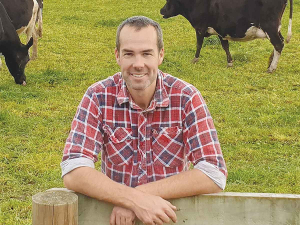
DairyNZ deputy chair Cameron Henderson has been re-appointed unopposed for another term.
OPINION: The stats speak for themselves.
Farms across the upper North Island are trialling different pasture mixes as part of a research programme that aims to build greater resilience into farming systems.
Election years are always a concerning time for farmers, according to DairyNZ chair Tracy Brown.
The Ballance Farm Environment Awards are coming to the West Coast of the South Island.