Vendro badged tedders
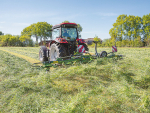
Masterton based Tulloch Farm Machines has introduced a new series of Krone tedders badged Vendro, to replace the existing KW range.
 increase font size
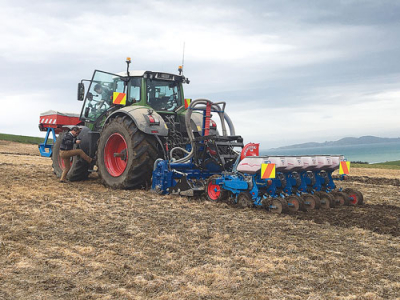 South Canterbury agricultural contractor is impressed after just one season using a Strebel SAG 16 strip tiller.
To farm more sustainably and profitably, many farmers and contractors are exploring the advantages offered by strip-tilling.
Tulloch Farm Machines is looking to meet this demand with a new strip tiller designed to work in pasture — the Strebel SAG 16.
Most crops require a fine seedbed for reliable germination, but traditional cultivation can damage the soil structure, while exposed soil can be eroded by wind or rain.
Strip tillers cultivate strips for a seedbed without disturbing the soil between them, so minimising soil damage and retaining moisture which have the potential to increase yields, reduce costs and ultimately result in healthier soil profiles less prone to pugging.
Tulloch Farm Machines’ Strebel SAG 16 is based on a subsoiler with rotary hoe blades on either side of the subsoiler leg.
The layout is said to break up the soil pan, while the hoe creates an ideal seedbed. The result is a shallow seedbed with shattered ground below, promoting easy root establishment with excellent nutrient and water flows.
Waimate contractor Josh Bleeker is into his first season with a Strebel SAG 16 strip tiller, after running other strip tillers for the past two years in his business Bleeker Ag Services.
“The Strebel is a better designed machine with a better driveline and is a lot easier to work with,” he says. “Where the cultivation occurs there is a more room for soil-flow, whereas with our other machine space is a lot tighter and prone to plug in wet conditions.”
By mid-December, driver Danny Walker had completed about 500ha of fodder beet and maize with the Strebel and was getting more requests from clients for strip tilling.
“We will do about 1000ha this year, building on the 800ha of last year, weather and time permitting” Bleeker says.
“Strip-tilling works well, as it cuts down erosion, particularly on the steeper ground prevalent in the area. The Strebel tiller does everything the crop needs. It creates a loose seed bed and fertiliser is incorporated into the planting zone. This has resulted in yield increases of 3 - 5 tonnes compared to traditional methods.”
Masterton based Tulloch Farm Machines has introduced a new series of Krone tedders badged Vendro, to replace the existing KW range.
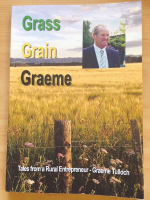
Adversity can bring with it a resilience that allows you to tackle the problems thrown at you and to emerge on the other side in a positive place.
Tulloch Farm Machines will display at Fieldays the latest Krone Big X 780 plus maize header, a Big M 450 self-propelled mower conditioner, a Comprima CF 155XC baler and a Swadro TC 640 rotary rake.
Any company that has a 50-year relationship with a supplier is justified in feeling proud.
Crop establishment, particularly various ways of doing it, was the focus of a recent field day near Taupo.



Federated Farmers has welcomed new rural policies released by ACT, saying they align closely with its own election priorities.

Rural Contractors NZ says proposed changes to land transport rules for agricultural vehicles are a welcome response by the Government to out of date regulations which have seen members hit with huge fines.
Alliance is calling for final applications for its 2027 Graduate Programme, with applications closing on Sunday 25 October.
Decades piloting planes has ensured vet and farmer David Hayes is focused on safety. So, after a serious accident while welding on farm, he is sharing his experience so others can learn from it.
Canterbury milk processor, Synlait Milk has confirmed Leon Fung as its chief executive officer.
OPINION: Making it easier to collect rainwater and use it to grow crops and livestock is a no brainer.