Ballance Launches AI Assistant for Fertiliser Ordering
A new digital assistant is now helping Ballance Agri-Nutrients farmers speed up nutrient information and ordering.
 increase font size
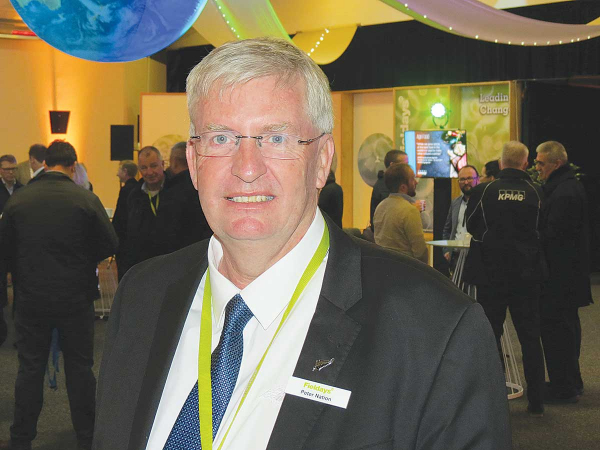 Fieldays chief executive Peter Nation says this is the first time Fieldays has included something so specific to the forestry and wood-processing sectors.
Visitors to Fieldays 2022 – rescheduled for Nov 30 to Dec 3 – will be able to learn about the forestry sector from more than 40 sector organisations and companies under one roof.
The Fieldays Forestry Hub, under the theme of ‘Wood – our low-carbon future’, will be a newly organised space at the event. It will cover topics such as wood processing and the sector’s role in mitigating climate change.
The Hub, a collaboration with an advisory group comprising of Te Uru Rākau – New Zealand Forest Service, Forest Growers Levy Trust, Scion, NZ Forest Owners Association, Red Stag, NZ Farm Forestry Association and Future Foresters, recognises that the forestry sector is a major employer in New Zealand employing more than 35,000 people.
“People of all ages and abilities can find great careers in this sector – from planting and managing native forests and looking after the forest environment, to managing people and resources and working with state-of-the-art technology,” says Hub spokesman Alex Wilson. “We’d also like to open people’s minds up to the possibilities of trees in the future, including the likes of bioplastic vine clips, leather shoes tanned with pine bark tannin and biofuel insights.”
Forest Owners Association president Grant Dodson adds that forestry is an excellent land use opportunity for farmers.
“The hub is all about sharing information, so that forestry is better understood and those farmers that want to can be better informed before investing,” he says. “We see integrated land use, with trees on farms, as a real opportunity to increase overall long-term returns for farming, while improving environmental outcomes, especially around climate change.”
New Zealand has approximately 1.7 million hectares of productive forests around the country and is currently the world’s largest exporter of softwood logs. Plans are also afoot, through Te Uru Rākau’s Industry Transformation Plan, to add more value to our forestry sector by processing wood materials in New Zealand, which in turn will create even more career and job opportunities.
National New Zealand Fieldays Society chief executive Peter Nation says this is the first time Fieldays has included something so specific to the forestry and wood-processing sectors.
woodprocessing sectors. “There’s a huge need for workers of all kinds in the sector, so we’re lucky to have these companies and organisations coming together to showcase themselves and how an interest in forestry can quickly become a career.”
A new digital assistant is now helping Ballance Agri-Nutrients farmers speed up nutrient information and ordering.
OPINION: At Fieldays this year, one theme kept surfacing across the sector: global shocks are no longer something that happens “over there”. They are now translating quickly into local, farm-level impacts through increasingly complex and connected channels.
As the dust settles after Fieldays, we're once again reminded of the sheer volume of technology now available to New Zealand dairy farmers.
Kiwi built to suit Kiwi conditions, the Fieldays reveal of its new 3-point linkage mounted e-Spreader will add another string to Hamilton-based SAM Machinery’s already extensive portfolio of fertiliser spreading tools.
OPINION: The old saying 'a new broom sweeps clean' doesn't always hold up, if you ask the Hound.



A Palmerston North shearer has been sentenced to six months' community detention and 12 months' supervision after being found to have physically abused three lambs while shearing them.
Power Farming has launched a joint venture in Southland.
Food rescue charity Meet the Need has released its 2025/26 Impact Report, revealing a record year of growth alongside a stark warning: demand for food support across New Zealand is rising faster than supply can keep up.
As we move into the second half of 2026, the Tractor and Machinery Association (TAMA) reports that Year-to-Date figures ending June 30 saw new tractor deliveries hitting 1,386 units or 10.7% ahead of the same period in 2025.
The avocado sector is entering the new season with a larger crop and positive market opportunities.
New Zealand growers have always adapted to changing conditions, but one challenge is steadily gaining ground across the horticulture sector: resistance.