Claas Balers Turn 30
Claas built its first variable chamber round baler - the Variant 100 - in 1996, so 2026 marks 30 years and the fifth generation of the Variant name, recently complemented by the new Cerex Series introduced in 2025.
 increase font size
 Australian farmer says the technology pack on the new S7 is impressive.
Twelve months after its release, the all-new John Deere S7 combine harvester has been put through its paces across a range of grain-growing regions, so producers can see first-hand its potential productivity and efficiency benefits.
The Armstrong family from Central Queensland farm 8,500ha of mostly dryland cropping, predominantly growing a rotation of wheat in winter and sorghum in summer at Coolibah Plains south of Comet. Long-time John Deere customers, they operate a fleet that includes three S770 combine harvesters.
During their harvest of 5,200ha of wheat in October, they had the chance to trial the all-new S7 combine harvester alongside their current line-up.
Featuring an updated cab design, new engines, a re-designed grain loss sensing system, and new residue management features, the new S7 offers a suite of automation features, aimed at taking operator performance to the next level.
Ground Speed Automation manages the combine’s speed based on operator inputs for grain loss, engine load and rotor pressure to maintain consistent throughput. Harvest Settings Automation automatically adjusts rotor speed, fan speed, and concave, chaffer, and sieve clearances based upon acceptable limits for grain loss, foreign material, and broken grain.
This is said to deliver a more consistent and higher quality harvest, irrespective of operator skill level.
Meanwhile, the predictive ground speed automation uses ground speed automation as the foundation, with the addition of two forward-looking cameras, to visually assess changing crop conditions and a pre-harvest satellite image to generate a predictive field map. The combine merges the two inputs to proactively manage ground speed and maximise combine throughput.
Xander Armstrong commented, “The technology pack on the new S7 is impressive; with the technology optimised for our conditions, we saw a 15 to 20% increase in productivity in the S7 compared to our current machines. If you can sustainably achieve a conservative extra 15% productivity, over a harvest that takes four weeks, you can easily reduce that time by four or five days. This may not seem like much, but every farmer knows if you’re harvesting and suddenly there’s rain or storms coming, those extra couple of days make a big difference.”
Typically, averaging yields of across the whole area of 3.5t/ha, Xander commented on the re-designed grain loss monitoring system, commenting, “that technology makes a big difference, not only in ensuring more grain ends up in the bin for you, but also in the months following harvest. If we can improve our grain loss percentages, once you start getting rain, there’s less pressure to get back into the paddock soon after harvest to control weeds and volunteer plants that are emerging”.
He also noted how well the new high-efficiency residue management system distributed material across the stubble, which will also help with post-harvest management.
Xander summed up by commenting, “We’re very happy with the fleet we currently have, but we try to trade in our machines for new every five or six years, so when it comes time to trade our current fleet in, we’ll certainly be confident in taking home the new S7 with the automation technology”.
Claas built its first variable chamber round baler - the Variant 100 - in 1996, so 2026 marks 30 years and the fifth generation of the Variant name, recently complemented by the new Cerex Series introduced in 2025.
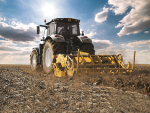
Distributed in New Zealand by OriginAg and supported by its nationwide dealer network, the Italian-built Alpego brand offers an extensive range of solutions including power harrows, rotary hoes, mulchers and subsoilers.
John Deere is introducing its 500R self-propelled sprayer to the NZ market, offering small-grain growers a new option designed for precise application, operator comfort and efficient field performance.
Global tyre manufacturer Michelin has extended its agricultural trailer tyre range, with the introduction of its new WorkxBib series, designed for tipping trailers, slurry tankers and manure spreaders.
Following the record-breaking success of its hydrogen-powered Hydromax, JCB is ramping up its investment in the business, key to the first major change at the executive level of the business, with George Bamford stepping up to the post of joint chairman, alongside his father Lord Bamford.


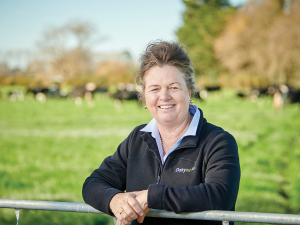
Farmers have until the end of this week to help shape DairyNZ’s future focus.
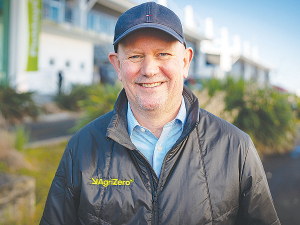
Wayne McNee, chief executive of AgriZeroNZ, has resigned and will leave the organisation on 15 January 2027.
The New Zealand dairy sector set a record in the 2025/26 season, producing more than two billion kilograms of milksolids for the first time.
Milk powder prices are continuing their merry run, firming up a potential $10/kgMS farmgate price this season.
Teachers are welcoming the outgoing Government’s U-turn allowing agriculture and horticultural science to remain a standalone Year 11 subject.
Outgoing ACT MP and dairy farmer Mark Cameron says Saturday’s election result reflects voters deeply impacted by the cost of living.