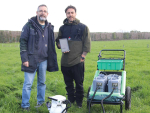
Massey Uses Portable Analyser to Measure Pasture Soil GHGs
Researchers at Massey University are using a special piece of scientific equipment to improve the measurement of greenhouse gas emissions from pasture soils.
 increase font size
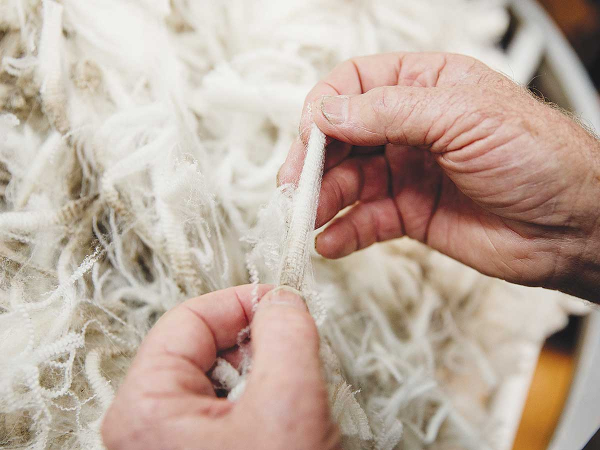 A wool-derived protein could be the key to diabetes management, according to new research.
New research has provided insight into the functional potential of wool-derived protein, with an initial trial revealing it can influence how the body responds to insulin.
Professor David Rowlands from Massey University’s School of Sport, Exercise and Nutrition has been engaging in this research in collaboration with Professor George Dias and Professor Margreet Vissers from the University of Otago as part of a Ministry of Business, Innovation and Employment (MBIE) Smart Ideas grant.
As part of the grant in 2015, Rowlands developed a hypothesis building on research and trials conducted by Dias.
Given the unique amino acid composition of keratin, Rowlands says he suspected it could be used to increase insulin sensitivity in people with diabetes.
“It was an out there idea, but we wanted to trial edible keratin protein derived from sheep’s wool which is particularly rich in cysteine, glycine and arginine which are important for insulin to function,” says Rowlands.
“As humans, we don’t have natural keratinase enzymes in our gastrointestinal tract, so we had to find a way to make the keratin digestible to unlock its potential.”
Before beginning the process, the wool is washed several times before undergoing a novel method using what is essentially a high-pressure microwave oven to break down the sulphur double bonds that tightly bind the keratin together. This unwinds the protein, allowing it to be reduced into smaller fragments and make it digestible.
To investigate the effects of the edible keratin protein, 35 participants with type 2 diabetes engaged in a 14-week trial. They consumed 17 grams of keratin blended with whey protein daily, via muffins and capsules, and took part in a standardised exercise programme.
The pilot clinical trial specifically focused on the peripheral tissues of the skeletal muscle, as those with type 2 diabetes often face challenges of being unable to respond effectively to insulin.
Rowlands says the combination of keratin supplementation and exercise across the 14-week period led to a substantial improvement in glucose delivery from the bloodstream into muscle tissues.
“Muscles are where most of the glucose ends up in the body, entering via the bloodstream through glucose transporters,” he explains. “Insulin facilitates glucose intake by increasing the number of glucose transporter proteins, GLUT4, in the cell membrane, allowing more glucose to enter.”
“Our results, measured from the participants’ muscle biopsies, demonstrated an improved GLUT4 response to insulin, enhanced insulin-stimulated microvascular blood flow and increased muscle sensitivity to insulin.”
Rowlands says the keratin protein contains high levels of cystine and glycine, two of the three precursors needed for production of the antioxidant glutathione.
“This antioxidant is vital for protecting cells from oxidative stress,” he adds.
“While further research is needed, our study indicated an increase in insulin-sensitive glutathione-system associated redox signalling. This suggests that over the course of the trial, there was a shift in the body’s redox environment balance, improving cellular response to insulin,” Rowlands says. “This helps with blood sugar control and may promote a healthier internal environment, with less stress on muscle tissues.”
While there is more work to come before the keratin protein can become a pantry staple, Rowlands says it could make a difference in the health of people with type 2 diabetes.
“With the keratin protein encouraging enhanced insulin sensitivity, it could improve blood sugar control, reducing the risk of hyperglycaemia, as well as improving energy regulation and production and potentially a reduced medication dependency for a better quality of life.
“As it currently stands, the wool-derived keratin protein is still a prototype food product, so we’re trying to improve it. We’re not quite there yet, but if we can continue driving it forward, there’s good potential,” Rowlands concludes.
Researchers at Massey University are using a special piece of scientific equipment to improve the measurement of greenhouse gas emissions from pasture soils.

New Zealand wool is reaching new heights as air filtration companies move away from synthetic products to biodegradable alternatives.
Will a stronger, more coordinated voice help rebuild confidence and improve returns in the wool sector?
Interest in agritech and production animal systems has prompted Massey University's School of Agriculture and the Environment to new majors to its popular animal science degree.
The industry is crying out for graduates with agricultural related degrees.



National’s pledge to introduce 19 new national standards shows the party is serious about getting Wellington out of farming, Federated Farmers says.

The National Party’s policies to make it easier to grow fresh vegetables, secure reliable water and energy and simplify farm planning are practical changes that will give growers the confidence to invest, according to Horticulture New Zealand (HortNZ).
Fonterra Co-operative Group chief financial officer Andrew Murray has resigned to take up a role outside the dairy giant.
A major move is about to get underway to improve the quality and viability of dairy beef and cattle in NZ.
Veterinarians say changes to the code of welfare for dairy cattle provides a positive foundation for improved cattle welfare across the country.
Today, 15 October, is the International Day of Rural Women, which recognises rural women’s contribution to farming, communities and the environment.