Award-winning Māori farm severely damaged by isolated Northland thunderstorm
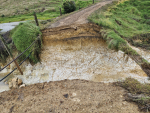
One of the country's top Māori farms has been badly damaged by a severe isolated thunderstorm which hit parts of the east coast of Northland last week.
 increase font size
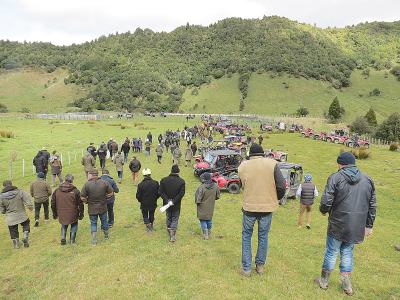 The Ahuwhenua field days attracted big crowds.
Good Māori farms shouldn’t just be pigeon-holed as good Māori farms, they should just be recognised as top farms globally.
That’s the view of Taine Randell, former All Black captain, who is involved with Ngati Kahungunu. Recently, Randell attended the field days of the finalists in this year’s Ahuwhenua Trophy, which this year is awarded to the top Māori sheep and beef farm.
He told Rural News that he was very impressed with this year’s finalists and says that to describe them as good Māori farms doesn’t do them justice.
“They are top performing farms in New Zealand and top farms globally,” he says.
Randell pointed to fact that Whangara Farms, a finalist, was an aggregation of three farms which was fantastic. He also praised another of the finalists, Gwavas Station, which was bought several years ago by the Te Awahohonu Forest Trust with a view to finishing lambs bred on its other farm Tarawera Station. “This is all about moving up the value chain.”
Randell says the vision and excellence shown by all finalists shows just how good Māori farming is today.
Meanwhile, Beef + Lamb NZ chief executive Sam McIvor says the Ahuwhenua Trophy has been tremendously successful in encouraging Māori farming and the whole farming industry to aspire to excellence.
McIvor was at two of the field days and says ordinary farming leaders can learn from Maoridom. He points to governance as one area in particular. “For me, the Ahuwhenua Trophy is a great way to recognise excellence. What this competition does so well is really dig deep down into businesses to identify what are the strong and weak points, what are the things that drive successful businesses,” he told Rural News.
“By their nature, Māori are very proud and competitive, and this competition brings out the best of those competitive juices.”
McIvor says Māori have a certain entrepreneurial spirit in them and he believes a lot of farmers could learn from that. He says while Māori take risks, they are calculated risks, and this is helped by the fact that they build around them a very strong team of advisors. These may be in farm management, financial or environmental areas.
“One of the things I have observed about Māori businesses is the emphasis on paying off debt. Many of their entities have often had hard beginnings and in some cases they inherited debt and have had to borrow, but they have real focus on paying off debt.
“That’s something unique to Māori. There are pakeha farmers who work hard at paying off debt, but there are others who basically just pay interest.”
According to McIvor, one of the great things about the Ahuwhenua competition is that it celebrates success in excellence and that those in the competition share their knowledge, especially at the field days.
One of the country's top Māori farms has been badly damaged by a severe isolated thunderstorm which hit parts of the east coast of Northland last week.

Coby Warmington, 29, a farm manager at Waima Topu Beef near Hokianga was named at the winner of the 2025 Ahuwhenua Young Maori Farmer Award for sheep and beef.
Recently two of New Zealand's top Maori sheep and beef farms held field days as part of the prestigious Ahuwhenua Trophy competition. The two are: Whangaroa Ngaiotonga Trust, northeast of Whangarei, and the proprietors of Tawapata Onenui farm on Mahia Peninsula in southern Hawke's Bay. Reporter Peter Burke attended both field days.
Farms from Northland and northern Hawke's Bay are the finalists in this year's Ahuwhenua Trophy competition for the top Māori sheep and beef farms.
The search is on to find the top Māori sheep and beef farm with entries now open for the 2025 Ahuwhenua Trophy competition.


An Auckland gelato shop and an established New Zealand ice cream maker have both been named Supreme Champions at the NZ Ice Cream & Gelato Awards 2026.

As the cost-of-living crisis continues to put pressure on household grocery budgets, new figures show pork remains one of the most affordable fresh meat options for New Zealand families.
OPINION: In politics, credibility is and should be big. It must surely rank higher than charisma, which is quite trite and superficial. Yet, voters nowadays are often wooed and influenced by how someone looks or talks at a superficial level. TV plays a huge role in this.
Farmers can spend less time on paperwork, thanks to a new data sharing agreement between DairyNZ’s DairyBase and LIC’s MINDA software.
Kaikōura families affected by July's severe storm have found a practical solution to a problem that's kept some children away from regular schooling for weeks: a washed-out section of Inland Kaikōura Road, which has stopped the local school bus from running its usual route.
Rural New Zealand is welcoming the Government’s recent package of rural healthcare initiatives.