Red Meat Farmers Welcome Labour's Emissions Pricing Pledge
Red meat farmers are welcoming Labour’s plan to review the Emissions Trading Scheme and not to campaign on pricing agricultural emissions.
 increase font size
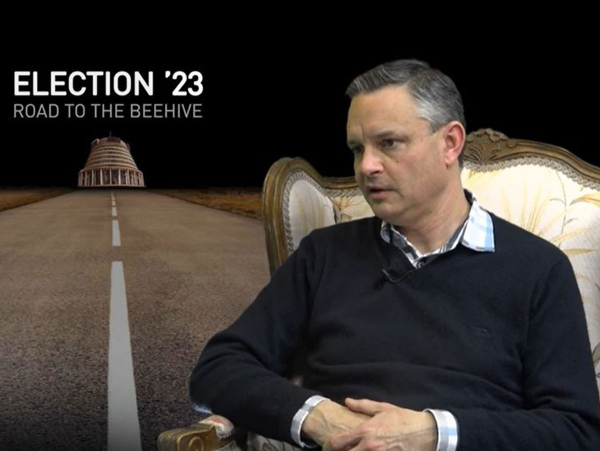 Green Party co-leader James Shaw.
Green Party co-leader James Shaw says there are myths that have been spread surrounding the issue of the Emissions Trading Scheme (ETS).
Shaw, who is also the Minister for Climate Change, says he sees the point made by many farmers that the ETS represents an additional tax.
His comments come just a couple of weeks after sector leaders labelled the Government’s plan ‘tone-deaf’.
“I’ve been talking to farmers a lot over the course of the last six years that I’ve been a Minister… and so I can certainly understand that,” he said in an interview with Country TV.
“I think there are some myths that I’d like to bust. People will say ‘Well, why are you just focusing on farmers? Why isn’t anyone else being asked to do anything about it?’,” he says.
He says that, currently, agriculture is the only sector that does not face a price on emissions.
“But I certainly understand, with all of the other things that are going on and the uncertainty about what that policy decision will be, that that’s anxiety-inducing for people.”
He says that, despite the anxiety surrounding the policy, he has still seen some positive reactions to it.
“I suspect people have kind of seen that I’ve been trying to find a kind of a balanced approach, one that actually does the job.
“One thing that I hear a lot from farmers is they say, ‘We’re not opposed to regulations on the environment, but we want something that works, that’s workable’.”
Shaw says that one of the biggest myths that needs busting is the idea that rural communities are specifically being targeted instead of urban and suburban Kiwis.
“Our focus has been almost entirely on the kind of pollution that you see in cities,” he says.
Examples of this include the clean car discount, decarbonisation work.
Shaw says his problem with the proposal from the He Waka Eke Noa (HWEN) Climate Action Partnership is that he doesn’t believe it will work.
“I think it will, actually, just impose an additional cost without achieving the result and so, I’ve been reasonably vocal about that.
“It’s also a massively bureaucratic proposal. It relies on ministers making decisions on both the supply side and the demand side so they set the price of the levy and they also set the price for the rewards that you get.”
Shaw says he would prefer what he labels as a simpler, farmer-to-farmer approach.
Get the full story on Country TV, tonight at 7.30pm on sky channel 81, or get 30 days FREE access, online and on demand at www.countrytv.co.nz.
Red meat farmers are welcoming Labour’s plan to review the Emissions Trading Scheme and not to campaign on pricing agricultural emissions.
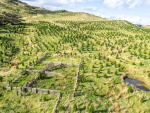
The New Zealand Institute of Forestry (NZIF) says unnecessary changes to New Zealand’s Emissions Trading Scheme (NZ ETS) will seriously erode investor confidence and result in significant reductions in forest planting rates.
New Zealand's Emissions Trading Scheme (NZ ETS) encourages afforestation while not achieving climate goals, says a new report released by the Parliamentary Commissioner for the Environment, Simon Upton.
Conversions of sheep and beef farms to forestry have slowed, however new research from Beef + Lamb New Zealand (B+LNZ) suggests land of value for food production remains at risk.
OPINION: Since when did one and one make three? Who didn't smell an elephant-sized rat when our leaders decided to give $60 million to save the cement factory in Northland?


Minister of Conservation Hon Tama Potaka has appointed Susan O'Regan as Chair of the Queen Elizabeth II National Trust (QEII) for a three-year term.
Red meat farmers are welcoming Labour’s plan to review the Emissions Trading Scheme and not to campaign on pricing agricultural emissions.
Where any worker in the kiwifruit industry is mistreated, we expect the authorities to take action.
Mid Canterbury Federated Farmers arable chair, Bevan Lill, said Beef + Lamb NZ data indicated that for the last six years, the average arable return on investment was about 0.8% while inflation ran about 4% - so the average arable farm was going backwards at about 3% a year.
Seed and grain companies share the concerns of arable farmers about the viability of their sector, says Seed and Grain New Zealand chief executive Dr Sarah Clark.
The New Zealand Institute of Forestry (NZIF) says unnecessary changes to New Zealand’s Emissions Trading Scheme (NZ ETS) will seriously erode investor confidence and result in significant reductions in forest planting rates.