Beef + Lamb New Zealand Awards 2026 Winners Announced in Christchurch
Last night saw the winners of the 2026 Beef + Lamb New Zealand (B+LNZ) Awards named at a gala dinner at Te Pae Christchurch Convention Centre.
 increase font size
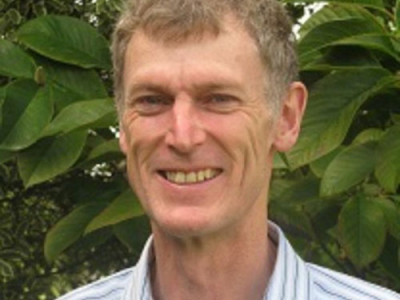 Dr Neil Wedlock.
State-owned AgResearch says it is working on developing new methods to detect diseases like Mycoplasma bovis hidden at very low levels in livestock.
A disease like Mycoplasma bovis can lie dormant at low levels in an animal for months before the illness becomes apparent. Detection at such low levels may help decision-making which can reduce the spread of a disease.
AgResearch has been working with OSPRI for more than 25 years on the eradication of bovine tuberculosis (TB) from cattle herds in New Zealand, using diagnostic tools to identify infected animals. As good progress has been made in addressing Mycobacterium bovis (the bacterium causing TB in the cows) in New Zealand, attention has recently turned to how to detect the “hard to find” instances of the disease.
AgResearch senior scientist Dr Neil Wedlock says although Mycoplasma bovis is a different organism to that which causes TB (Mycobacterium bovis), there is potential for applying some of the new techniques being developed for TB to a range of “hard to detect” infections.
“We are having to be more sophisticated in how we detect low-levels of disease,” Wedlock says.
“The earlier we can detect and test the presence of a disease, the better the outcome in terms of applying controls to prevent its spread, and potentially having more choices to manage a disease outbreak.”
“Some of the tools we are looking to employ include the use of improved blood-based diagnostics for early detection of an animal’s response to disease. There are technologies we are using that measure compounds that both the bacteria and infected-host produce. We can then compare the profiles of healthy (uninfected) and infected animals to establish the presence or absence of the bacteria.”
The recent use of whole genome (DNA) sequencing of the Mycobacterium bovis organism is also providing detailed information about the paths of localised TB outbreaks in livestock.
Wedlock says: “In cases where tests for disease may be negative, because the diagnostic tools currently available are not sensitive enough to detect the disease-causing bacteria at very low levels, there are exciting new technologies that are capable of concentrating the dispersed individual disease-causing organisms to levels that allows sensitive diagnostic tools to identify them”.
“Every disease is unique, but as we test different approaches, it may be that we can add to New Zealand’s toolkit, and develop methods to detect a very damaging disease like Mycoplasma bovis earlier, and perhaps with less invasive methods. That could be a game-changer in terms of limiting the impact of a range of these hard to detect diseases.”
Last night saw the winners of the 2026 Beef + Lamb New Zealand (B+LNZ) Awards named at a gala dinner at Te Pae Christchurch Convention Centre.
A significant breakthrough in understanding facial eczema (FE) in livestock brings New Zealand closer to reducing the disease’s devastating impact on farmers, animals, and rural communities.
A breakthrough in the understanding of Facial Eczema (FE) in livestock could bring New Zealand closer to reducing the disease’s impact.
An innovative idea for transforming mechanically deboned meat (MDM) into a meat flake for seasoning has taken top honours in the Meat Industry Association’s (MIA) first-ever Dragon’s Den competition.
The Government's plan to merge the seven crown institutes presents exciting possibilities for plant technology company Grasslanz Technology, says chief executive Megan Skiffington.



Federated Farmers has welcomed new rural policies released by ACT, saying they align closely with its own election priorities.

Rural Contractors NZ says proposed changes to land transport rules for agricultural vehicles are a welcome response by the Government to out of date regulations which have seen members hit with huge fines.
Alliance is calling for final applications for its 2027 Graduate Programme, with applications closing on Sunday 25 October.
Decades piloting planes has ensured vet and farmer David Hayes is focused on safety. So, after a serious accident while welding on farm, he is sharing his experience so others can learn from it.
Canterbury milk processor, Synlait Milk has confirmed Leon Fung as its chief executive officer.
OPINION: Making it easier to collect rainwater and use it to grow crops and livestock is a no brainer.