What Would Synlait Be Worth to Fonterra or a2 Milk?
Speculation of a possible joint move by Fonterra and a2 Milk to buy Synlait raises a much bigger strategic question, says agribusiness expert Dr Nic Lees.
 increase font size
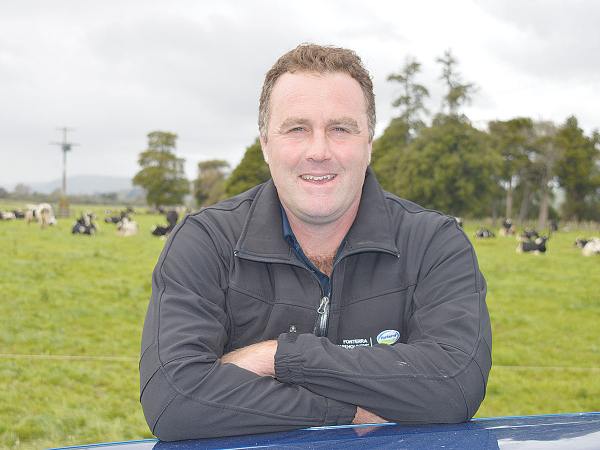 Fonterra Co-operative council chair John says farmers will be looking carefully at their budgets.
Farmers have been told that an opening forecast milk price of $8/kgMS this season hinges on China’s demand for whole milk powder (WMP) bouncing back.
Two milk processors – Fonterra and Open Country Dairy – currently have a mid-point of $8/kgMS. Synlait also came out last week with an $8 forecast milk price for the season that started June 1.
Fonterra Co-operative Council chair John Stevenson says farmers will be looking carefully at their budgets heading into the new season.
“Fonterra has told farmers that this forecast reflects an expectation that demand from China for whole milk powder will lift over the medium term, but that the timing and extent of that is uncertain,” Stevenson says.
Fonterra has opened with forecast price range of $7.25 to $8.75/kgMS. Open Country, which pays its suppliers in full four times a season, is forecasting $7.80 to $8.20/kgMS for milk supplied between June and September and paid in full in November.
Synlait notes that reaching this season’s forecast milk price requires an improvement in commodity prices from current levels throughout the season, which will require increased global demand.
After peaking in March 2022, dairy commodity prices have trended significantly downward with robust improvements in global production currently outweighing the first signs of increased demand, before appearing to find a floor around current levels.
Synlait chief executive Grant Watson says its farmer suppliers have received, on average, $0.28/kgMS in premiums above the base milk price for the last two seasons. He is forecasting to pay similar premiums for the next two seasons.
“We maintain a market-leading position in this space, which creates increased options for our farmers supplying Synlait’s world-class facilities in Dunsandel and Pokeno, enabling us to work with our farmers to add more value to the milk we receive. We are committed to delivering a competitive milk price.”
Fonterra chief executive Miles Hurrell says its opening forecast reflects an expectation that China’s demand for whole milk powder will lift over the medium term.
“We expect demand to gradually strengthen over the course of FY24 as China’s economy continues to recover from Covid-19.
“However, the timing and extent of this remains uncertain, with China’s in-market whole milk powder stocks estimated to be above normal levels following increased domestic production. This is reflected in our wide opening forecast range for the season.
“We recognise the pressure farmers are under and have designed a new Advance Rate guideline to get cash to farmers earlier in the season.”
Stevenson notes new Advance Rate schedules will be appreciated by Fonterra farmers.
“It shows that board and management have heard council and farmer feedback that the co-op needs to get more cash to farmers earlier.”
ASB economist Nat Keall remains cautions on the outlook for the Chinese economy, noting that April data was lower than expected.
He believes farmers should budget on “a price with a ‘7’ handle on it”.
“We still expect a milk price at or below the bottom of Fonterra’s forecasting range. We are cautious on the outlook for the Chinese economy, with April data printing below market expectations.”
Speculation of a possible joint move by Fonterra and a2 Milk to buy Synlait raises a much bigger strategic question, says agribusiness expert Dr Nic Lees.

In the past, much has been made of the concept of farm to fork, but an Australian expert in food science and marketing with experience in the dairy industry, Dr Angeline Achariya, says the reverse of this slogan is critical to win modern day consumers.
A four year trial has reaffirmed that mixing plantain into dairy pastures can help reduce nitrogen losses to freshwater while maintaining milk production and profitability, say researchers.
Fonterra has opened its upgraded Chengdu Application Centre, bringing New Zealand dairy expertise closer to customers in one of China's fastest-growing regions.
Tatua chair Stephen Allen says he leaves the co-op with a deep sense of gratitude for the people who have contributed to its success.



An Auckland gelato shop and an established New Zealand ice cream maker have both been named Supreme Champions at the NZ Ice Cream & Gelato Awards 2026.

As the cost-of-living crisis continues to put pressure on household grocery budgets, new figures show pork remains one of the most affordable fresh meat options for New Zealand families.
OPINION: In politics, credibility is and should be big. It must surely rank higher than charisma, which is quite trite and superficial. Yet, voters nowadays are often wooed and influenced by how someone looks or talks at a superficial level. TV plays a huge role in this.
Farmers can spend less time on paperwork, thanks to a new data sharing agreement between DairyNZ’s DairyBase and LIC’s MINDA software.
Kaikōura families affected by July's severe storm have found a practical solution to a problem that's kept some children away from regular schooling for weeks: a washed-out section of Inland Kaikōura Road, which has stopped the local school bus from running its usual route.
Rural New Zealand is welcoming the Government’s recent package of rural healthcare initiatives.