
AI Egg Counter to Identify Barber’s Pole Worm in Minutes
With drench resistance still a major problem on pastoral farms, reliable ongoing monitoring is a key component of keeping up the fight.
 increase font size
 Biosecurity New Zealand is reminding farmers to keep on top of their NAIT requirements.
Biosecurity New Zealand is warning farmers that those who don’t keep accurate NAIT records put others at risk and can hinder efforts to eradicate Mycoplasma bovis (M. bovis).
Currently, there are six Active Confirmed properties with M. bovis infections and a Controlled Area Notice (CAN) is in place for the Wakanui area in Mid-Canterbury.
M. bovis programme director Simon Andrew says most of the infected properties would be cleared by early next year and eradication remains on-track, but it is vital that all farmers use NAIT properly.
“In our tracing work, we have identified some poor NAIT practices, which is disappointing,” Andrew says.
“Good NAIT records allow us to track any infection quickly, whereas poor records slows us down and heightens the risk that other farmers’ cattle are exposed to M. bovis,” he says.
Andrew says the eradication programme has come a long way and that is largely down to the hard work of farmers and the wider community.
He says that as we approach the end of 2022, it is timely to encourage farmers to do the right thing, adding that incomplete NAIT records had resulted in farms being placed under movement controls, which may not have been the case if animals were properly accounted for under NAIT.
“Farmers should be aware that, where necessary, the M. bovis Eradication Programme will refer those with poor NAIT records to MPI’s compliance team for investigation,” Andrew says.
MPI national manager of animal welfare and NAIT compliance Gray Harrison says that while NAIT use has improved, more work is required.
“When a person in charge of animal fails their NAIT obligations, they potentially put the whole sector at risk,” Harrison says.
“There has been improvement with registering animals after they have been tagged, but I’m concerned there appears to be a belief that this obligation starts and finishes with the person who has animals born on farm,” he says.
Harrison adds that every person who has NAIT animals on their property that were not born there needs to make sure they are tagged, registered and have had their movement recorded into the NAIT system.
“Not doing this could make you liable for an infringement or court prosecution if those animals remain unregistered, and, or, not recorded in a movement.”
Harrison says there have been some serious cases in 2022 that have gone before the courts. These cases involved hundreds of unregistered animals, resulting in thousands of dollars in fines.
“The consequences might seem severe,” he says, “but they’re a drop in the ocean compared to what it would cost to this country if this disease – M. bovis or something similar – gained a foothold in New Zealand.”
Harrison says anyone unsure about their NAIT obligations should reach out, as there is plenty of support and information available through OSPRI.
With drench resistance still a major problem on pastoral farms, reliable ongoing monitoring is a key component of keeping up the fight.
Having spent more than 23 years in the New Zealand dairy industry as a dairy farmer, technical adviser, and dairy farm consultant, including seven years working directly with farmers to improve herd performance and profitability, I have learned that outstanding fertility results rarely happen by chance.
Worms are present on every farm; it’s ensuring there are enough worms that are susceptible to drench within your farm system, through the use of refugia, that is a key tool in slowing the rise of drench resistance.
A dairy industry leader believes eradicating the common and costly disease, Bovine Viral Diarrhoea (BVD) is within reach.
Farmers with high-quality feed available in late spring could consider weaning at least a proportion of their lamb crop early to benefit both lambs and ewes.


Farmlands shareholder directors are urging farmers and growers to vote ahead of the Farmlands AGM 2026, with the deadline to appoint a proxy at 6.30pm this Sunday 22 November.
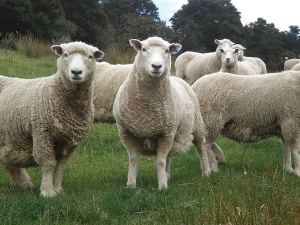
Lamb survival has always been a key driver of sheep farm performance.
For the second time in three weeks, Fonterra has lifted its farmgate milk price, on the back of soaring milk powder prices.
The 2027 East Coast Farming Expo will continue a decade long tradition in bringing the latest innovation, intriguing speakers, industry leaders and more.
Halter has launched Mav, an AI farming assistant that lets dairy farmers ask questions about their herd and pasture and get answers drawn from the data the company’s collars already collect.
OPINION: At first glance it appears that Father Christmas has delivered the rural sector good tidings, with most pundits predicting the return of the centre-right coalition.