Massey University Showcases Practical Solutions for Soil Health, Nutrient Retention and Kikuyu Grass Management at Fieldays
How to save soil, living with kikuyu grass and retaining nutrients on farm.
 increase font size
 Andrew Johnston from Luisetti Seeds says Puawhaa is the only sub clover selected in NZ specifically for NZ hill country environments.
A subterranean clover adapted for East Coast hill country farming systems is being made available to farmers after decades of sitting on the shelf.
Canterbury-based seed company Luisetti Seeds is launching Puawhaa subterranean (sub) clover onto the market this spring - ready for sowing next autumn.
Puawhaa is an ecotype of the subterannean (sub) clovers (Mt Barker and Tallarook) oversown on North Island hill country in the 1940s and 50s.
Luisetti Seeds’ Andrew Johnston says in the late 1980s, scientists working at Whatawhata Research Centre, near Hamilton, selected a line of sub clover suitable for low fertility, intensively grazed, dry hill country.
“It was more prostrate, dense and later flowering than the Australian sub clovers,” he explains.
“More importantly, it was adapted to New Zealand farming conditions.”
In the late 1990s, the clover (given the title WS1801) went through all the testing regimes and registrations required to commercialise it. However, the clover never made it to market – until now.
Johnston says Luisetti Seeds was searching for a clover with a prostrate crown, runners and a later season flowering date as these characteristics all promote re-seeding.
He says WS1801 ticked all the boxes in term of drymatter production as well as being an exceptional re-seeder. It has the ability to produce more than 200 plants per square metre and yield over 1,000 kg/DM/ha in spring.
“It is particularly exciting that this is the only sub clover selected in NZ specifically for NZ hill country environments.”
In looking for a name for the clover, Johnston consulted with Ngaati Maahanga whose land includes the former Whatawhata Research Station, now Te Rauputiputi. In recognition of the work and research carried out on WS1801, the iwi gifted the name Puawhaa, meaning flower of the plant with four leaves.
Johnson says, as a medium to later maturing cultivar, Puawhaa will complement early flowering varieties of sub clover and sown in combination. He claims that Puawhaa will ensure a longer supply of feed during the spring production period.
“With the correct management, sub clover, which thrives in welldrained, sunny, low rainfall areas, has proved transformative on many east country hill country farms throughout New Zealand, giving farmers the ability to drive high pre-weaning growth rates,” Johnson explains.
“This allows farmers to maximise their weaning draft and partition feed back into ewes to build body condition going into the following autumn’s mating.”
How to save soil, living with kikuyu grass and retaining nutrients on farm.

To build resident populations of subterranean clover in hill country pastures, sheep farmers are encouraged to spell selected areas for four to five weeks over late spring and early summer if possible.
Dairy farmers getting their applied nitrogen down to the proposed national 190kg/ha limit will take time, says Ashburton farm consultant Mark Everest.
New Zealand dairy is unique when it comes to nutrition.
A new high sugar grass now available in NZ has the potential to significantly lift animal production and reduce farmer’s environmental footprint.


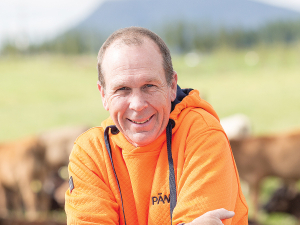
Pāmu has released its FY26 Integrated Annual Report, reporting a Net Operating Profit of $113 million, more than double the $49 million recorded in FY25.

Meat Industry Association data, released alongside the Red Meat Sector conference in Wellington, shows export value climbing across the US, China, UK and Canada.
Applications are set to open for the 2027 Zanda McDonald Award, a trans-Tasman award recognised for identifying and fast-tracking talented young leaders in agriculture and agribusiness.
The Royal New Zealand College of General Practitioners (the College) and Hauora Taiwhenua Rural Health Network are calling for investment in a proposed new training pathway for rural GPs, warning that many rural practices are struggling to recruit while a large share of the existing workforce nears retirement.
Federated Farmers has called on Central Otago District Council (CODC) to drop or vote down a plan to truck sludge from Alexandra and Cromwell to farmland near Lauder, warning it would compound an "outrageous" situation created by a separate council's decision weeks earlier.
Synlait has swung to second-half profit as operations stabilise, but the dairy processor still posted a $75.4m annual loss.