Seeka Posts Record $62m Profit as Zespri Lifts 2026 Forecast
More signs of a booming kiwifruit sector.
 increase font size
 Seeka boss Michael Franks says while labour is slightly less of an issue than it was a year ago if it still remains a challenge for the hort sector.
As chief executive of the larget kiwifruit growing operation in NZ, Seeka boss Michael Franks says labour is slightly less of an issue than it was a year ago.
However, he says the issue has not gone away, but the situation has improved. Franks says looking back to last season there was real concern about getting the fruit picked and reckons the industry, in some ways, convinced itself that it would not get the crop off the vines.
Franks told Rural News as pickers were incentivised to rush the harvest it resulted in fruit that was not handled as well as it should or could have.
"In hindsight, we won't do that again."
Franks says this year there is a new set of problems facing the industry with an indifferent bud break and the frost, which severely damaged some crops. However, he says with the borders opening up, hopefully more backpackers will come to NZ. He adds that despite this there remains a labour shortage in areas such as Northland, Opotiki and Gisborne.
"In those areas we struggle to find people who will come to work, especially where we are in a situation where we have huge demand and huge market share. To add to our woes, we can't get RSE workers into Gisborne," he told Rural News.
Franks says while the RSE scheme has many good aspects to it, some growers are sceptical about the economics of employing RSE workers - especially given the very tight government regulations that are placed around their employment.
"For example, employers have to pay half the airfare of getting them to NZ, guarantee 30 hours pay a week - regardless of whether they work or not and comply with a raft of rules on how and where they are to be accommodated and how they are to be looked after during their stay in NZ," he explains.
Franks says he understands what the Government wants employers to ensure that RSE workers are well treated but says the vast majority of employers of RSE workers would do this as matter of course.
"We work cooperatively with the government agencies to ensure that we are providing our RSE workers with excellent conditions and focus on the areas for improvement," he says. "The regulations ensure that things are done to the lowest common dominator and exclude the employer from making innovative common sense decisions. We should focus our attention on those beloew the standard."
More signs of a booming kiwifruit sector.
Seeka chief executive Michael Franks says while it's still early days in terms of the kiwifruit harvest, things are looking pretty good.
Our job is not to panic but to professionally manage our way through this predicament.
Tech savvy Huntly farmer Rhys Darby believes technology could help solve one of the dairy industry's pressing problems - how to attract more young people into farming.
Fruit trader Seeka posted a record profit and returns to shareholders in 2025.


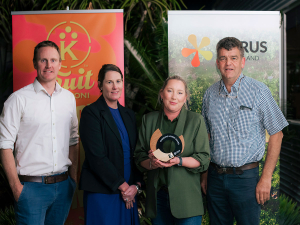
New Zealand's citrus growers were challenged to build their future on the value embedded in their fruit rather than the volume they produce, at Citrus New Zealand's annual gathering in Gisborne on 17 September.

Leading John Deere technicians and apprentices from New Zealand and Australians were recognised at the recent sixth annual JD Technician of the Year Awards, held in Brisbane.
In Dacre, near Invercargill in New Zealand’s South Island, Bruce Dinnington is running a dairy operation unlike any other.
A free online platform aggregating governance vacancies across rural and regional New Zealand has been launched.
Environment Minister Nicola Grigg has announced details of a new rural plastics recycling scheme.
Agricultural drone operators say that a government decision to allow lower-risk drone work without certification won’t lower standards but drive innovation and efficiency.